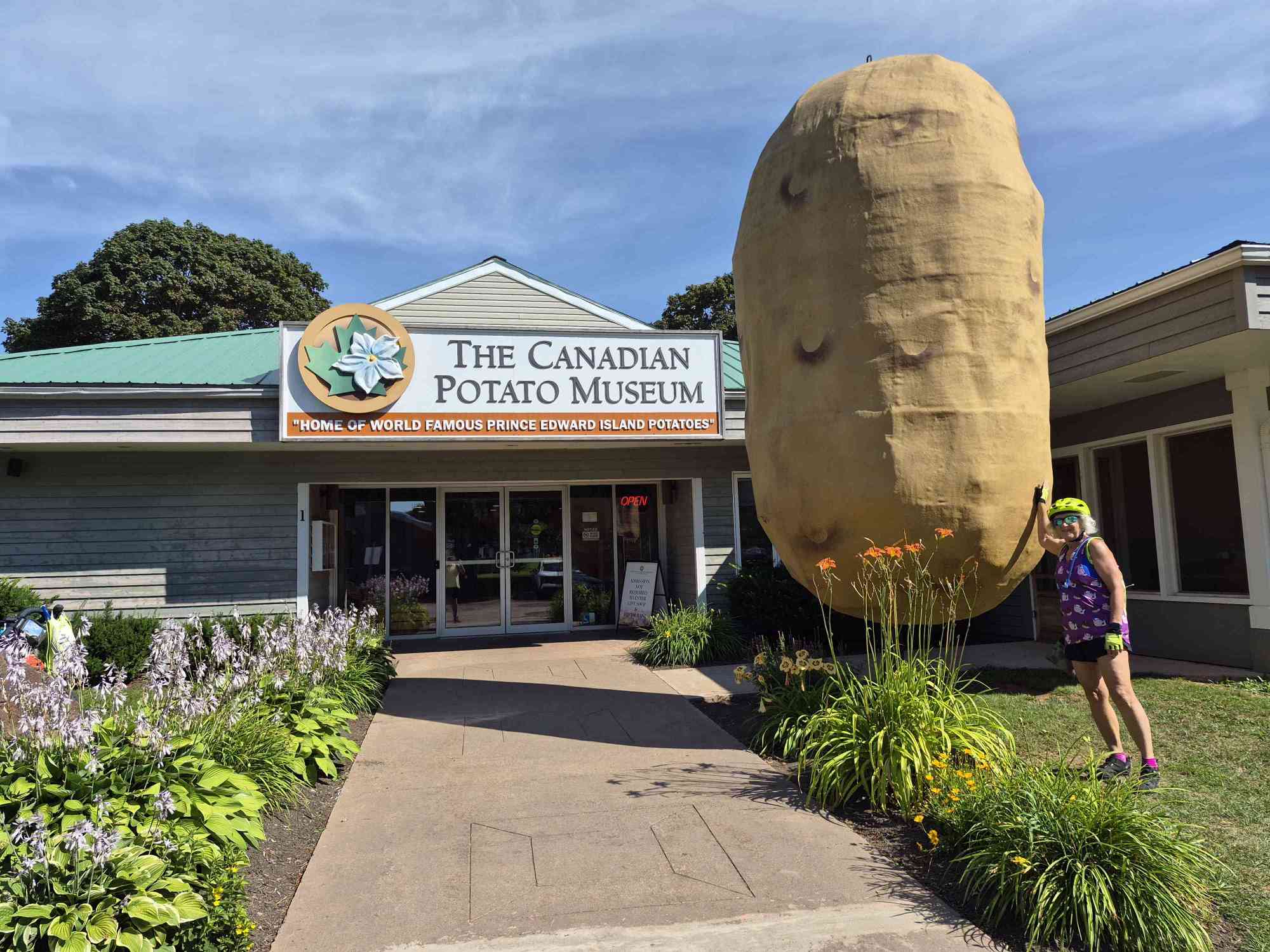
 Day two’s first stop was the Canadian Potato Museum in O’Leary. There we learned that islanders pronounce potato as “podado”, how podados are planted and harvested and what podados infected by viruses, fungi and bacteria look like on the inside. For those keen to partake of podados, they serve them baked, fried and stuffed. From there we had a brief stop for dirty sodas in Richmond, and visited the Bishop Mill visitor center in Wellington (the home of many Acadians). Our landing spot was Summerside on the southwestern part of the island on the water. Summerside is the second largest city on PEI, population 14,000. The clouds were rolling in and we expected that our third day would be a wet one.
In the morning, we noted the blackened skies and a few miles up on the trail, the lightning seemed to be crackling right next to us. We decided to take shelter on the porch of a B and B and as the rain poured down, three little girls in a home across the way waved to us from their open garage. Soon enough, a woman in braids carryi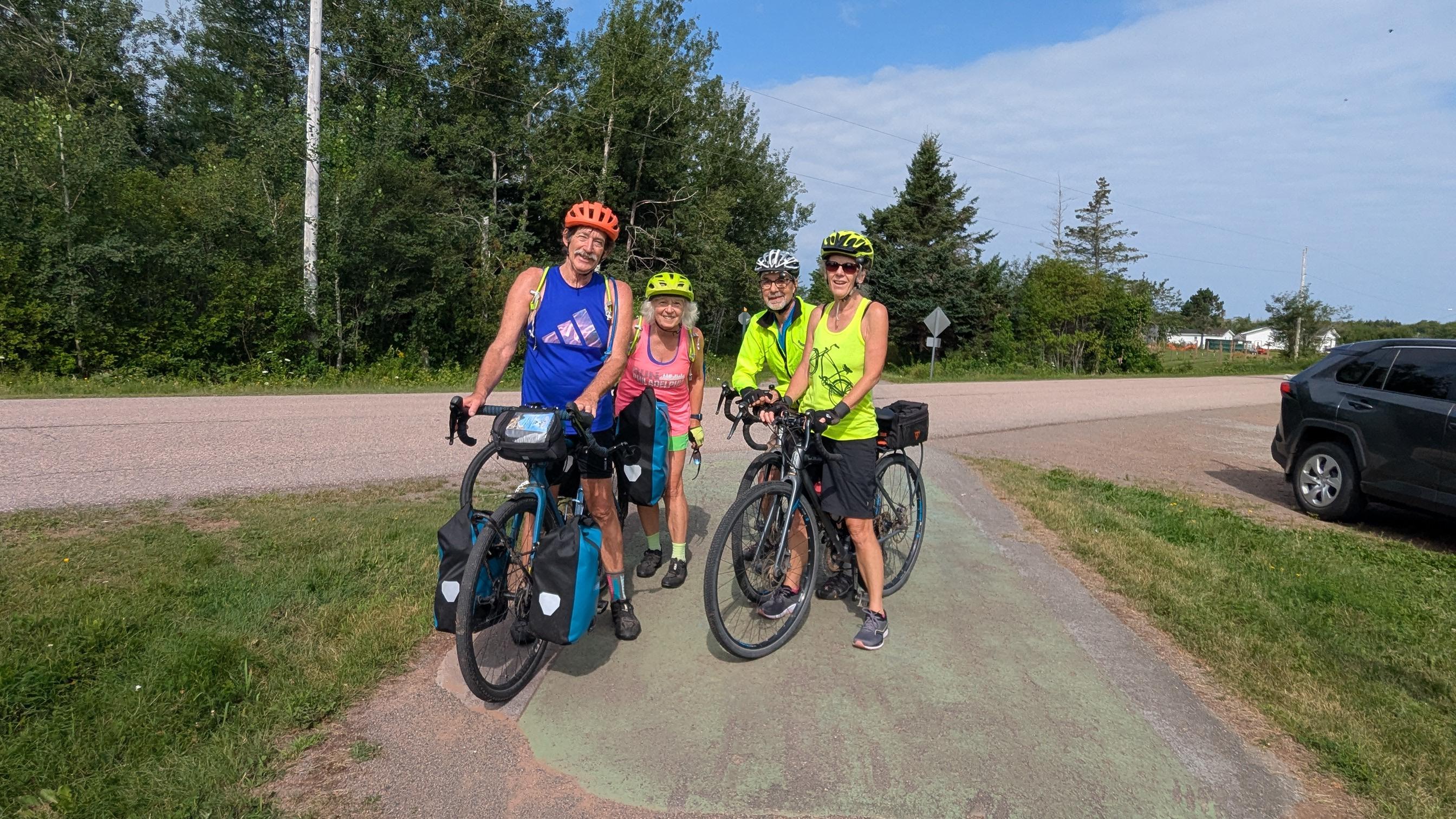 ng a load of sheets walked onto the porch and asked if we had a reservation. We politely said we did not and were only borrowing her shelter. Her three granddaughters, all under 10, in long printed dresses and bare feet, studied us intently. When the lightning subsided, we put our yellow rain coats and pants back on and began our journey north toward Kensington. It was a cold rain and we were forced to cycle through many gigantic puddles splashing up against our shoes. In Kensington, we took advantage of a café with warm soup, grilled sandwiches and cappuccinos. We had a date to keep with Mad River Valley residents, Doug Schick and Sue Frechette, who planned to take us in their stylish RV to dinner at Dalvay-on-the-Sea. Though the rain significantly slowed our pace we still had a few moments for a hot shower before dinner with Doug and Sue. After a lovely meal in a former mansion, we passed on dessert, opting instead to find a grocery store with dark chocolate ice cream, which we shared in their RV.
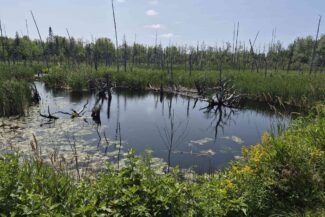
On Day Four, the four of us cycled together for some miles and when they turned back, we made a plan to see them in St. Peter’s for dinner that night. Pat and I continued north, found a place for lunch which served a variety of dirty sodas, milk shakes, sandwiches and chips. All but one table was filled with folks of all ages painting ceramic items while they ate and drank. We were fascinated. As we neared St. Peters we cycled next to swamp grass and salt water marshes and then discovered the welcome center, which served pints of IPA – the perfect end to a 44-mile long day.
Before long we were strolling through the grounds of the Mysa Resort, our accommodation for the night, wrapped in extra-large white bathrobes. We took advantage of the relaxation room, the large hot pools, the outside fire circles and the cold plunge. We could look out over St. Peter’s Bay, filled with mussel farms, while listening to new age music and partaking of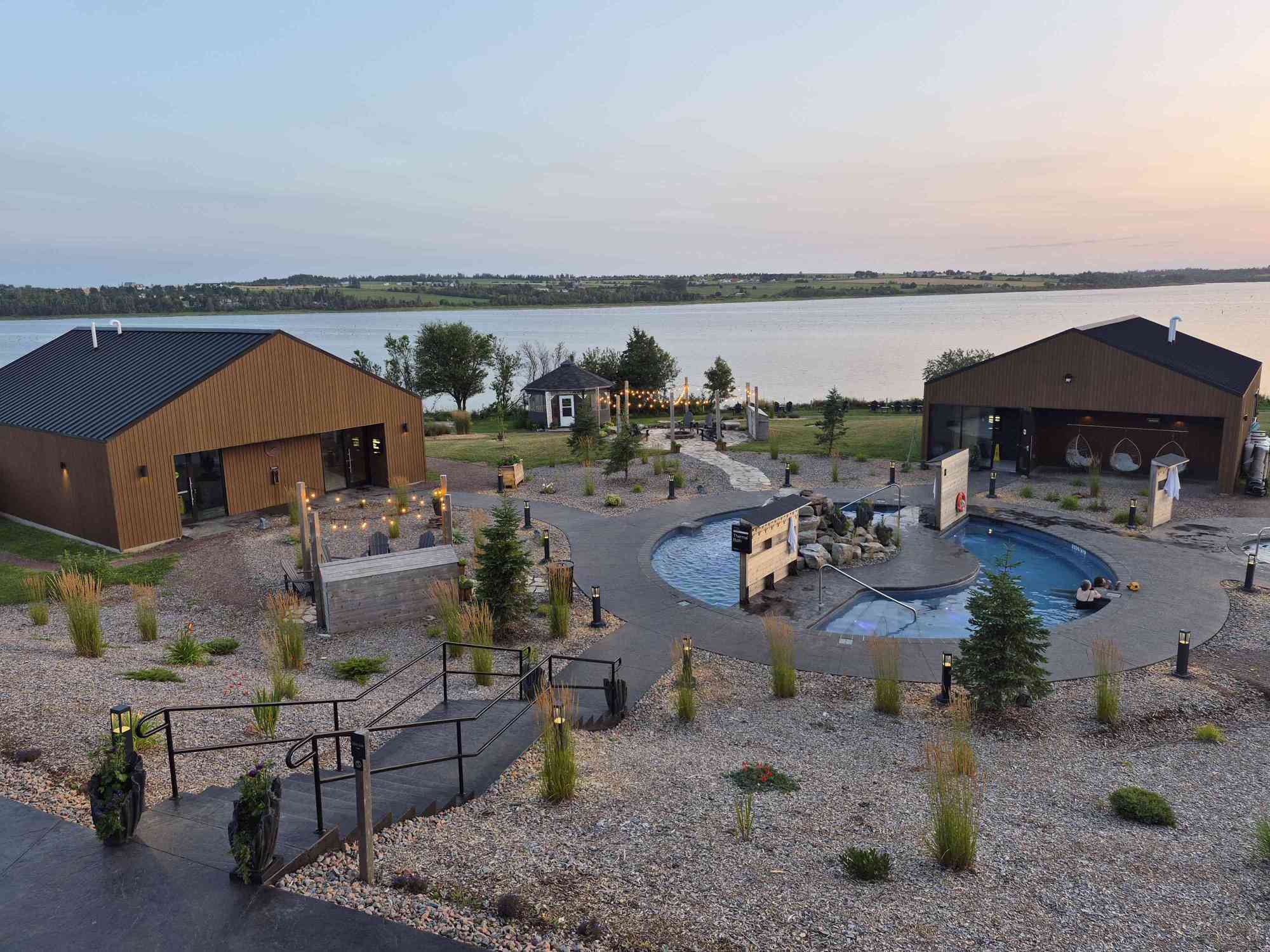 eucalyptus aromas. We did, however, get reprimanded for being too loud.
On Day Five, we met Sue and Doug once more and they cycled with us for over an hour. Much of the time the trail was wooded though we did run into other cyclists and a group of women who are in the process of hiking the entire trail. The trail ended at Elmira, where they have kept the railroad tracks and the former station is now a museum. Inside we found a map of all the former places the rail line stopped. No wonder this rail line was such a fiasco financially. The contractor was paid by the kilometer constructed and the colonial government at the time didn’t put a limit on the number of KMs constructed. There were stops every two or three miles across the island and the line zigged-zagged because of pay offs and lobbying from multiple different townspeople in power. The construction of this railroad was so expensive that it bankrupted the then independent colony. The solution for the islanders, in 1873, was to negotiate with what was then Canada to become part of the Dominion. In turn, the Dominion of Canada took on and paid off the debt. The railroad ope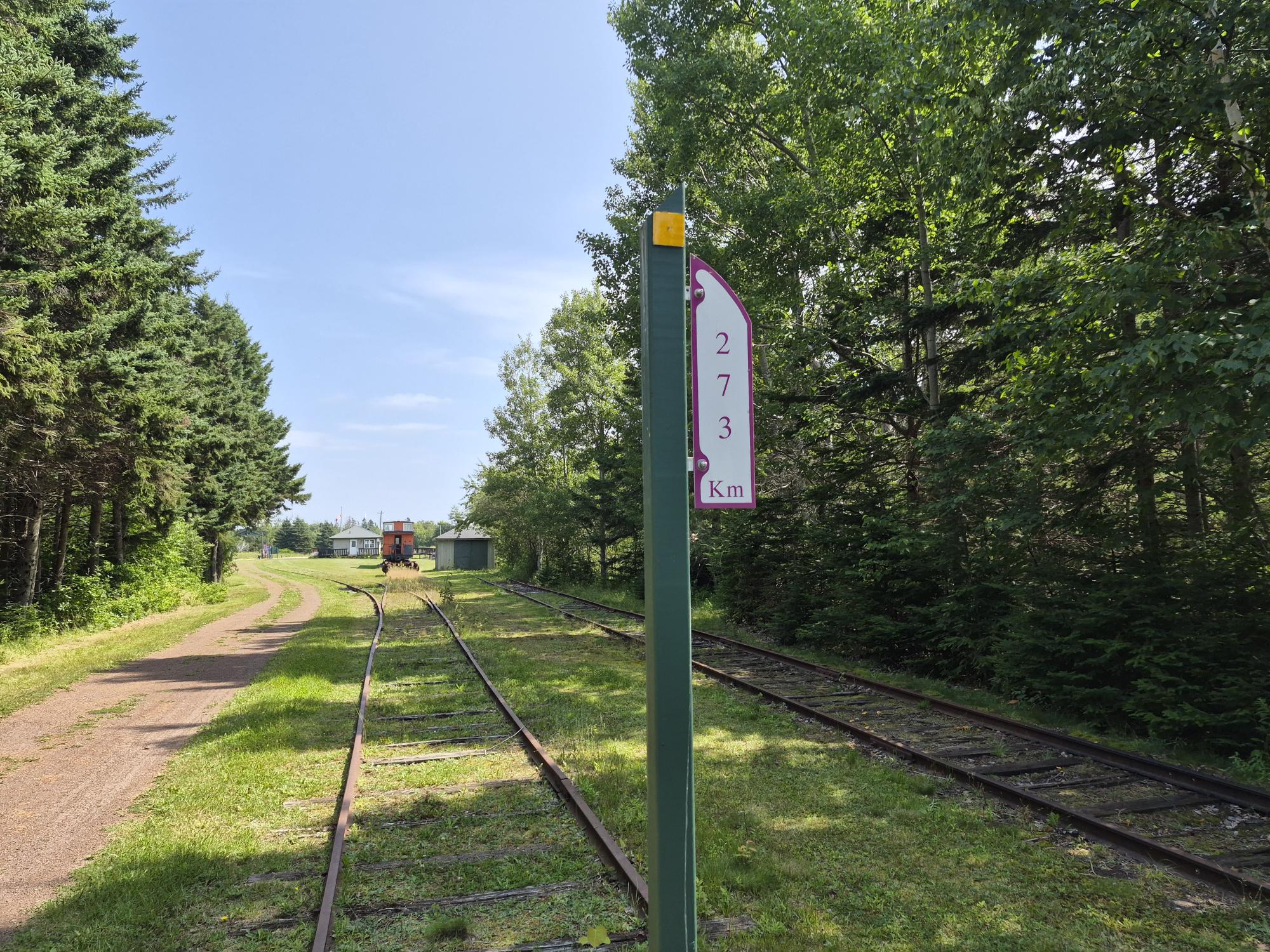 rated from the mid 1800s until the late 1980s when it was determined to be a losing proposition.
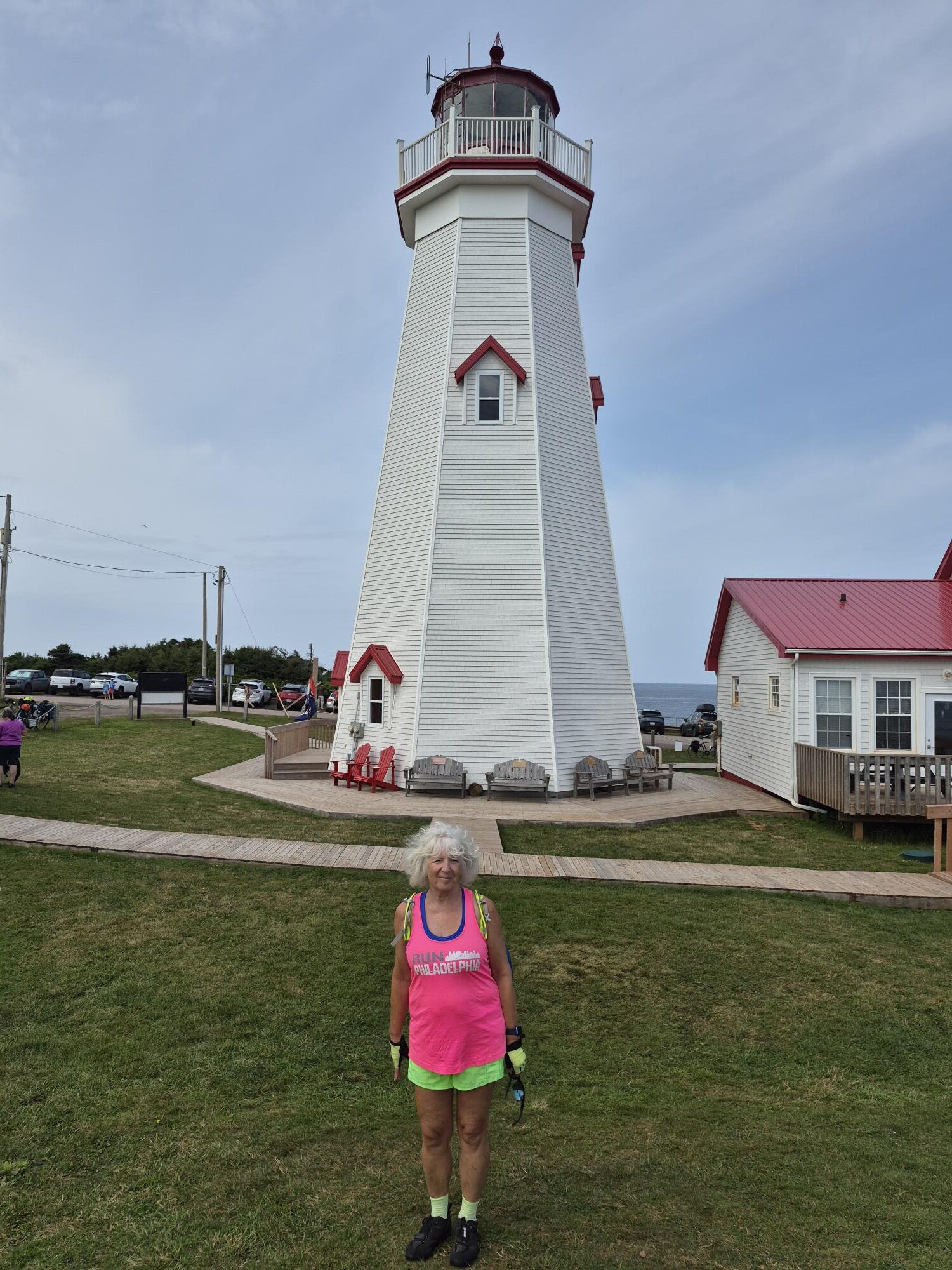
After an extra bit of cycling, this time on roads, to the far eastern end of the island, end we visited the East Point Lighthouse, constructed in 1867, and then cycled back to Elmira for our shuttle back to our vehicle in Charlottetown and our last night on the island. Next week we plan to cycle around Lac Saint-Jean in Quebec.