How it's Going

Blog

Nuggets of Gold we Found in the Black Hills

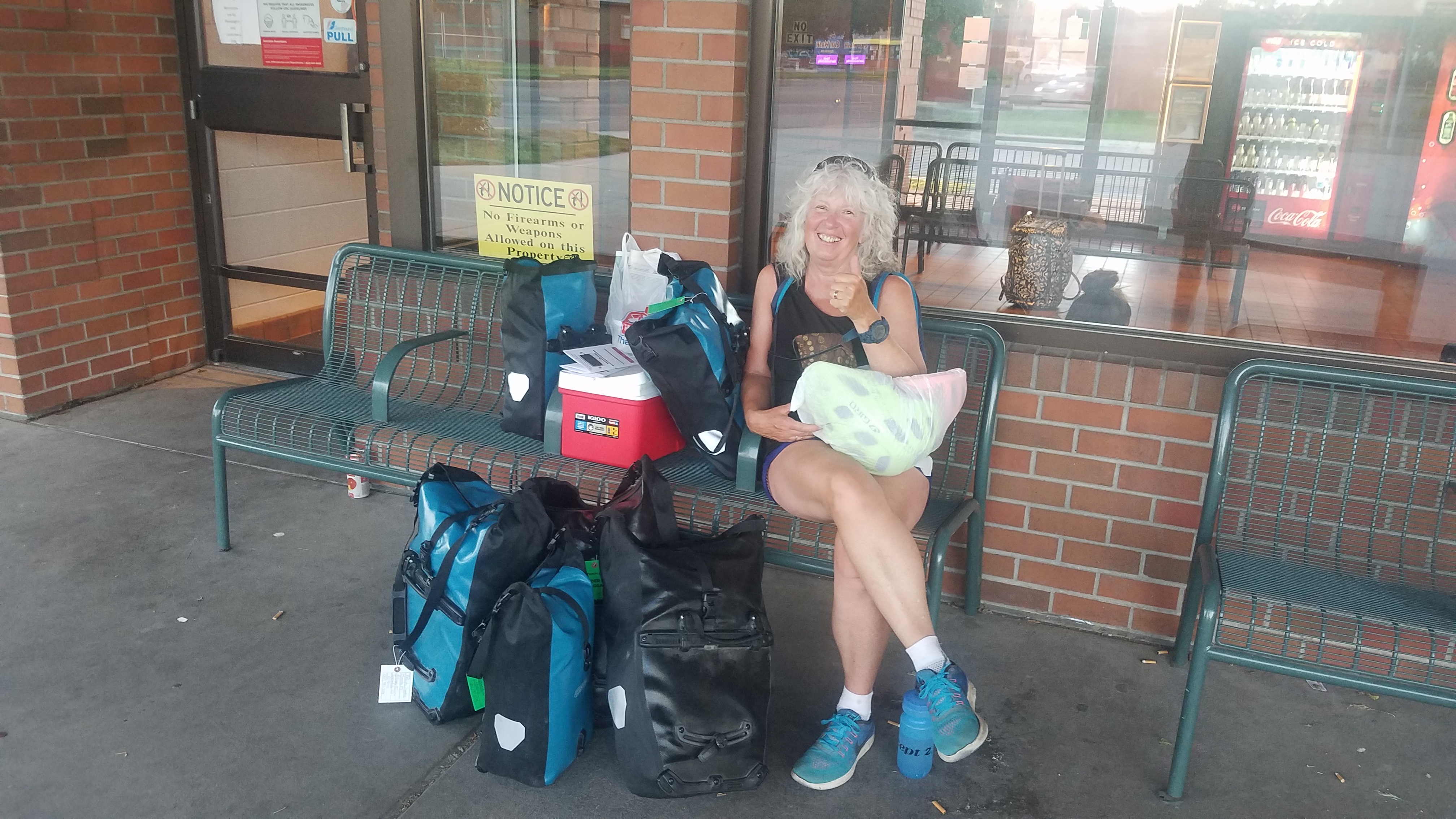
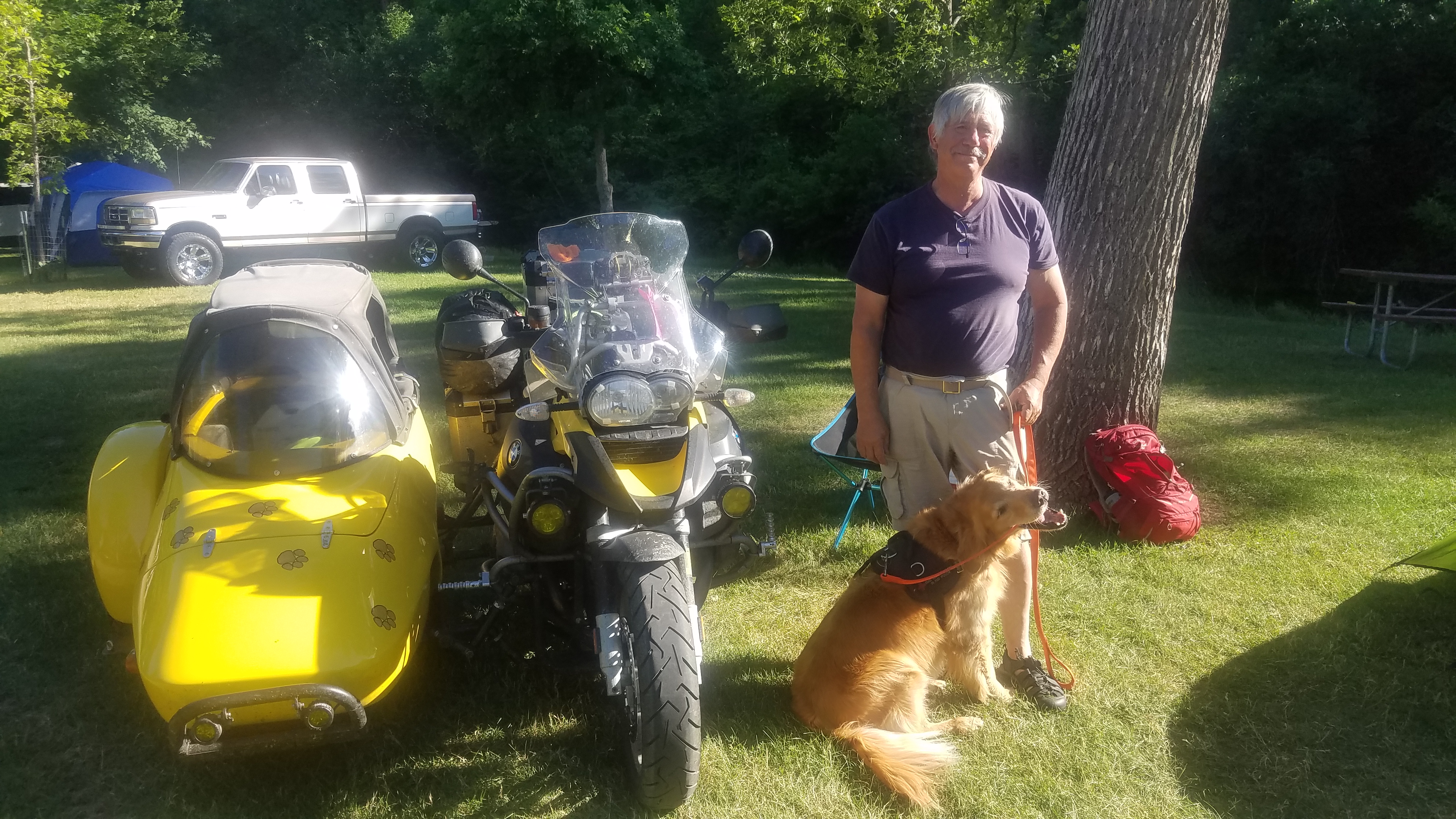
Over the past several days Pat and I have found many nuggets of gold in these here Black Hills. First, while patiently waiting for our bicycles to arrive from Missoula, we camped for three nights in the town’s campground next to a babbling brook, an historic fish hatchery and the town park, equipped with six pickle ball courts, a polywood playground and an open-air amphitheater. We met other cyclists and we had a beer with Pete and his golden retriever, GlenLoveIt, (a therapy dog) from Craftsbury, Vermont. They are traveling the country this summer on a BMW motorcycle. Glenloveit rides next to Pete in the yellow side car. In the past, few years they have logged 22,000 miles together.
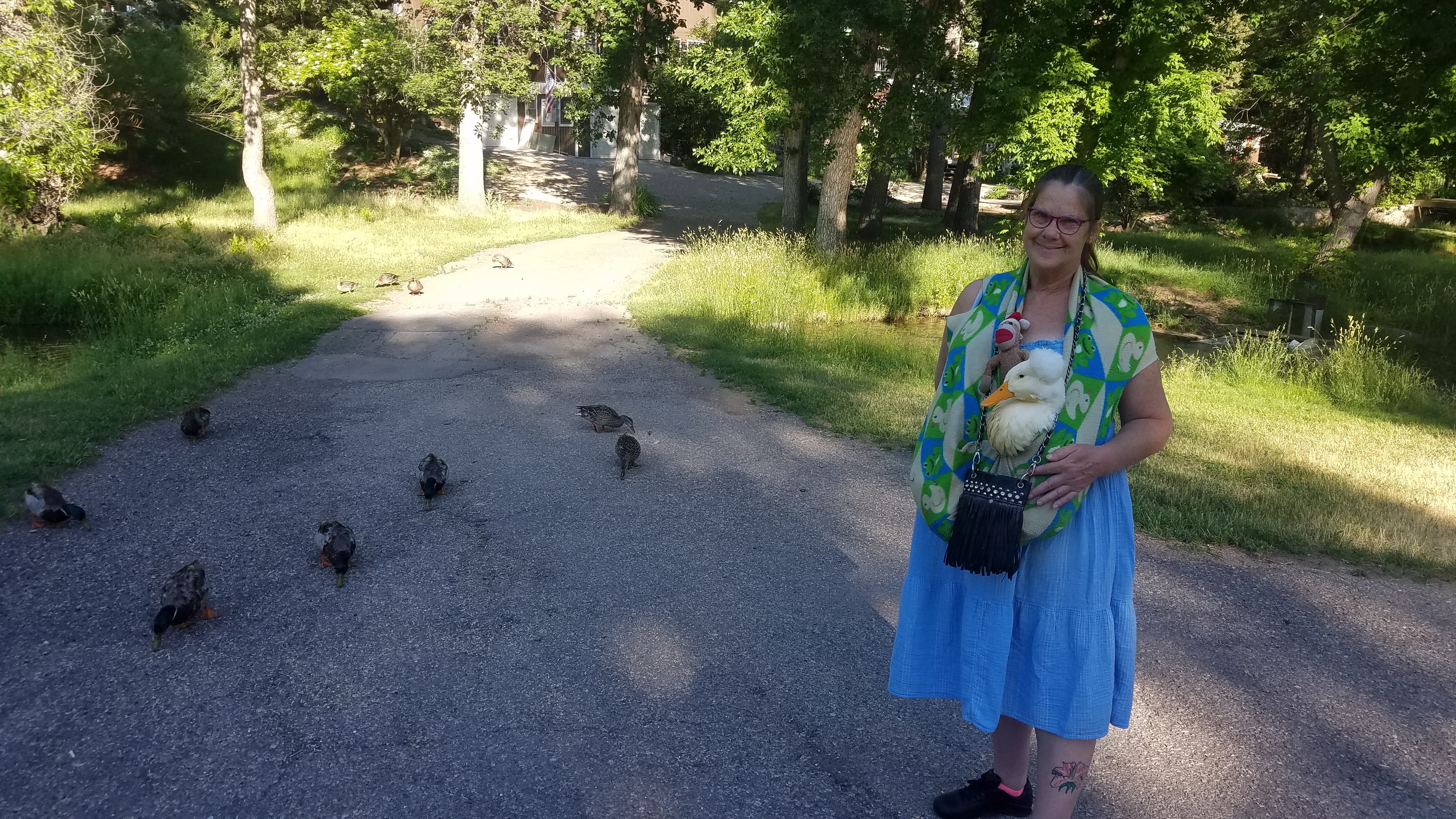
Every morning, 365 days a year, Kerry Sue and her therapy duck, Mr. Duckery Doo, (who she wore in a baby sling of sorts) come down to feed all the wild ducks in the park.  Mr. Duckery Doo will only eat if he can share his food with the other ducks. “He is the best kind of partner for me,” she said.  “He doesn’t talk much and if when we get irritated with each other, we take our private time-outs.” 
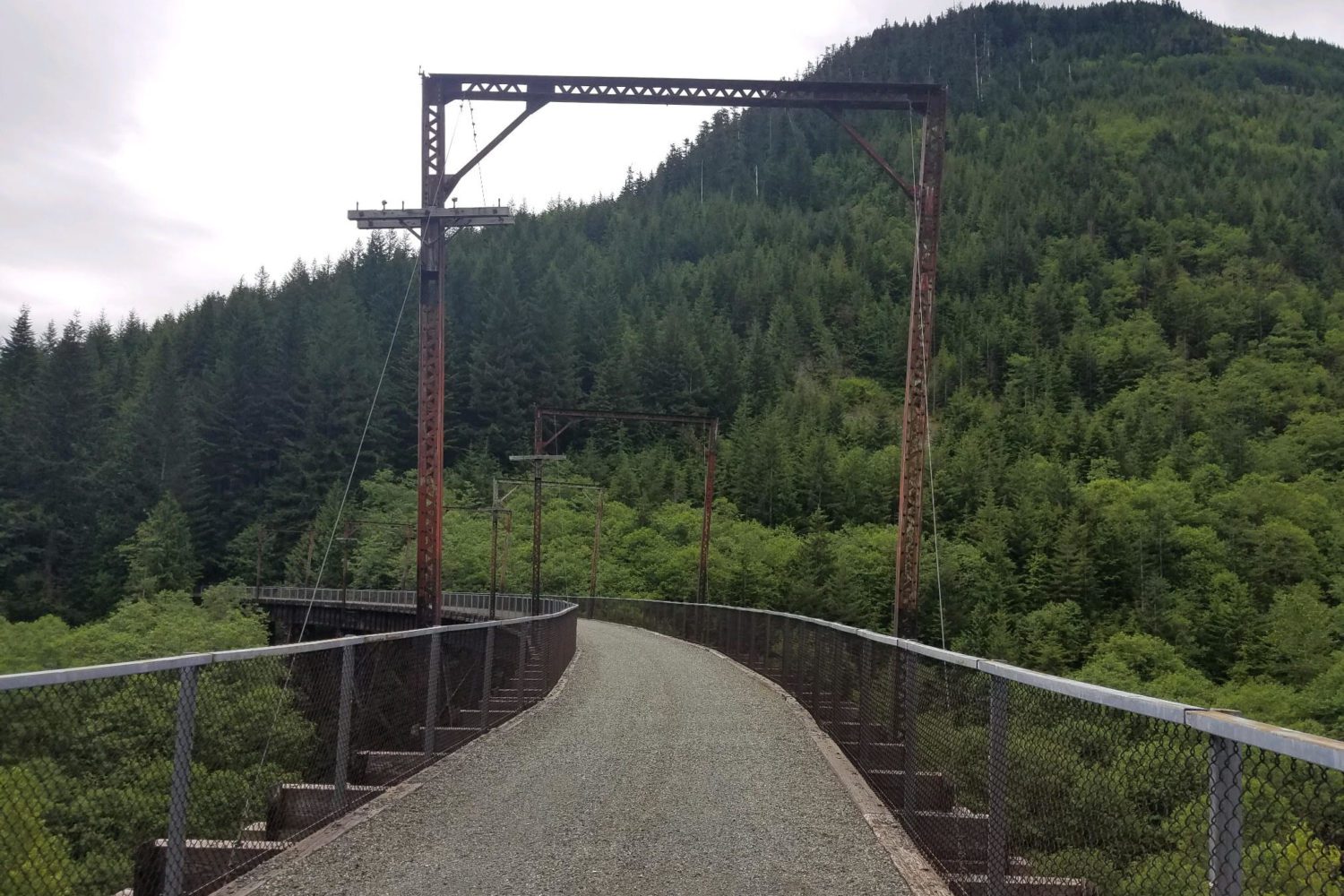
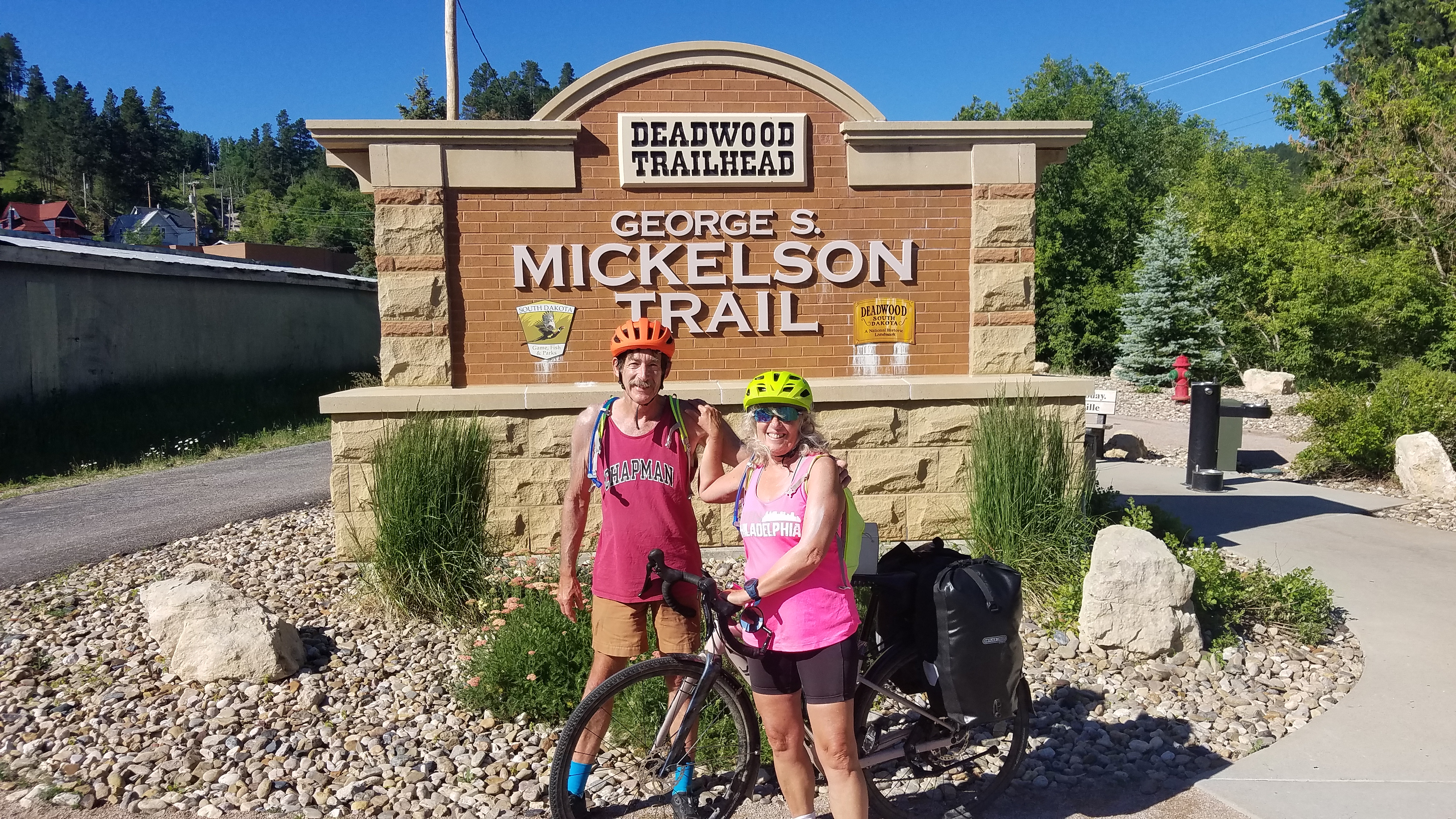
On Friday, bikes ready to go, we caught a shuttle up to Deadwood, the start of the George S. Mickelson Trail. This trail is a former railroad that was first built to carry supplies and passengers during the gold rush years, it is 108 miles long, has 100 trestles, four short tunnels and involves plenty of uphill climbs and downhill coasting. It was in the Black Hills that Lt. Colonel George A. Custer discovered gold in 1874. As times changed, however, the rail line had less and less business, eventually shutting down completely and removing the rails. Thanks to the efforts of the former governor (for whom the trail is named) and several other advocates, it is now a cycling destination.
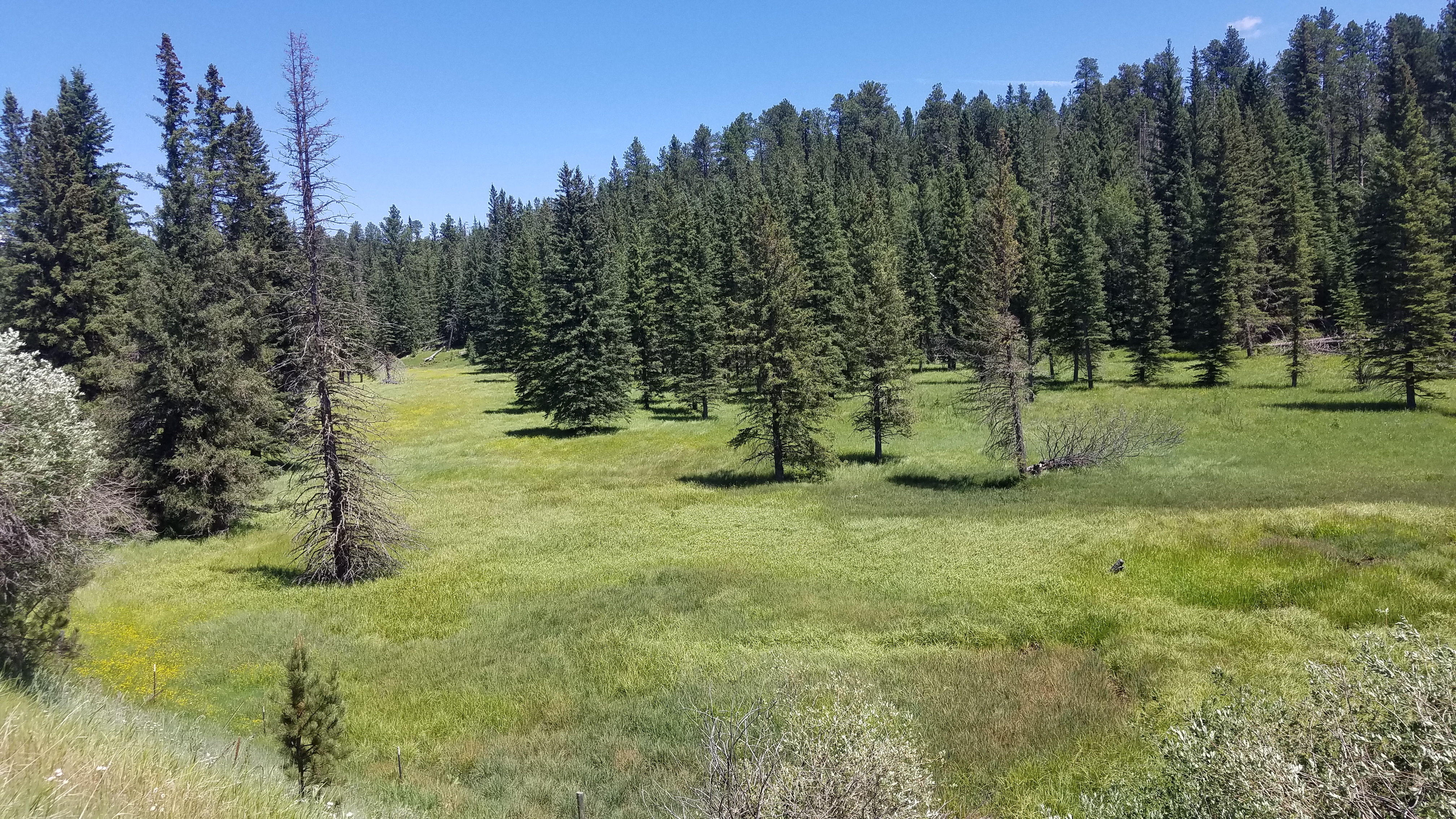
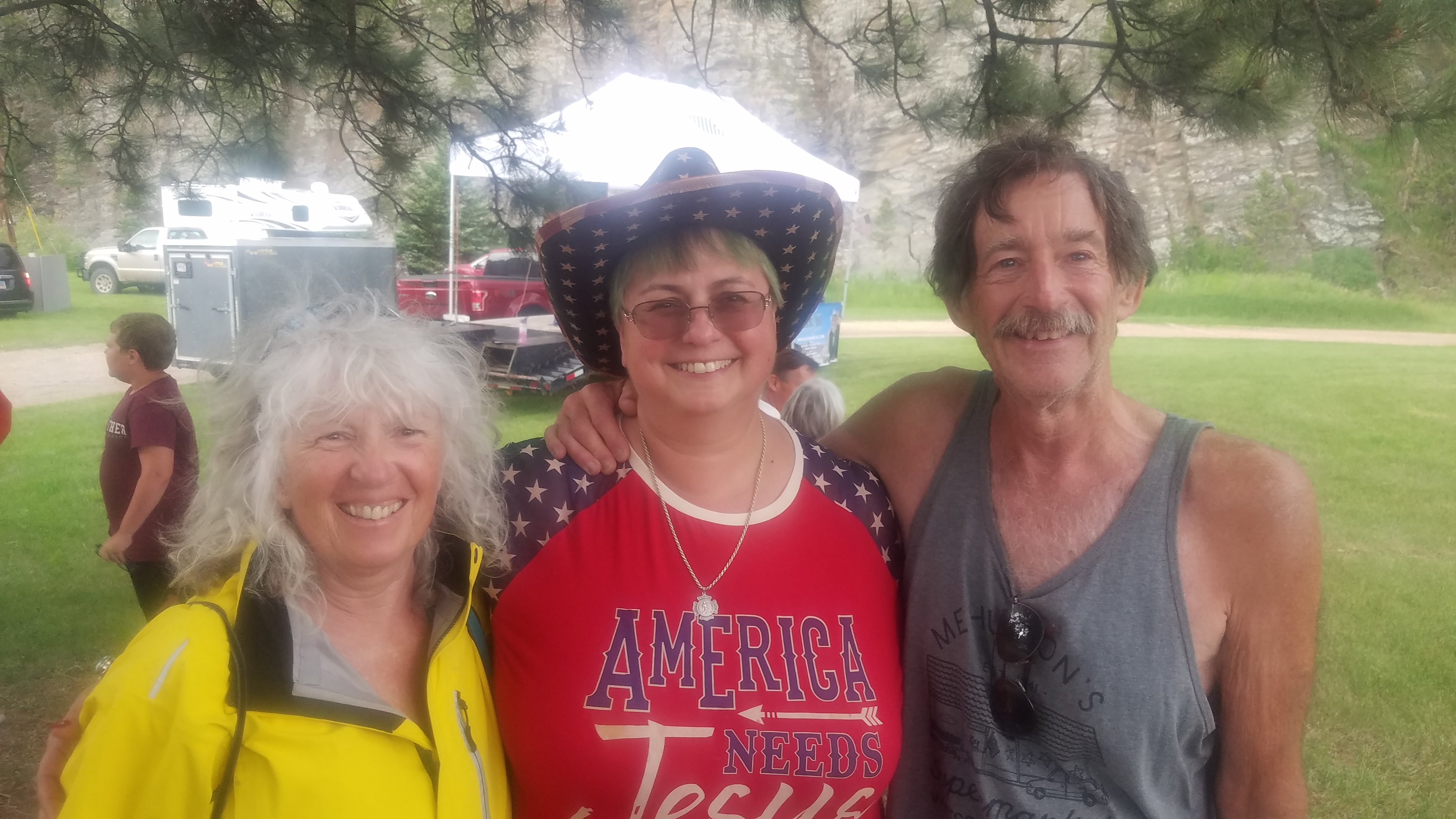
Our goal for the day was Hill City and by the time we arrived we were fairly exhausted from the climbs and the heat of the day. Hill City had advertised several celebratory events for July 3rd and we decided to stay on to catch the parade, (the first one they have had in 28 years) partake of the pie and ice cream social and hear the Rusty Strings Band and Jill and Allen, known for their fine cowboy songs and to meet Mayor Kathy.   
On the morning of July 4th, as we were packing up, our tent neighbors invited us to join them for a hot cup of coffee. That was a true nugget of gold as we are not carrying anything to heat up food or water. Thanks to Shane and Victoria and their children for the lively conversation.

Another long uphill climb brought us to the road next to the Crazy Horse sculpture.  A fellow rider told us a little bit about the sculpture and then warned us that there was lots of sand on the trail ahead of our descent into Custer. He wasn’t kidding. We arrived in Custer, in time for a dedication of a new US flag complete with the color guard, the singing of the national anthem and a gun salute.
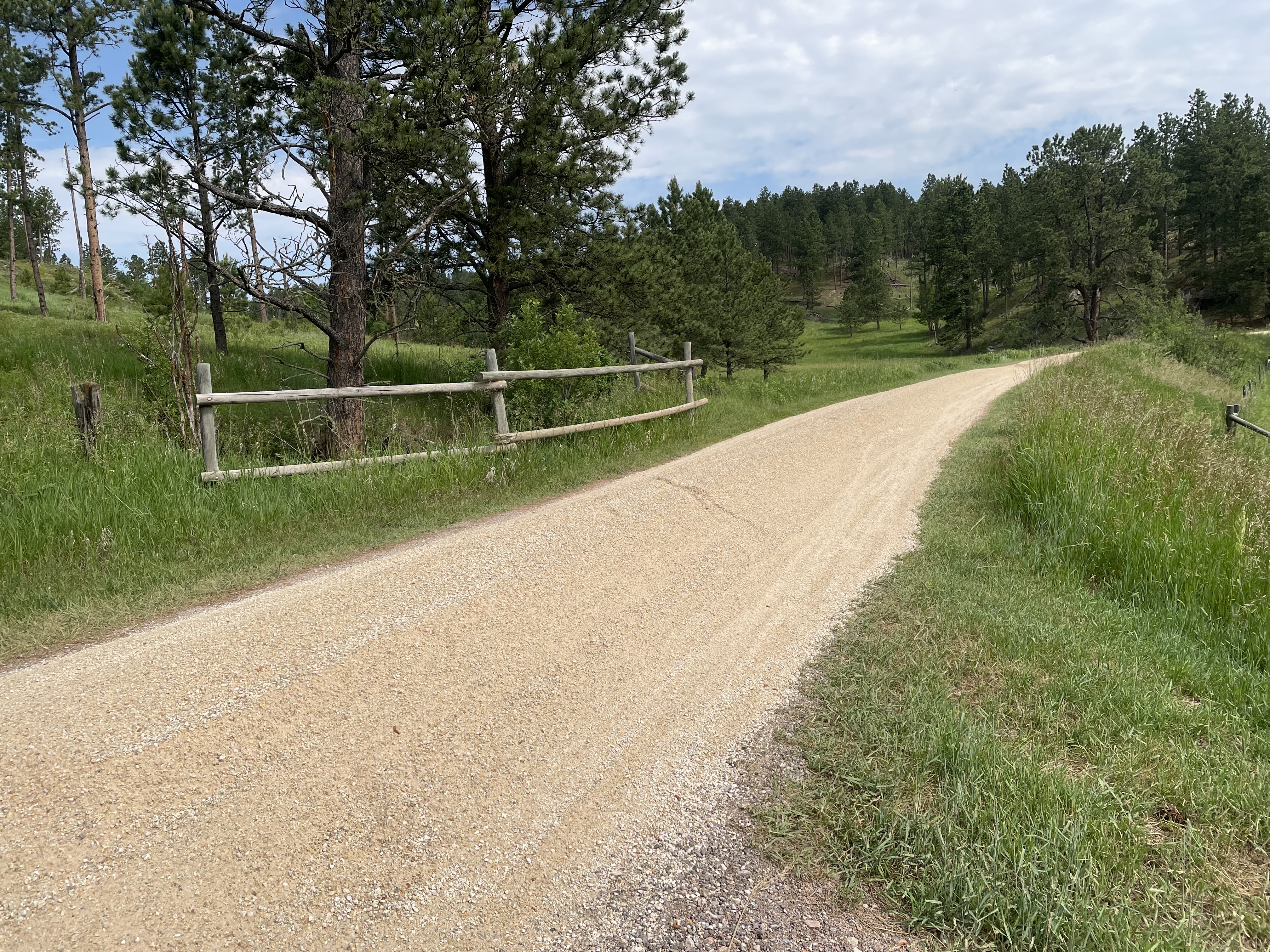
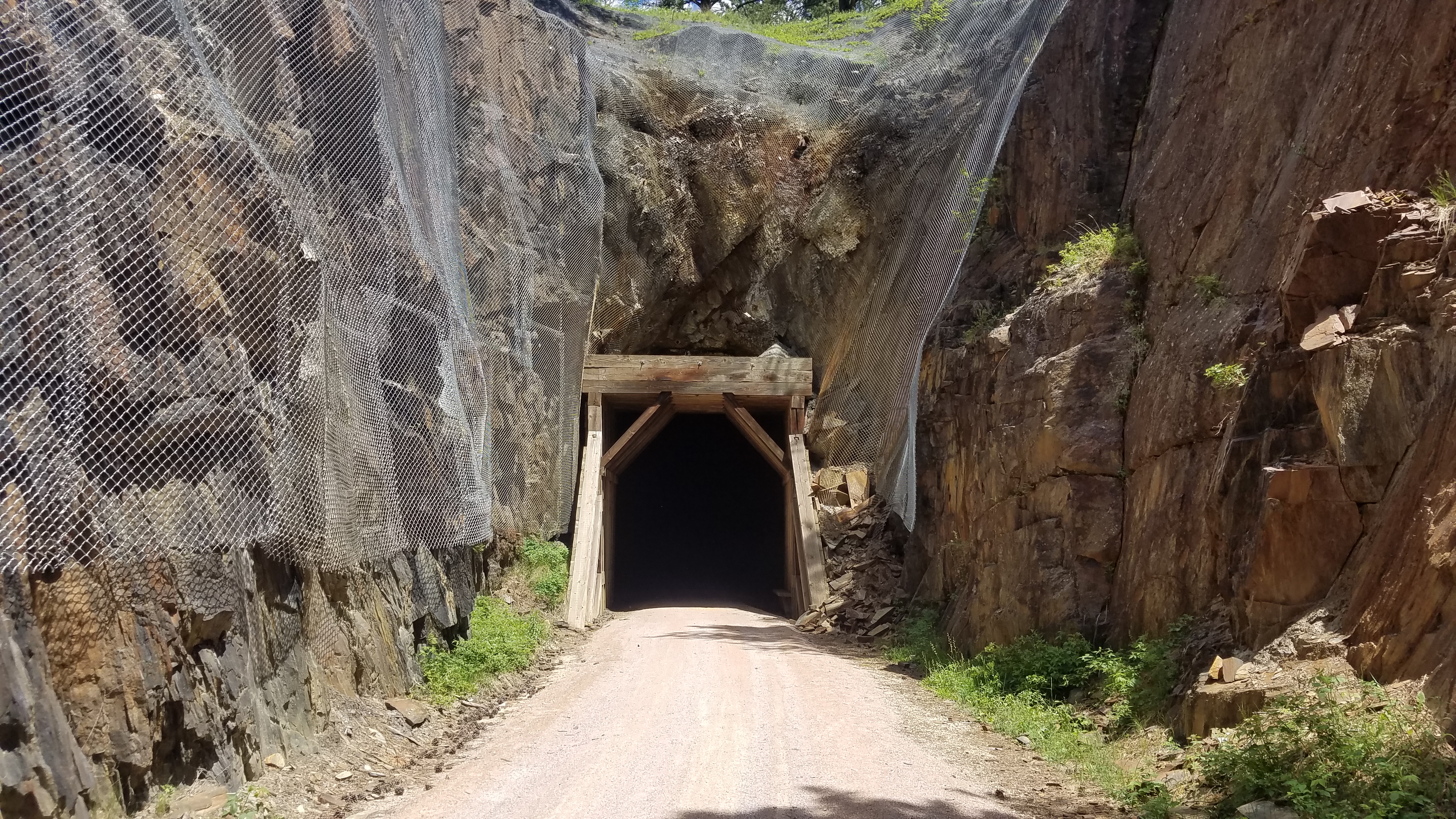
On the other side of Custer, we crossed paths with Shane from Prescott, Arizona. Shane is loaded down with plenty of gear, a few bicycle flags and has been traveling since early May. We think we may run into him again as we near Washington DC. Shane told us we had about 30 miles of a downhill grade into Edgemont, our final destination. Sixty miles later, we arrived and the bank sign’s temperature read 96 degrees. Other than an exhausted dog sauntering in the middle of the road, Edgemont was eerily empty as was the campground. Though there were eight RV’s at other sites with air conditioning running, there were no people. (More about what we discovered in a subsequent blog) Ready for dinner, we cycled to the nearest open restaurant and shortly thereafter met townsfolk, Frank and Peggy and George Lingo and his former wife who traveled for their meal in a golf cart. Frank and George are musicians and Frank gifted us with one of his CDs.

Back at the campground, fireworks were being set off everywhere or so it seemed.  Add to that a wicked wind storm with lightning in the distance and the constant freight trains passing through meant sleep was out of the question. At 11:30 p.m. three vehicles pulled up next to the campground and began setting off a barrage of fireworks in the abandoned tennis court very close to our tent. After enduring this for 25 minutes, I checked in with the local 911 dispatcher. Her response was classic. “We have an ordinance here that says fireworks can be set off until 12:01 a.m.  They have six more minutes of time. “And indeed, just had she had stated, they shut them down at 12:01 a.m.

Shevonne and Pat

Follow us as we spin our wheels


The Executive Decision

If any of you have studied the map of the Great American Rail Trail (GART), you probably noticed that that there are several rail trails in place that stretch from Seattle almost to Missoula, MT.  Then, with the exception of a five-mile stretch here, a ten mile stretch there, another two-mile stretch there, there are several hundred miles of no GART segments through the balance of Montana and Wyoming. Thus, Shevonne and I had to make an executive decision about how to address this huge gap.

To get through the rest of Montana and Wyoming on our bicycles would have entailed riding several hundred miles of two-lane highways, such as US 12, where vehicles, including large trucks, typically travel at 70 miles per hour.  Some portions of these roads have very narrow shoulders.  There are also many stretches where there are no towns for 40 miles or more. Most of it is prairie land with no trees to provide any cooling shade.  And the temperatures this week in Missoula have been hovering around 100 degrees.

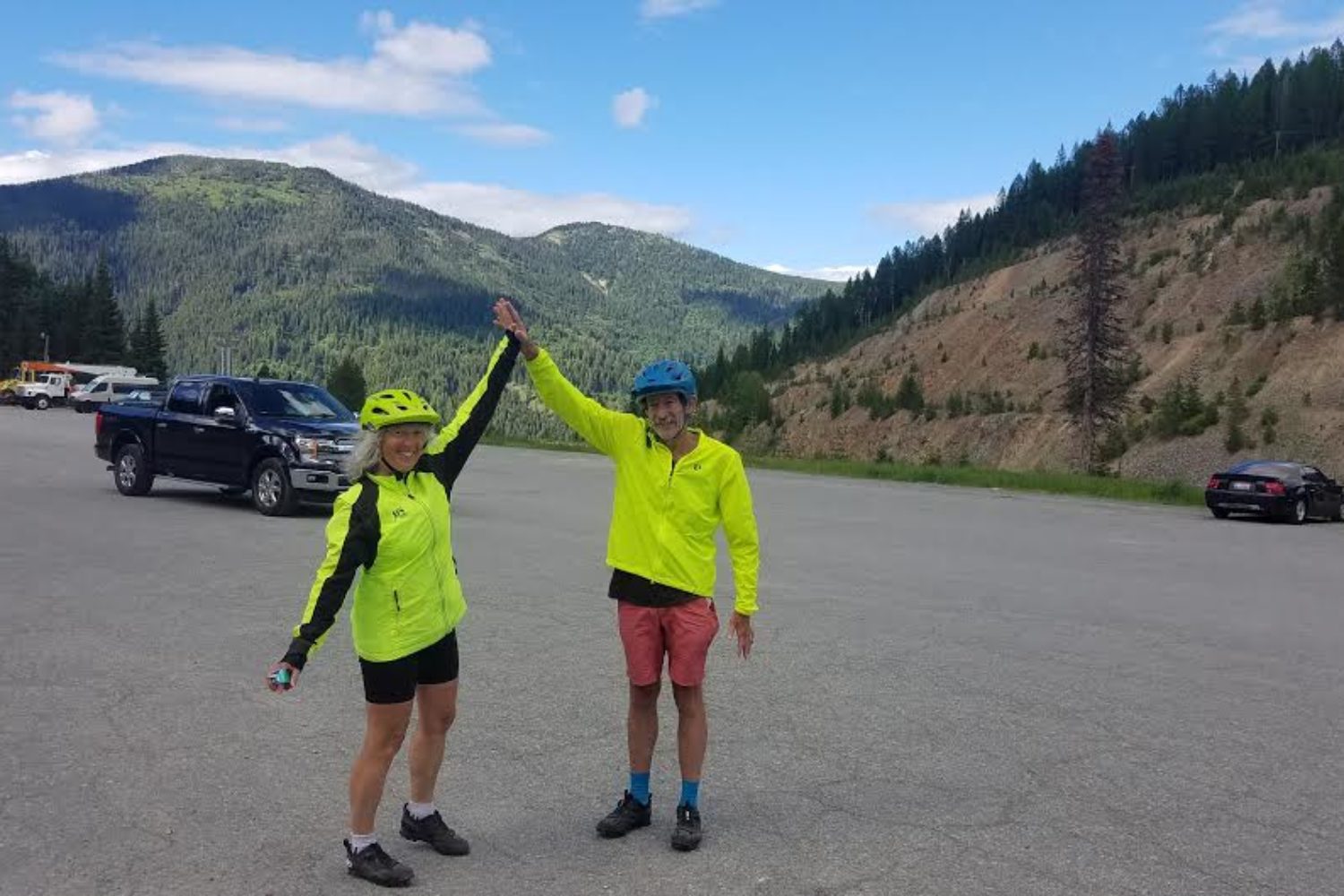
Considering all these factors, Shevonnne and I made the hard decision to fast-forward our trip to Spearfish, SD, in the Black Hills.  From Spearfish, we will resume our ride eastward, picking up the Mickelson Trail, a 106-mile long converted rail bed that has received rave reviews since opening in 1999.

Fast-forwarding our trip to Spearfish necessitated some logistical challenges.  First, we had to make arrangements to get our bicycles shipped.  Thanks to Joe, at Spotted Dog Cycles in Missoula, we learned about shipbikes.com, a service that specializes in transporting bicycles. We paid Joe to disassemble our bikes and pack them for the trip to Two Wheeler Dealer, a bike shop in Spearfish.

And then we had to get ourselves to Spearfish.  We found one bus that runs from Missoula to Spearfish and we bought two tickets. Sounds simple enough. Then, we had to deal with the bus ride, which became its own adventure.  The daily bus to Spearfish leaves Missoula at 10:20 PM and arrives at Spearfish at 10:30 AM the next day, and it includes a transfer in Billings at 4:30 in the morning.  Trying to get decent sleep on a bus is difficult enough, but when other riders are carrying on conversations, making calls on their phones, and playing music, it becomes nearly impossible. Add to that an inebriated man who boarded the bus in Butte and started yelling things out and a near fist-fight and the ride became downright terrifying. Needless to say, when we finally got to Spearfish, we were glad to be off the bus and we have sworn to not ride any more overnight buses.  It’s a different world on those. Our first driver was struggling and very out of breath and our second driver was 80 years young and after retirement as an airplane pilot took up driving buses.

As I write this update in Spearfish, we have just heard that our bicycles have arrived at Two Wheeler Dealer. That means that Mike, the store owner, can get to reassembling them.  We are hoping to be “back in the saddle” by tomorrow or the next day.

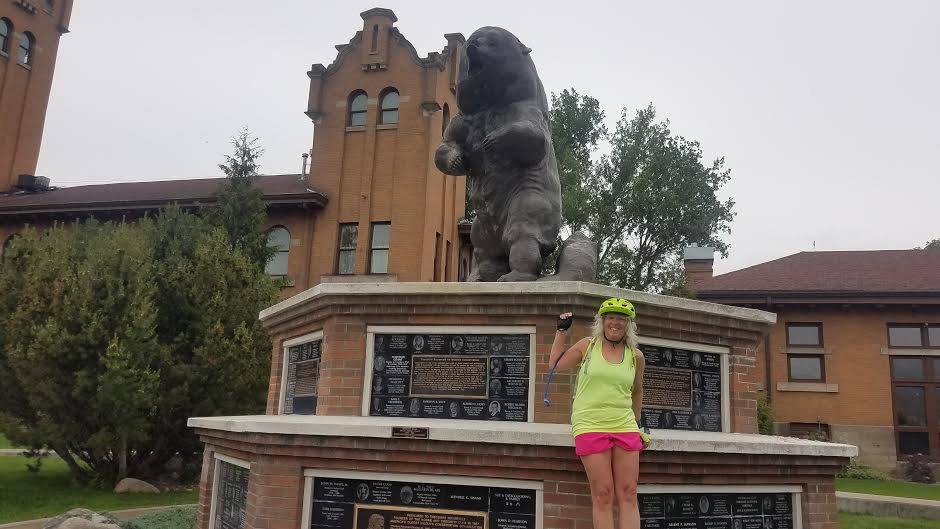
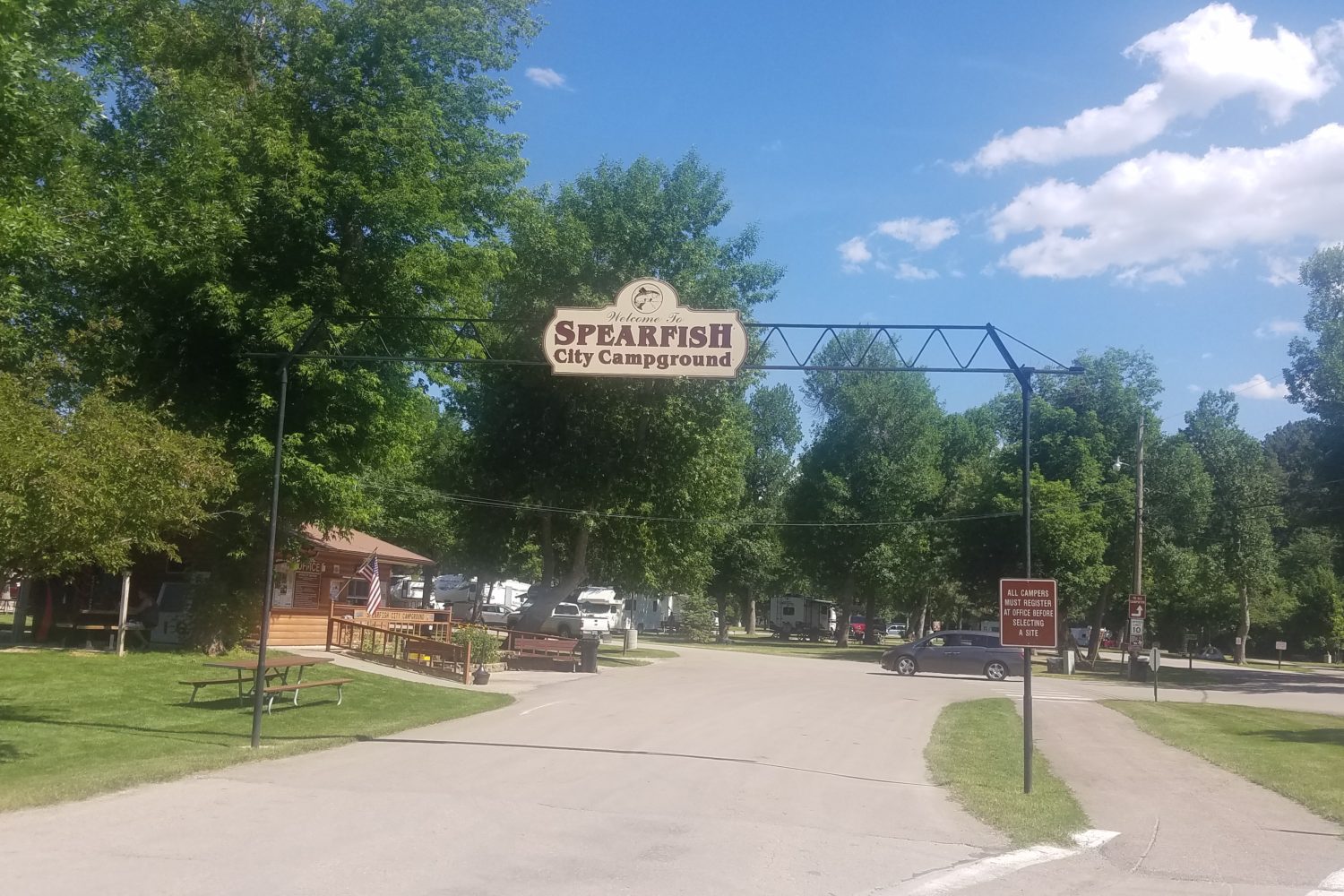
Spearfish is a very attractive and vibrant town of some 10,000 people, located at the northern fringes of the Black Hills of South Dakota. It houses Black Hills State University, has an opera theatre, is home to two micro-breweries and features artisan galleries.  It also hosts a beautiful municipally-owned campground, where we have been very happy to spend some nights, waiting for our bicycles to be reassembled.  It certainly has been a nice place to be “marooned” for a little while.

Pat

Follow us as we spin our wheels.


And Then There Was Montana

There we were in Mullan, ID, on Sunday, going in multiple directions to locate the Northern Pacific (Nor Pac) Railroad Trail. No signage in any direction though a helpful Sinclair gas station employee did provide some guidance. And after coming across two other cyclists also trying to locate the trail, we all finally found it. The goal now was to climb up to Lookout Pass, some 12 miles upward to an elevation of 4,710 feet. Once at the pass, the trail promised 14 miles of downhill coasting to Saltese, Montana.

The climb upward seemed fairly easy given that it was a railroad grade.  However, it was at the top of the pass that we faced a quandary. We were informed that the US Forest Service had just closed the Borax Tunnel, a necessary part of the way down, 24 hours earlier, because the tunnel is in imminent danger of collapse.

Our only route down, according to a Lookout Pass ski area employee was to ride down I-90 with those thundering fast tractor trailers. I absolutely refused to do so, leaving us with trying to find another way to Saltese. Should we ignore the tunnel closure and gamble our way through in the dark? Or should we, according to another employee, attempt to find the correct ATV trail shortcut (there were so many) that would guide us around the tunnel safely?

As we slowly cycled down over the rock-strewn trail, a family of ATV riders, appeared at just the right moment from the opposite direction.  We stopped them and asked them about the tunnel. They had driven the tunnel detour and they indicated their tire tracks were still easily visible. “Follow them, we spun our wheels” they said and “you will be fine.” By 8 p.m. that evening we were finally in Saltese, a tiny community, too exhausted to have more than a cherry soda with some Washington State cherries. We stayed in a motel attached to a real general store.

Monday morning, full of newfound energy, we were back on the Milwaukee Road trail (the one that we had crossed Washington on). This Montana section is named the Trail of the Olympian and it was only 200 feet, via a connector, from yesterday’s Nor Pac Trail. In Haugan, literally in the middle of nowhere, we stumbled upon M’s Drive-Up Espresso and Smoothie Stand.  Hmmm, who would have thought?

Five hours and 23 miles later (the trail was rich with rocks and gravel). we arrived in St. Regis.  After climbing out of St. Regis on a back road, we were treated to wonderful views of ranches and surrounding mountains. We cycled through a section of a National Forest and tired, decided to stop in  Superior for the night.

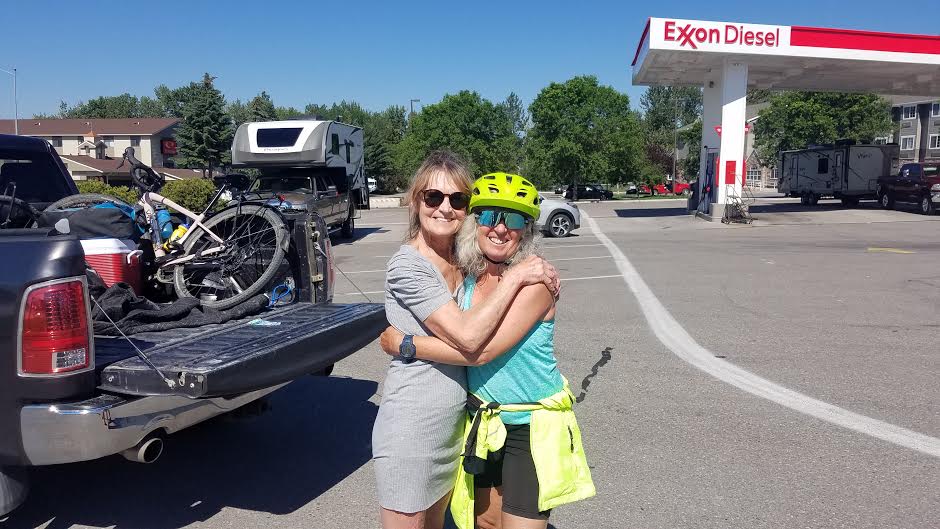
Tuesday was our day to make lots of miles (62) to Missoula and there were no off-road trails. Up early, we made great time 15 miles on Old Route 10, until we suddenly came to an unanticipated dead end. Though Google Maps indicated that the road we needed was right there on the dirt strewn path, instead there was a large yellow sign which read “No Outlet”. The only way to Missoula from here was multiple miles on the interstate. Would we now have to walk or ride on I-90 for 40 miles on a very hot day? As we prepared to walk up the ramp entrance, we stopped for a moment to determine the distance to the nearest exit. And that’s when another trail angel, named Cindy, appeared before our eyes. Cindy, who is about the same age as we are, was driving a pickup truck and going to Missoula for a massage. Yes, she would happily give us a ride.

Cindy told us she was raised in western Washington on a Holstein farm, with four other sisters. She and her family have lived in western and eastern Montana and sold a property that subsequently burned to the ground. Cindy is full of love, positivity and curiosity. On the outskirts of Missoula, we said our goodbyes and shortly thereafter, Pat discovered he had left his cycling helmet in the truck. Whoops – time for a new helmet. Then we found the Milwaukee Road rail trail once again, stopped at the Spotted Dog bicycle shop and then crossed the river into downtown Missoula where we popped in to visit the headquarters of the Adventure Cycling Association.

A gentleman opened up the door and said “Welcome.” “You can park your bicycles here and then come on in for free drinks and ice cream.”  We filled out a small card with our information and they took a Polaroid photo of us, posting it with the other cyclists who have passed through in 2021. We spent several minutes describing some of the trickiest parts of the Great American Rail Trail thus far while we sipped our Coke’s and ACA’s Jeff said, “We had a couple here yesterday who essentially shared similar information.”

Now staying for a few days in Missoula, we have cycled the rest of the   Milwaukee Path, the Kim Williams Trail and the Canyon River Trail. These trails run alongside the Clark Fork River (a branch of the Columbia River becomes gravel-like and heads to a golf course and resort community. This is the end for now of what is open of the GART in Montana

Follow us as we spin our wheels
Shevonne and Pat


The Blue Ribbon Trail

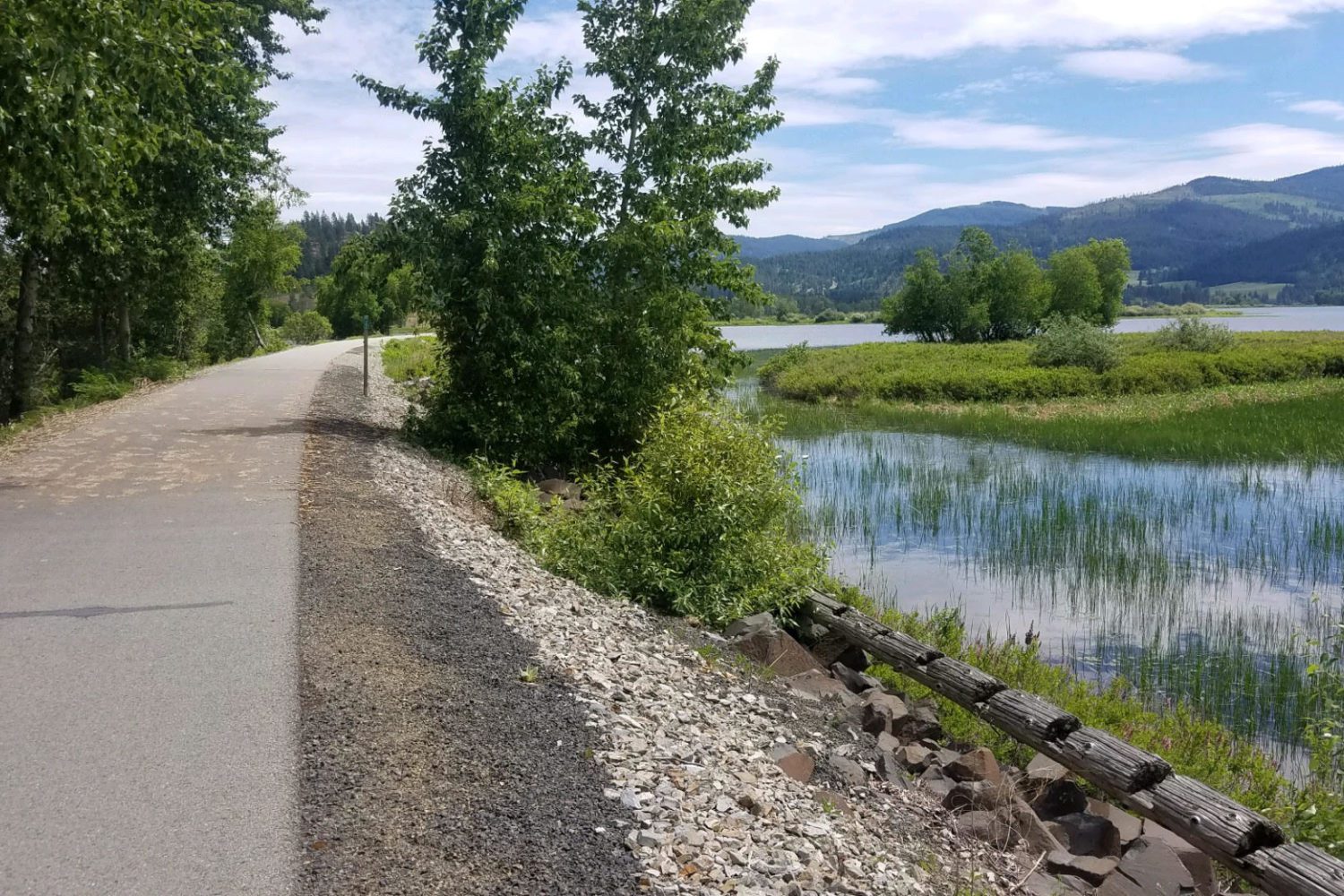
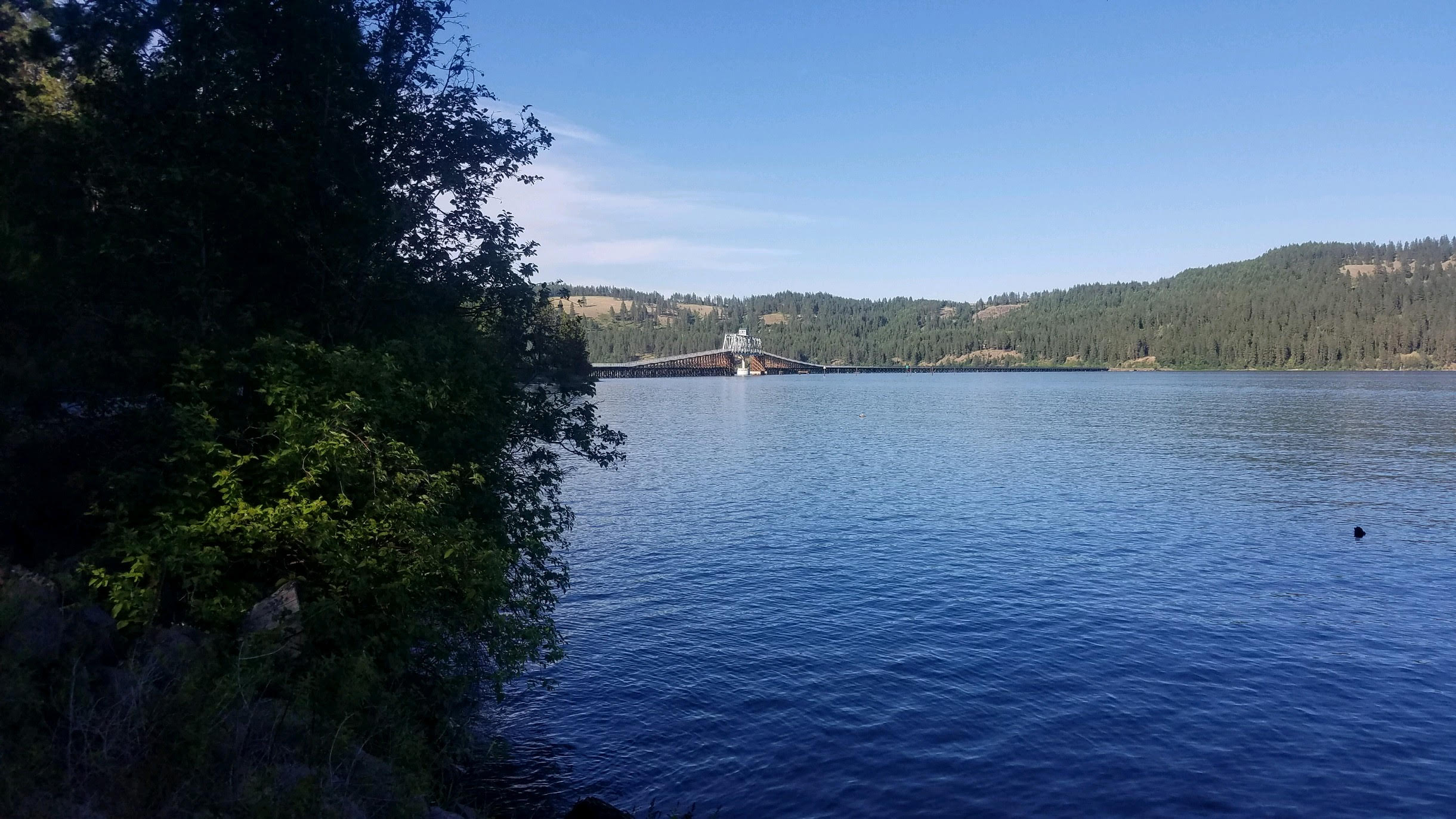
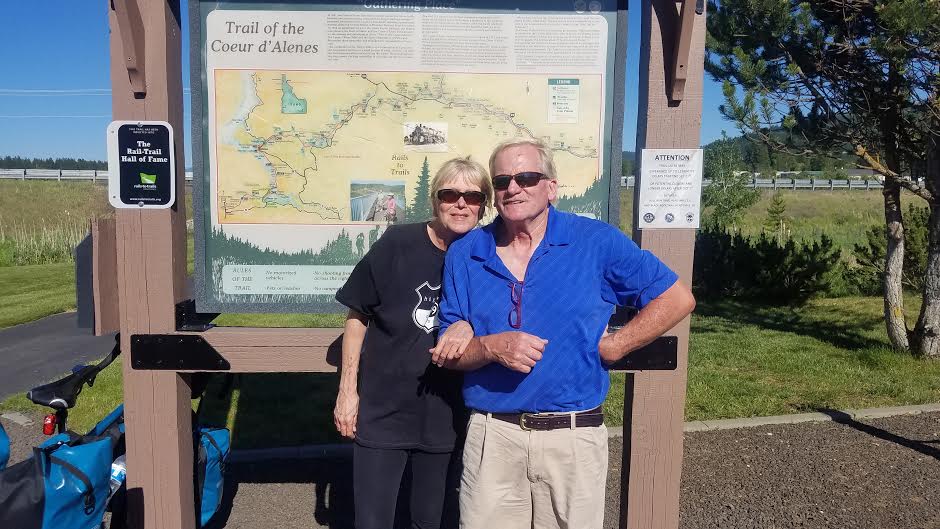
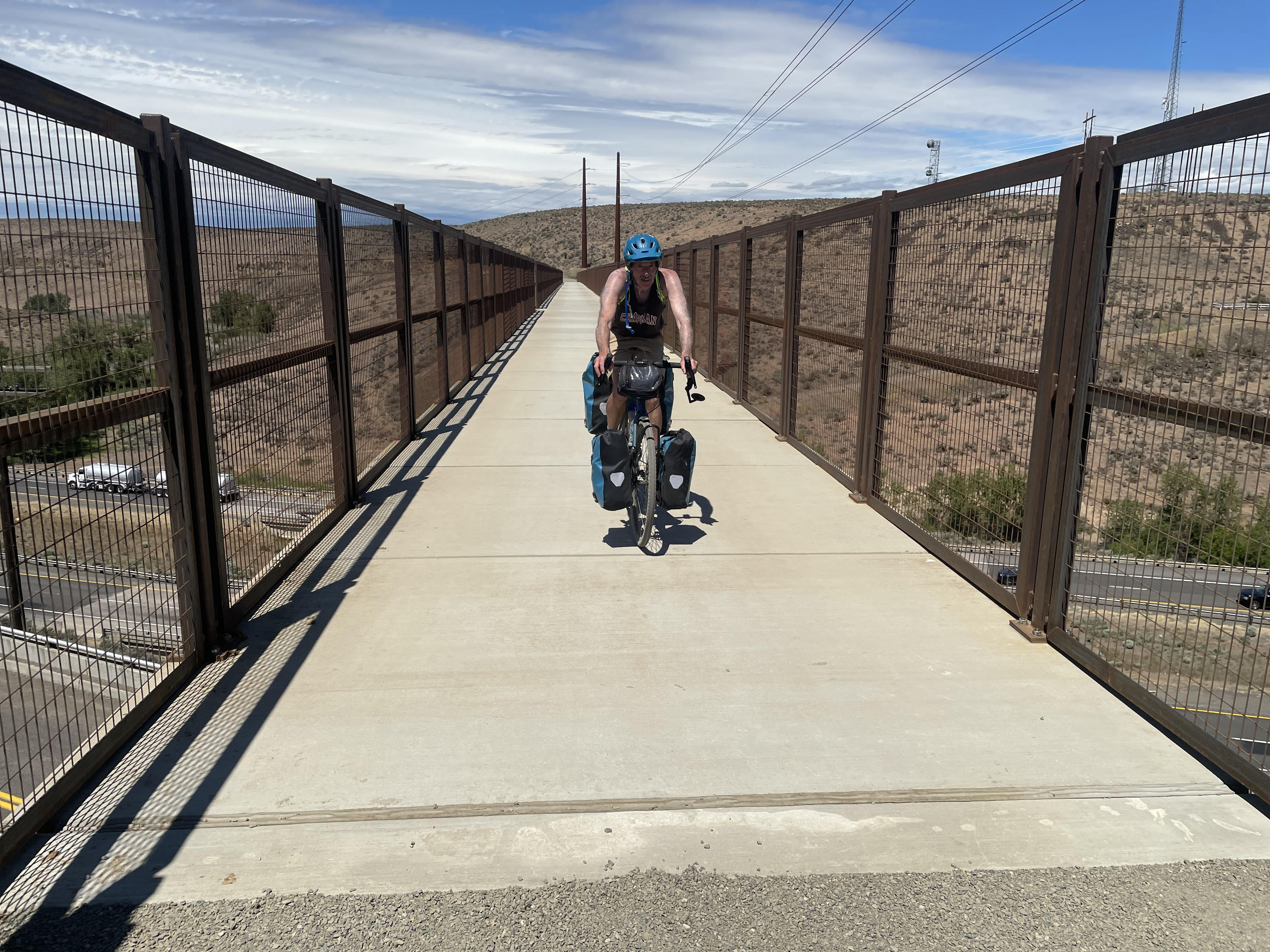
After a warm night at Heyburn State Park, we were back on the Trail of the Coeur d’Alenes in the morning. This trail gets our blue ribbon of excellence because of its beauty, its pavement and because it winds across and next to multiple waterways. It crosses most of Idaho’s Panhandle, travels through the Coeur d’ Alene Indian Reservation and the Silver Valley and crosses a 3,100-foot bridge trestle on the Coeur d’Alene Lake that is also specifically designed for individuals in wheelchairs. Pat, the engineer, fell in love with the bridge’s design and indicated that he wished he could have had a part in its construction.

We learned that this 72-mile trail is paved because it is a superfund site. The asphalt on the trail serves as a barrier to the contaminants caused by mine waste rock and tailings (from early mining activity) containing heavy metals.Eight miles up the trail, we stopped in Harrison and chatted with two ladies sitting outside the town’s library selling crafts and huckleberry products. According to them, it was once very easy to find huckleberries as they grew after forested lands had been clear cut.  Clearcutting, however, is no longer supported as a means of forest management. By a bit later that afternoon, we reached the By the Way campground, small yet equipped with hot showers and a fabulous gazebo.

That evening, we walked down Pinehurst’s thoroughfare in search of dinner. Prospector’s Pizzeria drew us in and sure enough, it wasn’t long before Prospector Bob, dressed in his plaid flannel shirt, red suspenders, jeans and a prospector’s hat appeared. Prospector Bob, (aged 75) entertained us while we ate, sharing stories about how as a teenager he was friends with all the miners and then after a stint in the service, he became an IBM software developer for several years. He and his family opened the restaurant and indoor mini-golf room last fall because they saw a need for more recreational activities needed for children. After a hilarious evening, we made it back to the campground in time to meet Linda, a woman in her mid-50’s who is presently living out of her Honda Element as she travels the country. Linda is from St. Augustine FL and deemed it time to quit her job as a software developer a few months ago, to discover the country and do lots of hiking. “Who knows,” she said. “Perhaps my next career move will be raising llamas.”

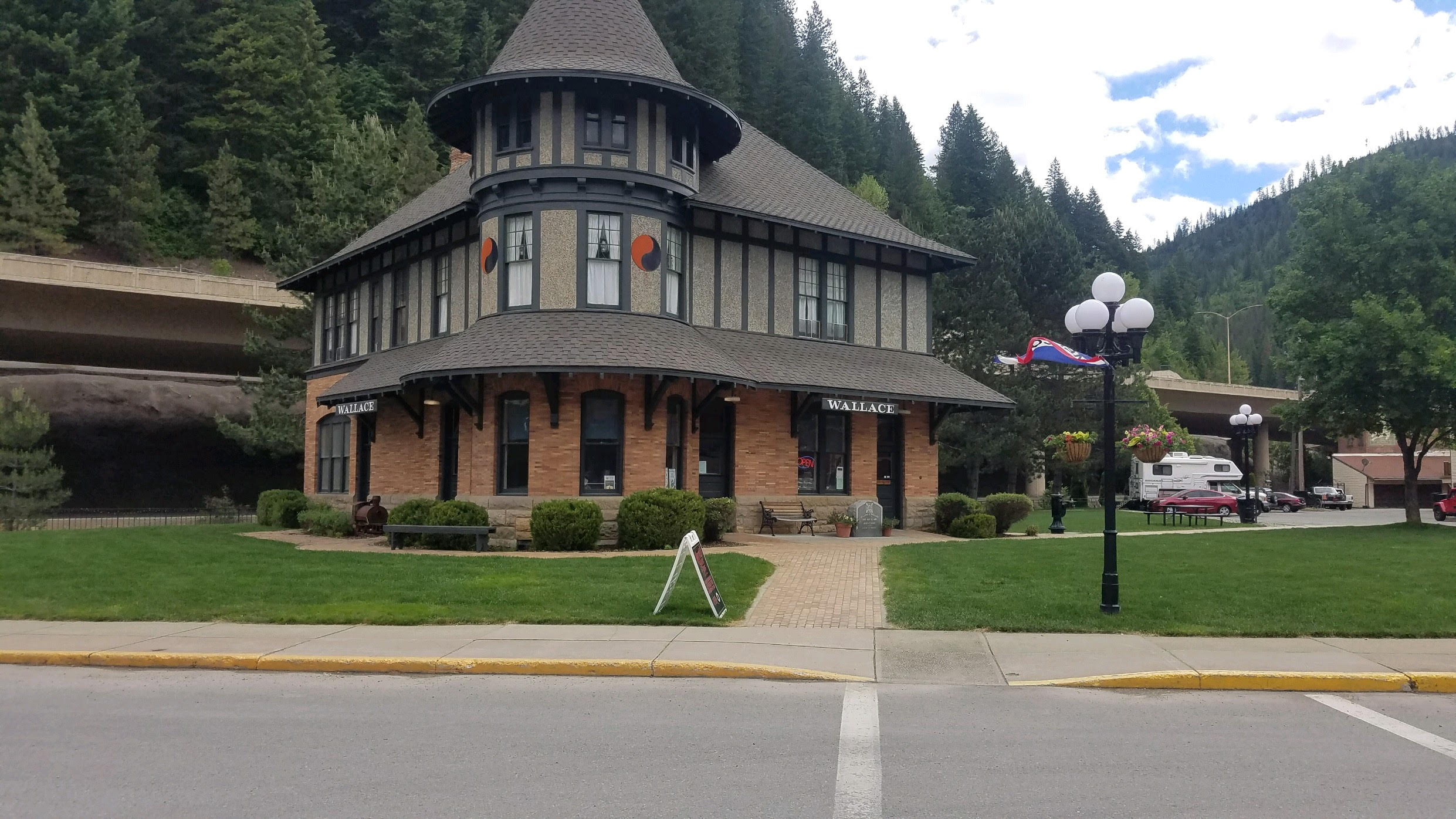
On Sunday, we continued on the paved trail, cycling through Kellogg, where we noticed a gondola shuttling mountain bikers and tourists up to the top of the local mountain. And from there, we cycled up to Wallace, a town designated as an historic district, which kept it intact when the interstate was built.

Upon our arrival, we went straight to the refurbished railroad depot, where we met John Turner, who plays the part of Colonel Wallace, the town’s founder. According to Turner, Colonel Wallace, was a shyster from Kentucky, who laid claim to the land with fake money. The Wallace depot was once home to the employees who worked either for the Northern Pacific rail line or the Union Pacific rail line.

Women had their own waiting area, to avoid the rough language and the spittoons, used by men. We learned that President Teddy Roosevelt once came to town for fundraising purposes, traveling to Wallace on the Northern Pacific rail line and leaving on the Union Pacific rail line. Within the depot is the only remaining US flag from his visit and a framed map of what the United States and its territories looked like in 1908.

After tooling around the town and having lunch, we cycled up through the headwinds to Mullan, (the home of the Lucky Friday silver mine,) and the last stop on the paved trail.


The Eastern Washington Detour

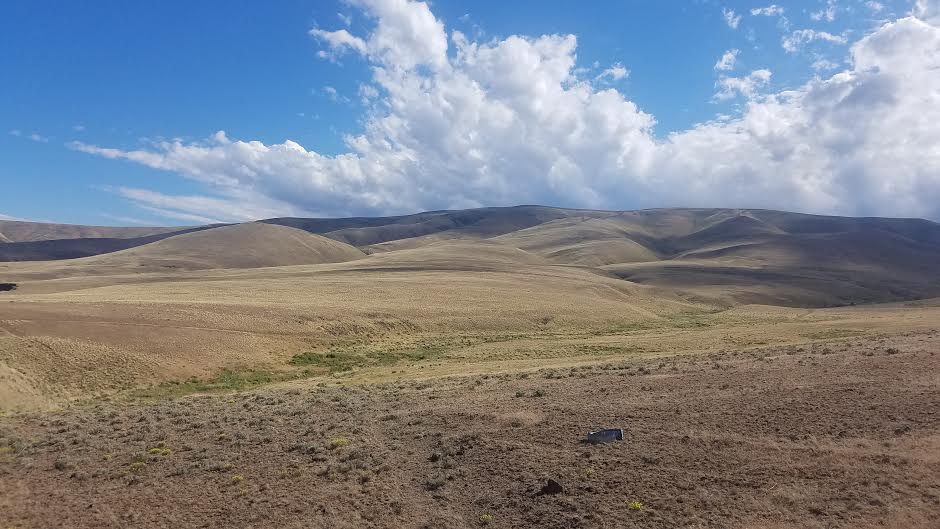
After surviving the ride through the Yakima Proving Grounds and the subsequent wind storm, we discovered that the rest of the Palouse to Cascades rail trail is not ready for prime time. The railroad ballast still lines the trail, meaning we would have to push our bicycles for a few hundred miles through the rest of Washington. It was, we decided time for a detour.

Thus, over the past week, we have traveled through Moses Lake, Ritzville, Sprague and Rosalia and earlier Friday evening crossed into Idaho. We have made use of frontage and dirt roads through desolate, dry country. We have become accustomed to the freight train warning whistles at all hours of the day and night. We have seen how the construction of new roads and recurrent flooding have destroyed once vibrant communities. We have learned much about freight trains, what they carry and where they travel We have stayed in inexpensive motels, camped in the Rosalia town park and in the Heyburn State Park, the oldest state park in the Northwest. We have chatted with motel owners and guests, folks hanging out in their lounge chairs and several individuals in cafes and restaurants. We have witnessed several acts of kindness among community members and have also been the recipient of their generosity.

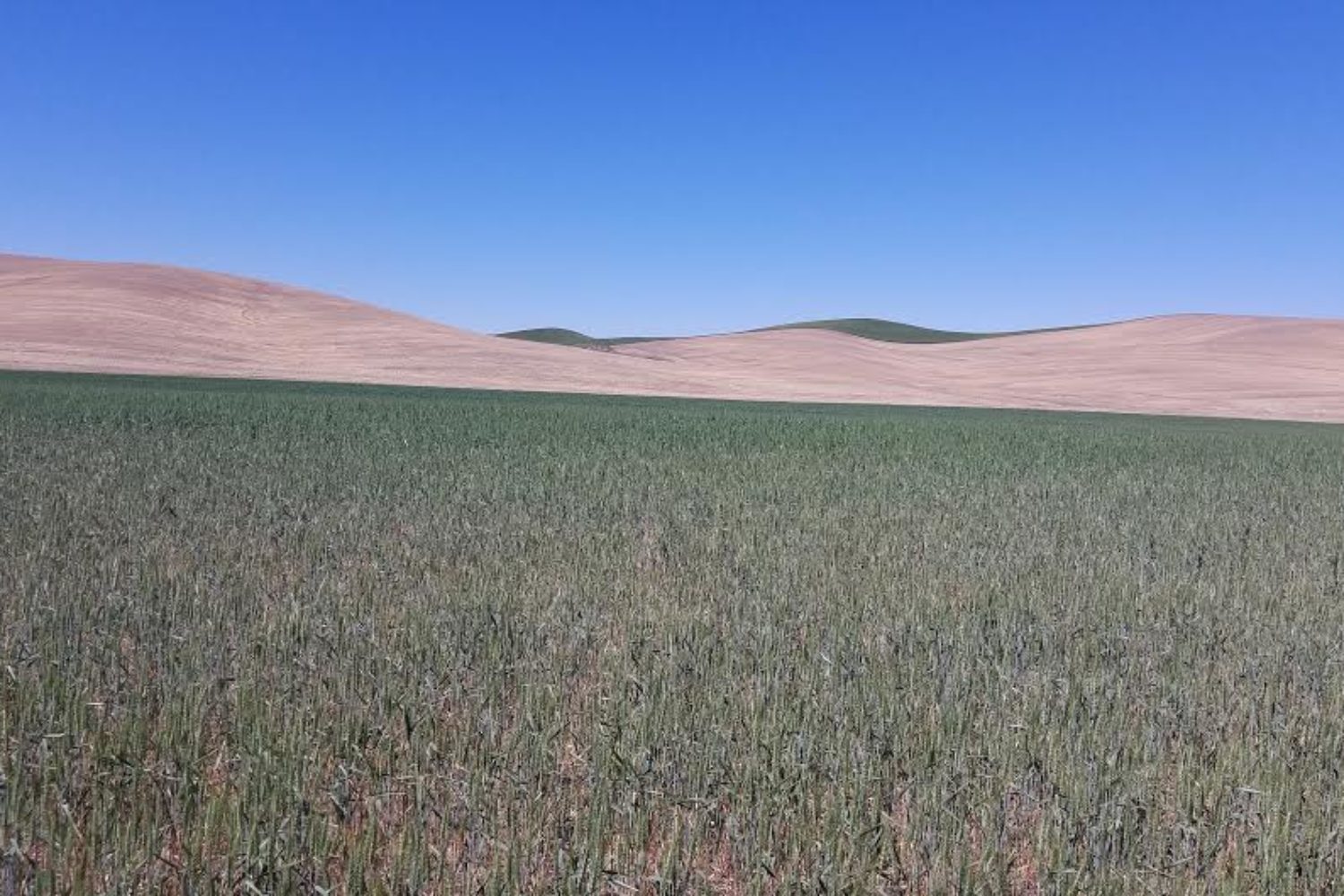
We have been introduced to summer and winter wheat, fields of hard shelled peas, lentils and barley.  We have gained leg strength as we climb in elevation.  We have learned that Ritzville is famous for their wheat (once claiming be the wheat capital of the world) and because it was where the majority of the volcanic ash from the 1980 Mt. St. Helens eruption landed, forcing road closures for several days. Similar to what occurred in Gander, NF after the 9-11 attacks, Ritzville hosted several out of town visitors until the ash could be cleared.

Last Thursday on our way from Sprague to Rosalia, after several gorgeous but challenging climbs, we came upon the town of Malden, much of which was destroyed in a wildfire last Labor Day. It was eerily quiet, not much rebuilding was taking place and the remnants of homes and vehicles were still visible. As I cycled through, I saw an older gentleman, digging through his home’s charred remains. A short time later I had the pleasure of meeting Paul as we were in the same restaurant in Rosalia. He shared that he was ecstatic when he found pieces of their Nativity set in the rubble.

A little later in the new coffee shop in Rosalia, we met Bill O’Keefe, who was teasing us about our ride and offering to take us either to Plummer, Idaho or Spokane, WA to get wider tires. Though we laughed at the time and said “No”, as the day progressed and we stared at the hills we would need to climb out of Rosalia, we decided we should really reach out to Bill. Trouble was we didn’t have his contact information. In a small town, however, it didn’t take long to find him

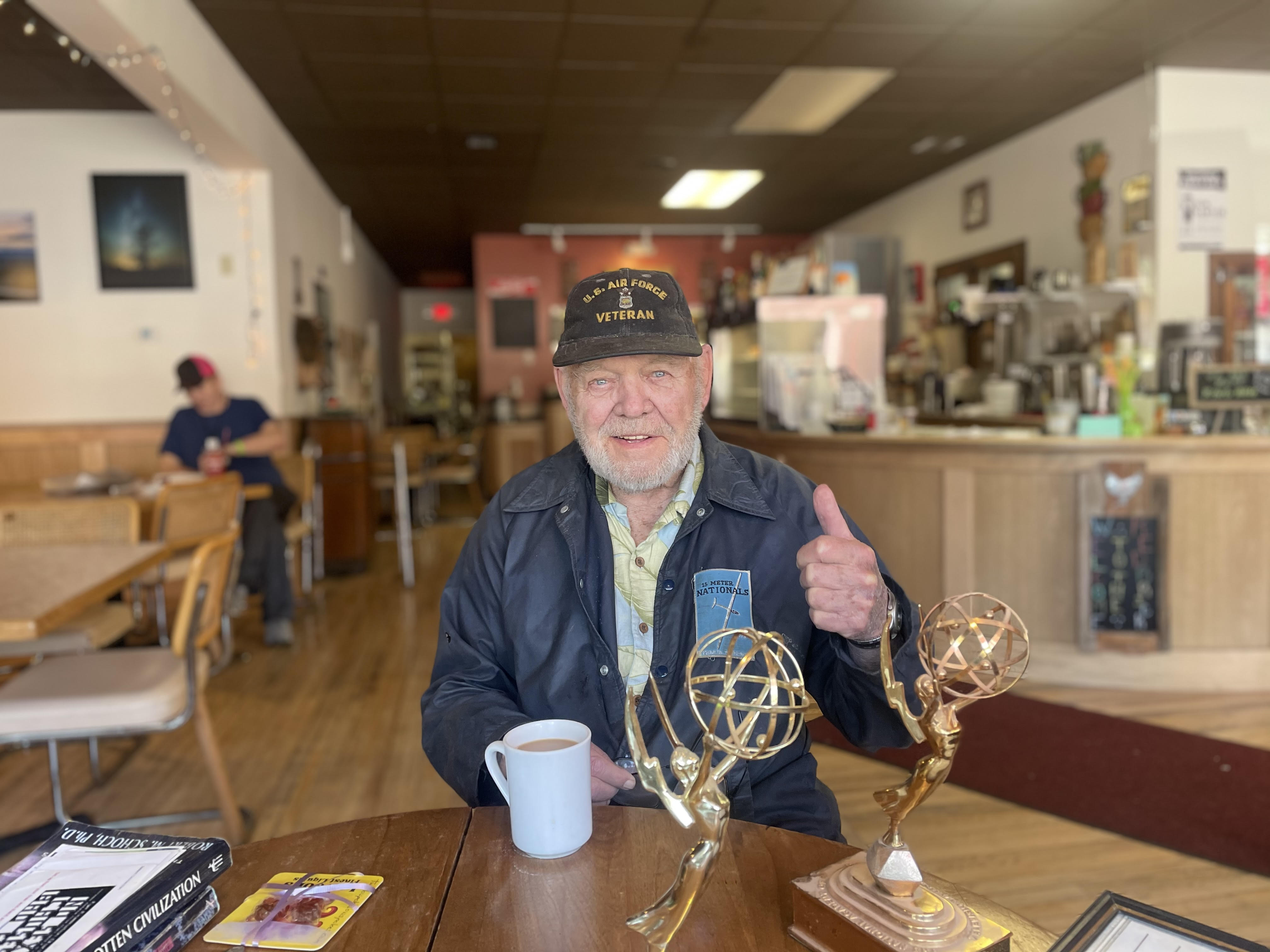
By Thursday evening, we had his contact information and sure enough he and his partner, Tonya agreed to take us the 29 miles to Plummer on Friday afternoon. That meant Pat and I had several hours to talk with local townspeople. For three hours, we held court in the Red Brick Café. An older gentleman (91) named Rudy appeared and acted as though he knew me. As we chatted, I learned that he had won two Emmy’s for a program he put together years previously entitled – RV, an American Odyssey. Rudy told us that he traveled all the backroads of the country and loved every minute of it. And sure enough, he went out to his truck and brought in those two Emmys.

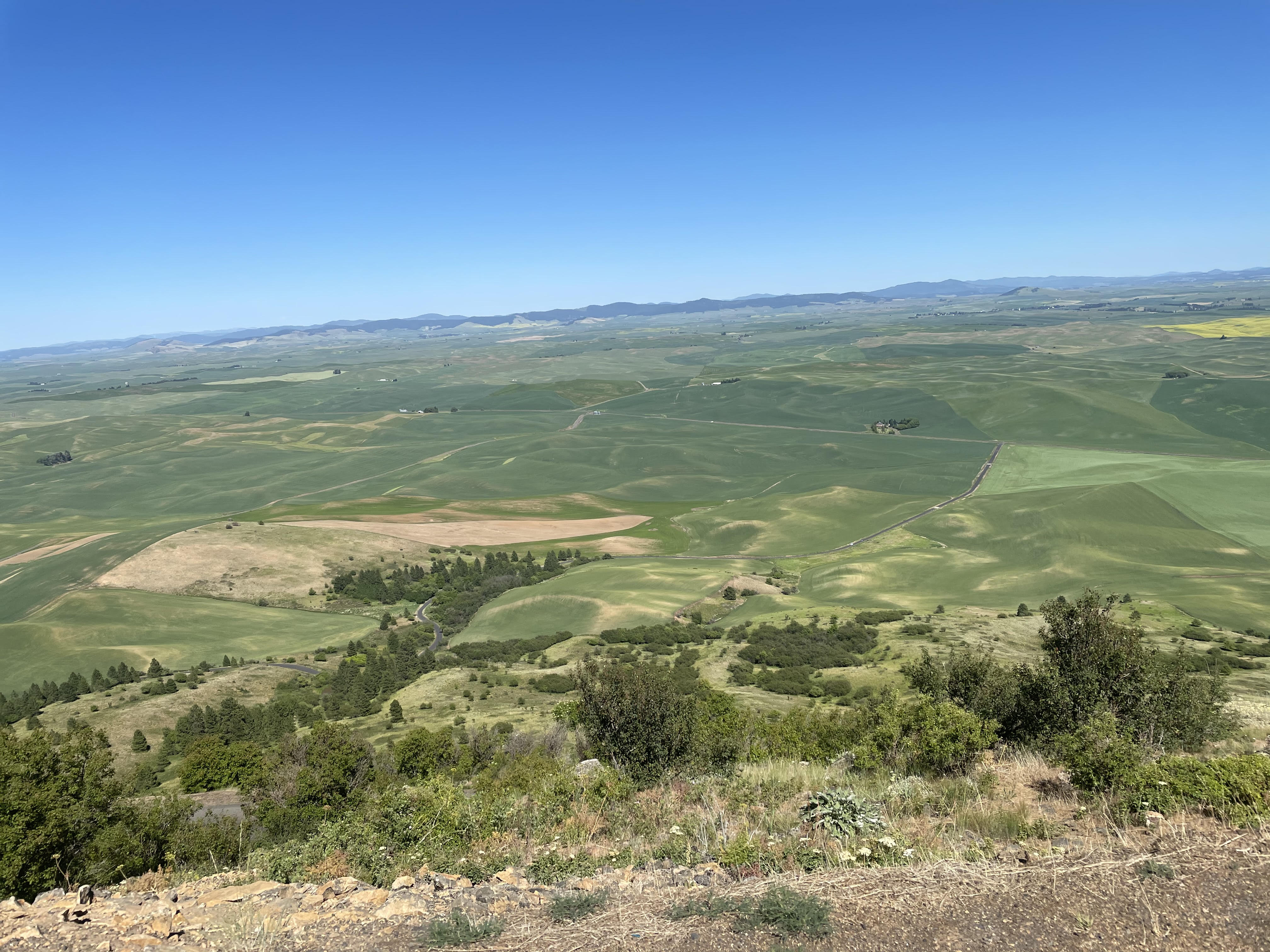
When Bill and Tonya arrived to pick us up, Bill said, “hey let’s take a detour to the Steptoe Butte State Park” Bill describes himself as a spoiled farm boy who was riding motorcycles by the time he was 14. This part of Washington is his home and he thoroughly enjoys each and every moment and is a consummate storyteller. After a somewhat terrifying ride to the top of the butte (over 4,000 feet) we were introduced to spectacular views of mountain ranges in the distance combined with the contrasting green and yellow fields below.

Shortly thereafter, we arrived in Plummer and thanked them profusely.  We are thrilled to be back on a paved rail trail once again – the Trail of the Coeur d’ Alenes. After a very quick eight-mile downhill ride, we have set up camp at the Heyburn State Park.

Follow us as we spin our wheels

Shevonne and Pat


Our Great American Rail Trail Angel

The fifth day of our adventure was, by far, the hardest yet. After 11 miles of fairly easy travel heading east out of Ellensburg, WA and riding over a brand new trestle, we entered the US Army’s Yakima Training Grounds. Suddenly the trail

surface turned into pure sand, making cycling with our tires impossible. During the peak of the 90-degree afternoon heat, Shevonne and I had to dismount and push our bicycles on foot, uphill. This went on for four difficult miles until we reached the Boylston Tunnel. Technically, cyclists are supposed to walk up and over the tunnel, on a side trail, because the tunnel is in a slow state of decay, with rocks occasionally falling off the ceiling. As it was about 50 degrees inside, we decided to chance it, given our sturdy bicycle helmets. We pushed through all the tumbleweed inside the tunnel, carried our bicycles over the heavy rock falls in the center of the tunnel and emerged on the other side to find a jumbled mess of sage brush and a bog to navigate! At last, we thought as we looked at the topography, we were going to be able to revel in the gradual downhill trek for better than 10 miles, on a somewhat ridable surface, (though there were ruts and plenty of rocks to maneuver around and I fell four times). Then, suddenly a vicious wind storm kicked in, with gusts over 50 mph. For the last couple of miles we once again had to walk our bikes and hold on to them for dear life as the winds threatened to throw us or our cycles over the steep hillsides. After arriving at the trailhead by the Columbia River, we were wasted. We had been the only folks on that trail for several hours.  And although we didn’t say anything to each other, we each assumed we would not make it another three miles to our reserved campsite and would have to endure a night of sitting up in the wind because putting a tent up would have meant sheer destruction. our tent.

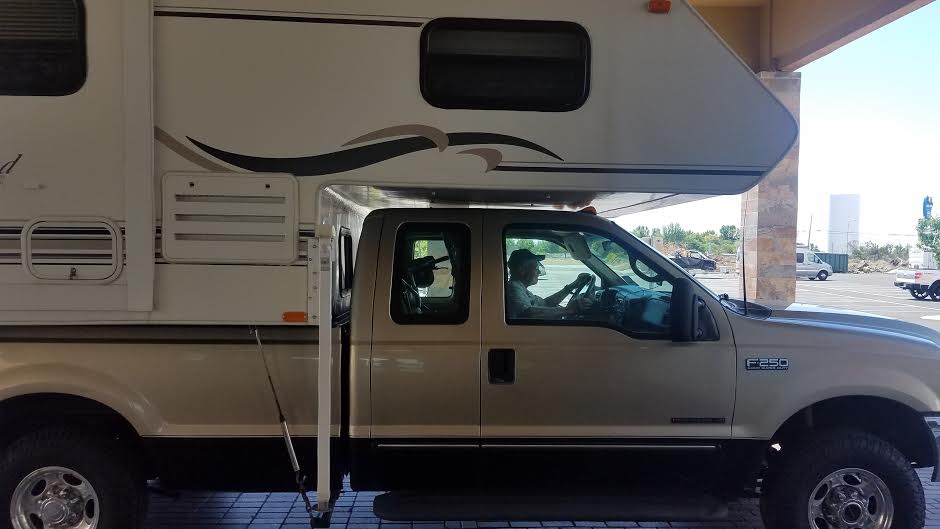
There are times in life, however, where something occurs that “was meant to be.”  When we arrived at the last trailhead, a gentleman was parked in his camper. He originally had plans to spend the night there, but due to the fierce winds, he was about to drive elsewhere. Extremely exhausted with several small cuts and bruises, I brazenly asked him if he wouldn’t mind taking two wiped out cyclists to Wanapum State Park. He said “Sure.”  So Shevonne and I hopped into his camper, (after loading all the panniers and the bicycles into the back of his camper) and he drove us to the state park.  Once at the park, our new best friend, Bob, spent the night in his camper while we determinedly got our tent up in the whipping wind. He cooked up a lovely dinner for us complete with appetizers and drinks.  As we chatted we learned Bob, (aka our Trail Angel) is an avid cyclist and is an advocate for bicycle trails in the State of Washington.  The perfect person for us to run into!  He also provided us with some very useful advice about the not-so-good conditions of the Palouse to Cascades Trail in eastern Washington meaning today while chilling out, we are figuring out a new route to Idaho.

Bob invited us back into his camper earlier today for breakfast and offered us a ride to Moses Lake. Given yesterday’s horrendous 35 miles, we eagerly agreed. Otherwise we would have been riding on Interstate 90 all day in the blazing sun.  It was during that conversation we learned a new acronym from Bob. “So you aren’t one of those EFI trail riders then?” said Bob. “What does that stand for?”, I asked.

“Making sure to ride Every F’ing Inch of the trail,” he replied. We laughed. I think we met our match on yesterday’s trail, making us much more willing to leave EFI behind! We may see Bob once again in Cataldo, ID, where he will be cycling for the next few days. Did I mention that Bob is 77 years old and has cycled many miles around the USA and on other continents? He’s one amazing individual and we are extremely glad to welcome him into our lives.

Pat

Follow us as we keep spinning.


A Walk in the Park – Most Certainly Not!


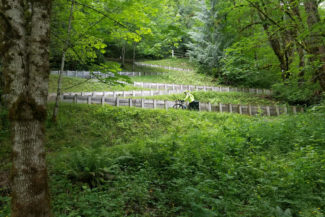
The scenery is spectacular but the past three days have been far from a walk in the park. Yes, we have been on several rail beds and that means the grade of the trail cannot be more than two percent. However sometimes the rail beds disappear because of burned out trestles or because private entities have absconded with sections of the trail. We have had to push our heavily laden bicycles up zigzagging sections and carry them up metal stairs. And then there are the pitch-black tunnels designed and constructed for Rockefeller’s Milwaukee Road line to get through the Cascade mountains. The tunnels are open for cycling but one must have a good light and plenty of confidence to maneuver through the bumpy surfaces. Pat takes them on with a frenzy while I push my bicycle.

The first tunnel we encountered was two miles in length. Upon exiting we were greeted to plenty of rain that just kept on coming for the next three hours. Thankfully, our gear (yellow rain jackets, rain pants, helmet covers, gloves and hand warmers) did the trick.

Drenched as we were, it was also our first night to set up camp. Miraculously as we arrived at Lake Easton’s State Park, which is squeezed between an active rail line and Interstate 90, the rain subsidized. We set up our tent, inflated our sleeping pads and zipped our lightweight sleeping bags together. Our spirits buoyed, we found a lively café a mile’s walk away and were invited to join a fellow camper’s campfire as night fell. Unfortunately, the temperatures dropped to 42 degrees leaving us shivering in those bags. Now we know it’s cold in the Cascades in mid-June.

Saturday’s ride on the Palouse to Cascade Trail (from the state park) was full of gravel. It was extremely challenging for me to stay upright and not get caught in all of the ruts. The high point of the day was stopping at the former Cle Elum depot, which was once, one of the three crew change-over locations for the Milwaukee Road rail line. There we found several historical markers, describing the depot, and Smokey’s Bar-be-que, a diamond in the rough.

Since our Seattle departure, we have cycled 154 miles – not too shabby for we slowpokes. Once surrounded by lush forests, we are now cycling through rich green irrigated farm land, lots of wind and very few trees. The rest of the Palouse to Cascade trail promises more of the same climate, nasty goatheads which love to play havoc with tires and knowing the right password to get through the Army’s proving ground.

Pat is most definitely the stronger cyclist regardless of the weight he carries. We are dining on plenty of granola and Greek yogurt in the mornings, cheese or peanut butter sandwiches and fruit for lunch and every now and again, we locate a restaurant serving dinner. Finding coffee is now more of a fantasy than a reality.

Shevonne and Pat

Follow along as we spin our wheels
The Rubber Hits the Road

So, now it’s my turn to post something on our blog!

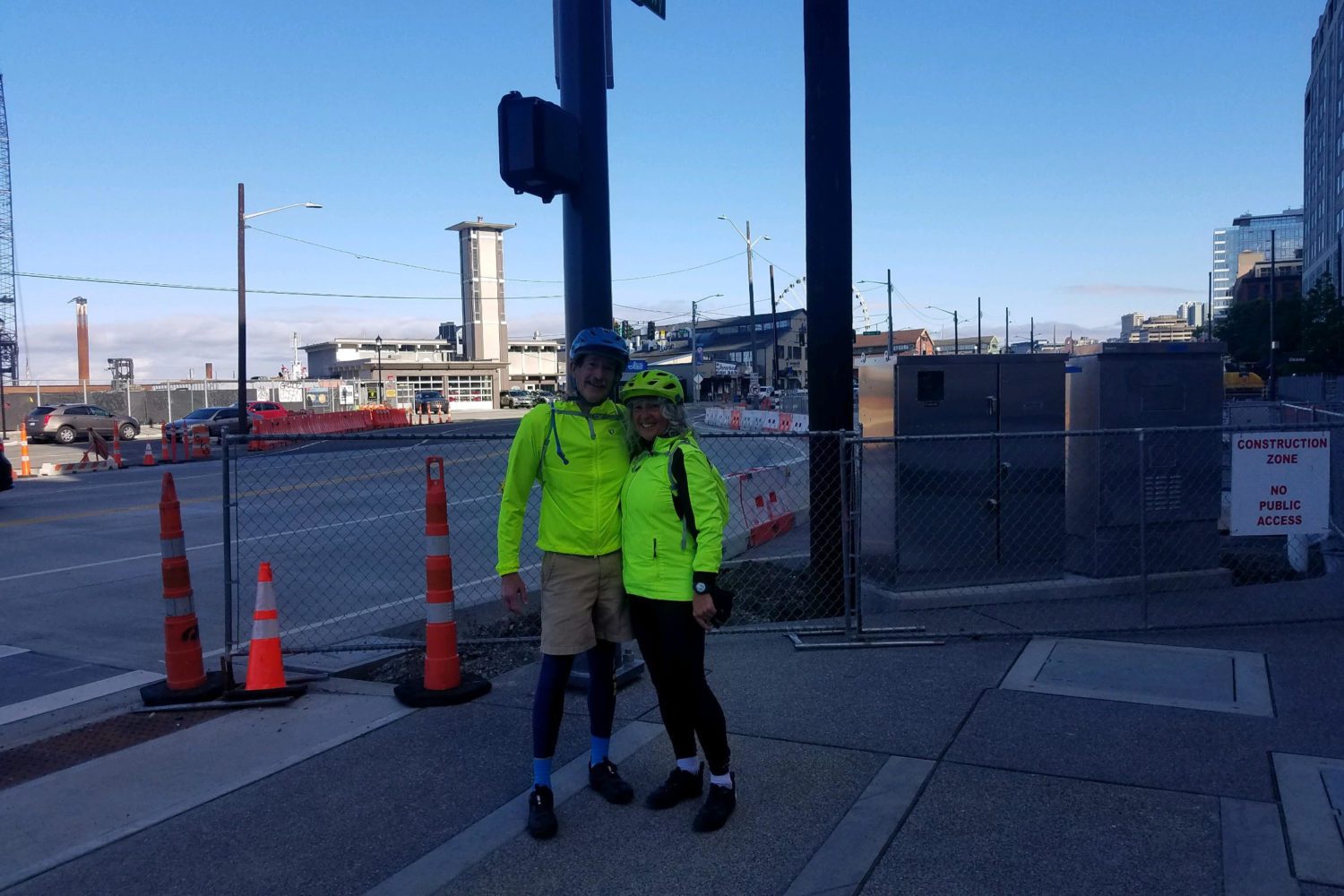
Today was the day our “rubber hit the road.”  On a bright and sunny morning, with the temperature at about 50 degrees, we set off at 8:10 AM from the corner of Alaskan Way and Marion Street on the Seattle waterfront, the start of our long adventure. How appropriate, with my decades of experience in construction project management, that the whole area around the start of the trail is under construction!  Better yet, it was a construction worker in a hardhat who agreed to shoot our “sendoff” photo. Many of you know Shevonne fell for me because I wore a hardhat when she met me.

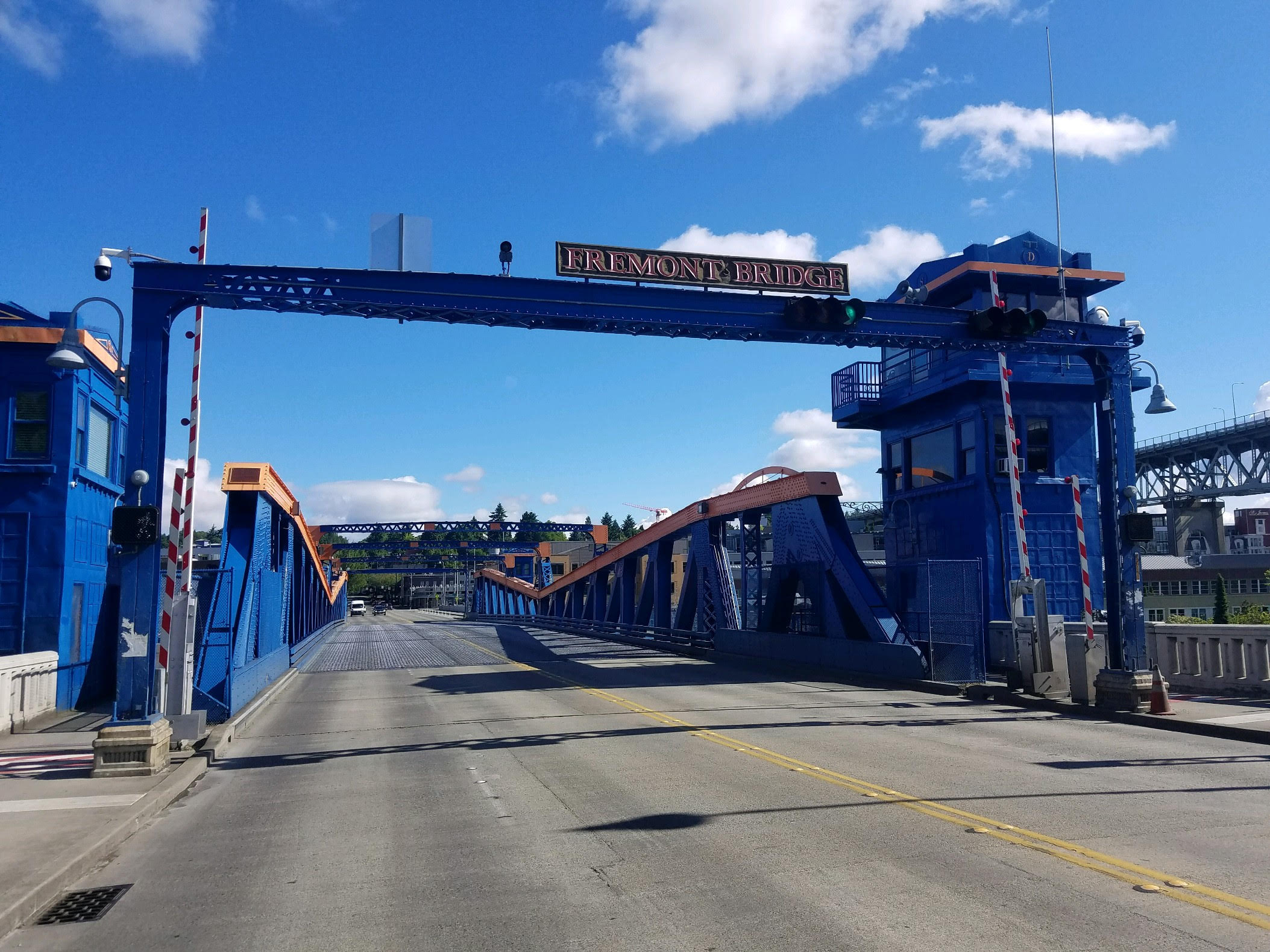
The 44-mile trip to Issaquah was awesome! We rode along Seattle’s waterfront on Puget Sound, which was loaded with container ships headed into this country’s fourth busiest seaport.  We went through the Port of Seattle, the huge BNSF rail yards, rode over an historic bridge and through the University of Washington.  We also rode along two large and beautiful lakes and followed the Sammamish River for several miles. The entire ride today was along rail trails or designated bike lanes.  Seattle and neighboring King County have built cycling trails throughout the area; they crisscross everywhere.  And they are heavily used!
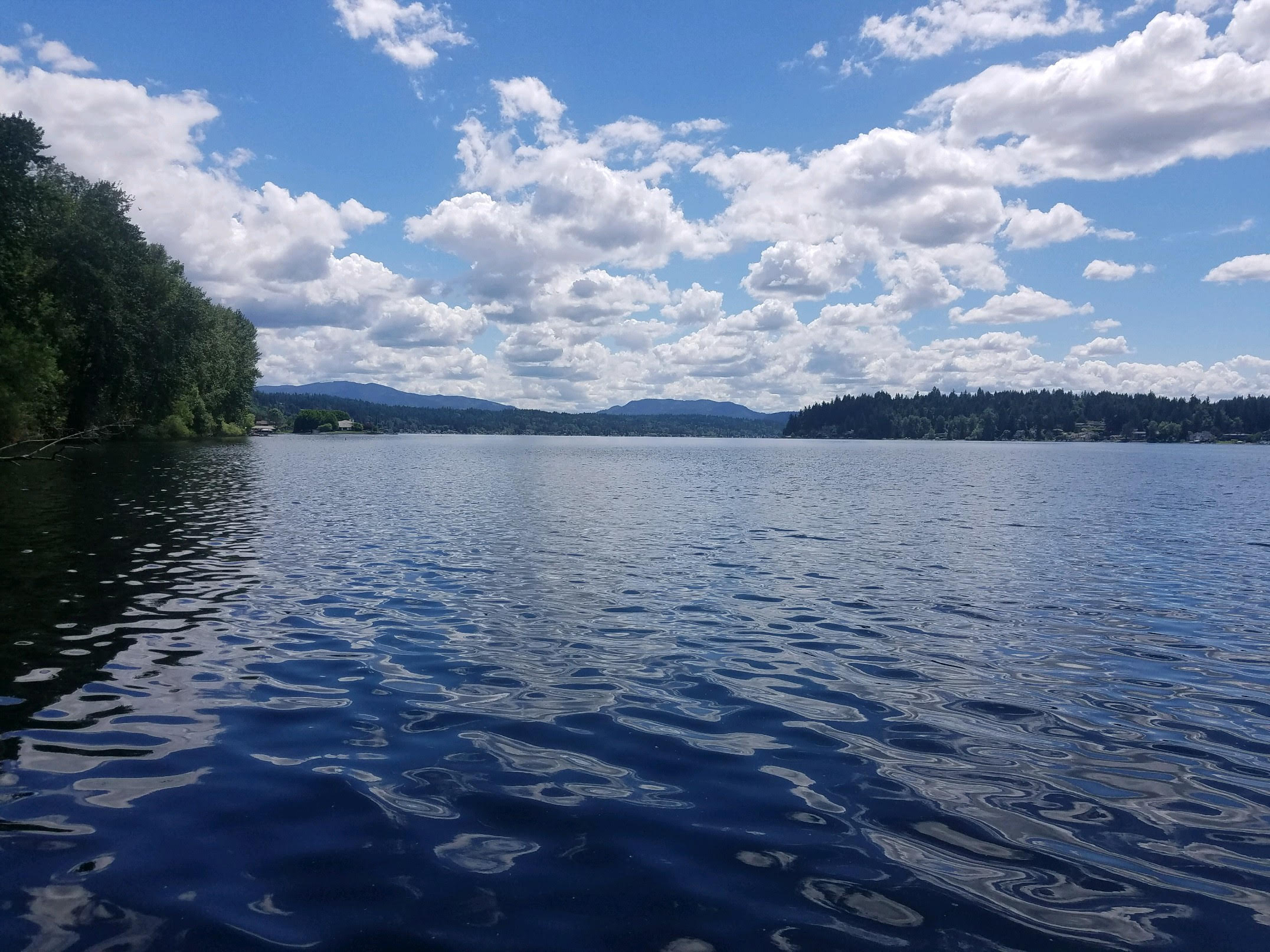
The stuffed bike bags continue to generate friendly conversations. When fellow cyclists ask us where we are going, their jaws drop when we answer. We also got a great tip from a cyclist who directed us to a fine Indian restaurant. Other highlights of the day included saying “Congratulations!” to a young lady in her graduation cap and gown getting her photos taken next to the river, learning some of the history around Lake Sammamish, watching some women practice sculling along the Seattle Ship Canal and discovering that there’s a large effort to restore salmon in the local lakes and rivers.

After two nights in the Hyatt Hotel in Seattle, we are spending the night in a Motel 6 in Issaquah. Within minutes of our arrival, the Issaquah Police were scoping the joint in front of our window, talking with a very upset young woman and her baby and laying down the law with the motel’s manager. Curious, Shevonne asked one of the police officers if we were going to be safe. He reminded us that we are staying in a Motel 6 and stupid things happen here.  Well, at least they left the lights on for us!

Follow us as we keep on spinning.

Pat and Shevonne


Sleepless in Seattle?

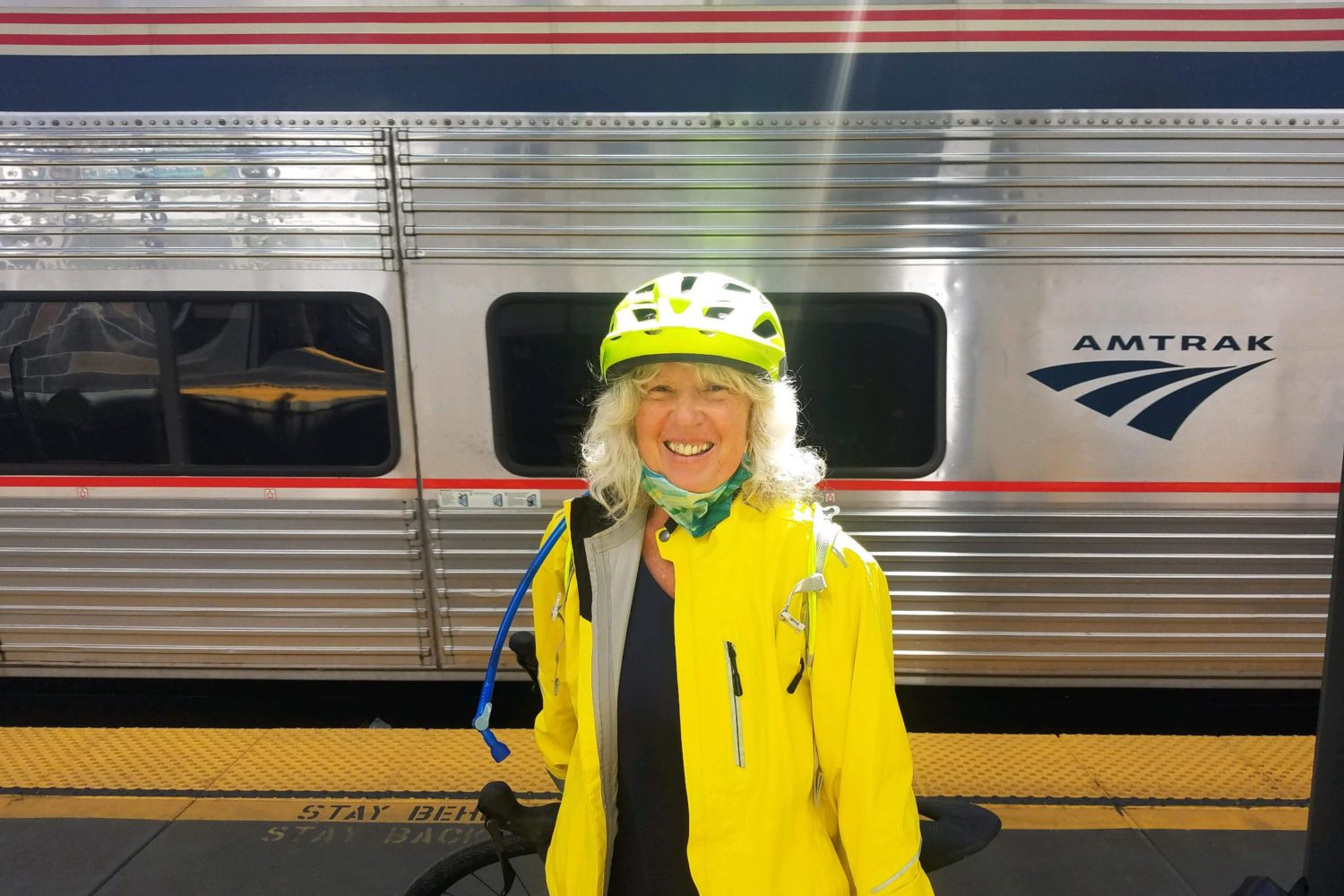
Not quite, although after three days of living and sleeping (first in coach and then in bunk beds)  on two Amtrak trains we are ready for our last bit of luxury before we begin cycling east. The past few days were full of pleasure and the unexpected. We chatted with other travelers, were exposed to exquisite scenery, provided care to a needy passenger and fell in line with the regimented Amtrak rules. We had our share of microwaved TV dinners ( because of the pandemic they have not been preparing fresh meals ), coped with no running water in the bathrooms for several hours and maintained our composure when we discovered we had purchased train tickets to Chicago on the Cardinal through Virginia, West Virginia and then back up through Kentucky, Ohio and Indianapolis (a 24 hour trip) rather than the much quicker route through Maryland and Pennsylvania. 

We quickly learned about shift changes, smoke breaks, how to take a shower in a moving train  and when a conductor threatens to throw someone off the train, they mean business. In Charleston, WV, a man sitting directly across from us, was handcuffed and removed from the train by three local police officers when he refused to stop badgering the conductor and continued to escalate. Unfortunately, he left his partner to fend for herself. She was terrified without him, had no money and held on tight to a teddy bear from Shoney’s. We soon recognized she had some cognitive challenges and everyone in the train car stepped up to help her get through the next several hours. 


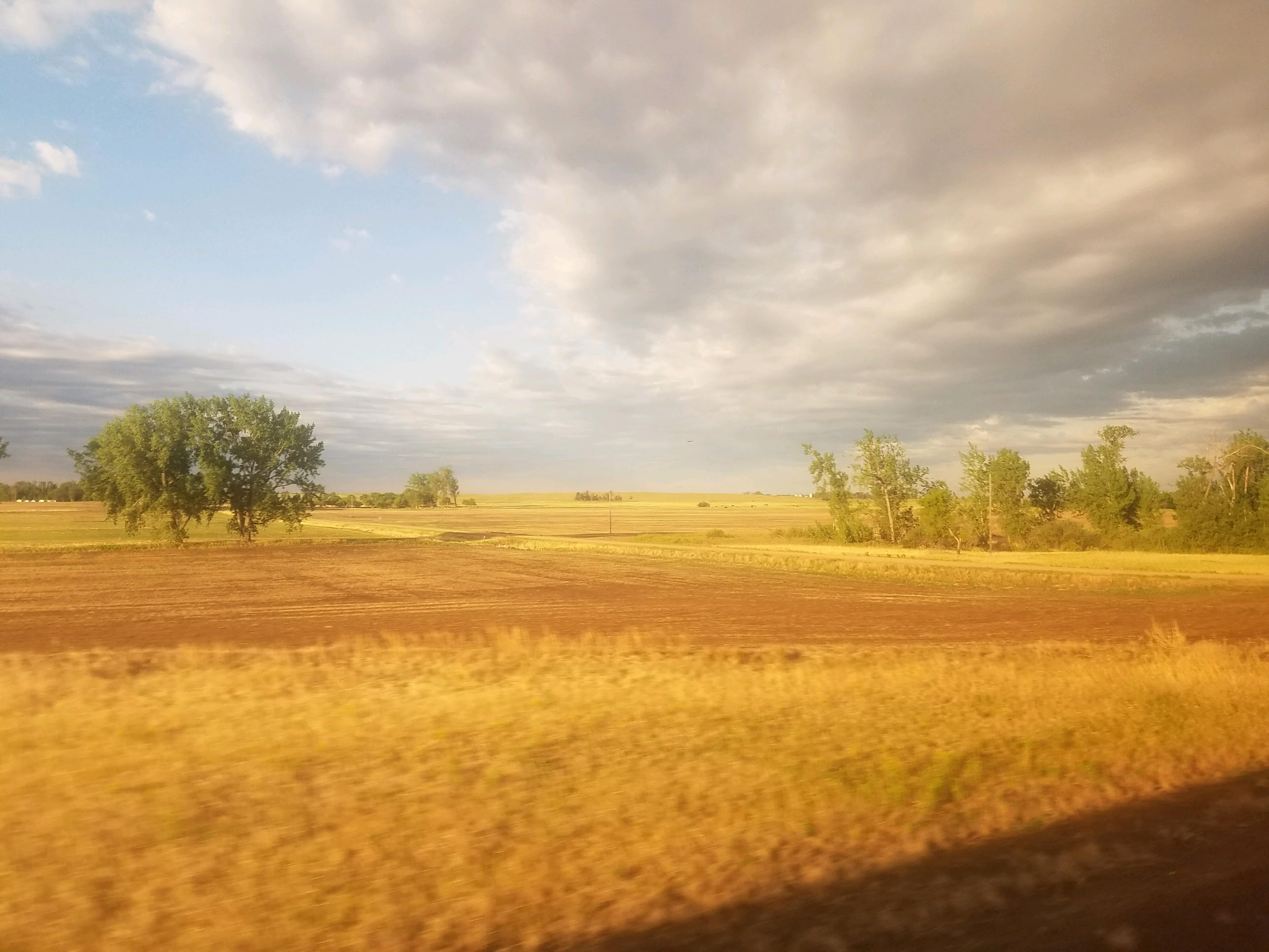
Once on the Empire Builder in Chicago, we secured a roomette, all of four feet by seven feet. Cramped but doable as long as our panniers stayed in a luggage area, this train offered us private sleeping quarters and an observation car equipped with swivel chairs, glass ceilings and windows. People played cards, drank soda and beer and kept their eyes on the ever changing scenery. Pat and I were introduced to much of North Dakota’s landscape, the Rocky Mountains throughout Glacier National Park and the raging rapids in the state of Washington.

It’s a chilly day here in Seattle but the sun is shining and we are taking some time to recharge and repack. We plan on leaving Wednesday morning on the Great American Rail Trail. All aboard.

Shevonne and Pat


Follow us as we spin our wheels.

P.S.  A special shout out to Sue and Bill Zekas who threw us a bon voyage gathering before we left the Mad River Valley. It was a truly special evening.


The Top Ten Takeaways from our Trial Bikecamping Experience

10. Pat needs to find space for his toothbrush in his pack.

9. During the height of black fly season, it’s important to bring along insect repellent. (We did not and it was disastrous).

8. Panniers on one’s bicycle are an instant way to make new friends. (People want to talk to you and find out where you ae from and where you are going).

7. When a Vermont State Police officer asks you whether you might need a place to stay for the night, say “perhaps” rather than “we are all set.” (As it turned out we were far from set.

6. When you are trying to sneak into a state park campsite, wait until the employee who is leaving gets the gate unlocked and re-locked. (Message – don’t ride right up to him and ask him whether you can camp there like I did). That also did not go well.

5. Make sure that the plug for the self-inflating sleeping pad is secure before sleeping on it. (Otherwise be prepared for a night of twists and turns. Ouch!)

4. It’s impossible for two individuals to try and change their clothes in our tent at the same time. 

3. When climbing up long hills, stop and take a breather rather than try to beat your partner to the top. (I almost passed out in my effort to show Pat up).

2. It’s not that easy to purchase a single can of beer in a grocery store. ( We dined on chocolate milk instead).

1. Sleeping enhancements may become an essential when sleeping in such close quarters. 

In summary, our experimental trek was far from easy but we endured regardless of the flies and the unfriendly state park person. Thank goodness we had brought along some challenging crossword puzzles

Our journey on the Amtrak train west to Seattle begins on the morning of June 4th. Stay tuned as we share our stories across the US of A. We plan to begin cycling on the Great American Rail Trail on the morning of June 9th. 


Shevonne and Pat