How it's Going

Blog

Our 61 miles on the Illinois and Michigan Canal Trail

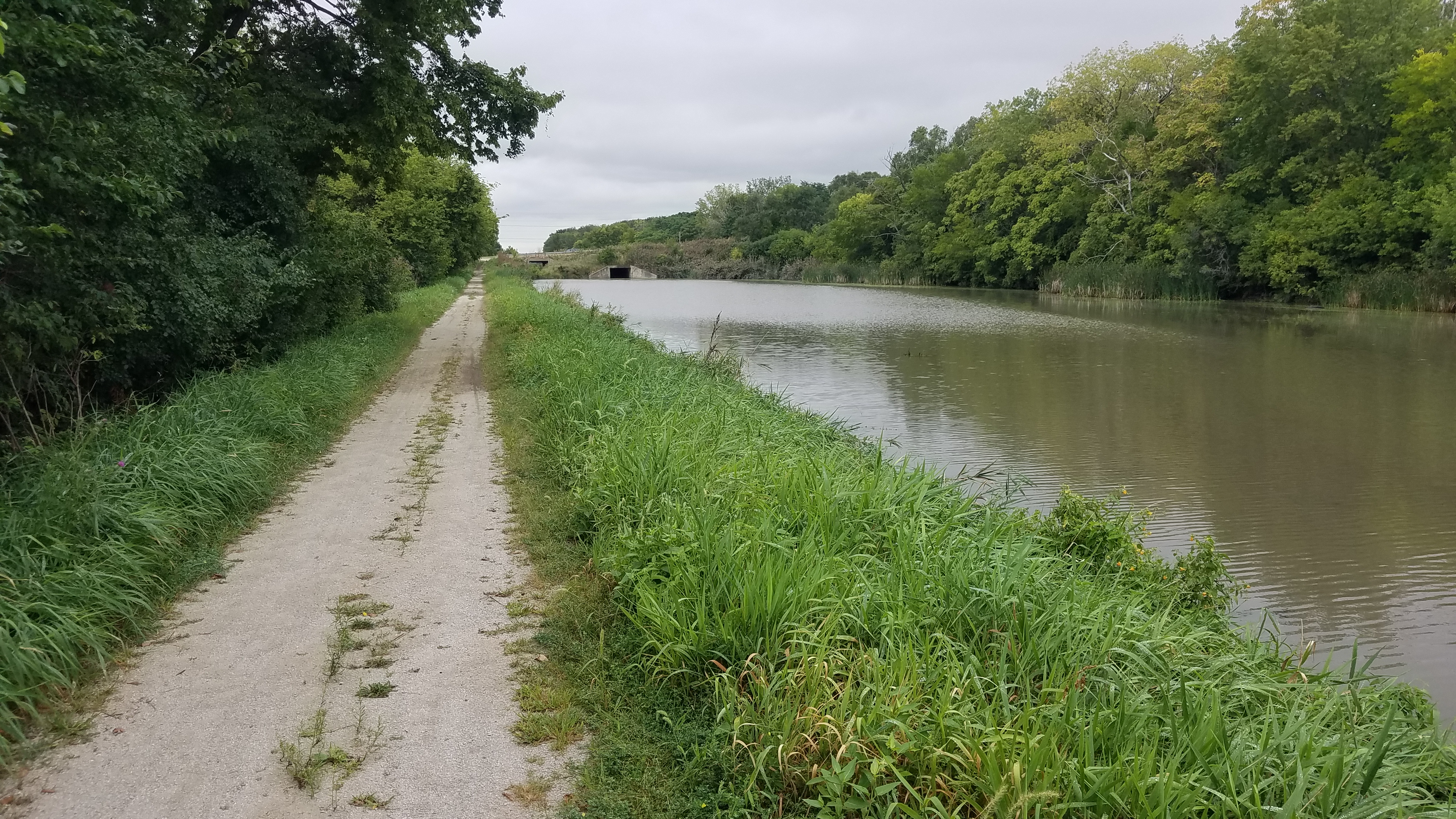
It was a pleasant, somewhat rainy start but by the time we found our way to the Illinois and Michigan Canal path, our raincoats were back in the panniers. We quickly learned that this canal is is recognized as a national heritage area and is responsible for making Chicago what it is today. The canal took 12 years to build – dug by hand  by immigrants.  Once opened, supplies and people from the south could make their way to the north and vice versa as the mules pulled them through. Of course, the canal’s heyday didn’t last long; other methods of transportation quickly materialized.  By 1933, the canal was shuttered.  This year, however, the canal turns 175.  The surface on the trail was either limestone, grass or paved and much of the trail was only single track.

Our favorite town on the canal was Lockport.  We had barely parked our bicycles when Nancy, curator of the Illinois State Museum, (there’s a branch of it in Lockport) shouted out to us that we should come inside, see the exhibits and use the restrooms.  So we did and found a collection of exquisite prairie focused  paintings by Philip Juras.  After an iced coffee break we were back on the canal, catching glimpses of muskrats, great blue herons and deer. For miles we were the only travelers on the trail.
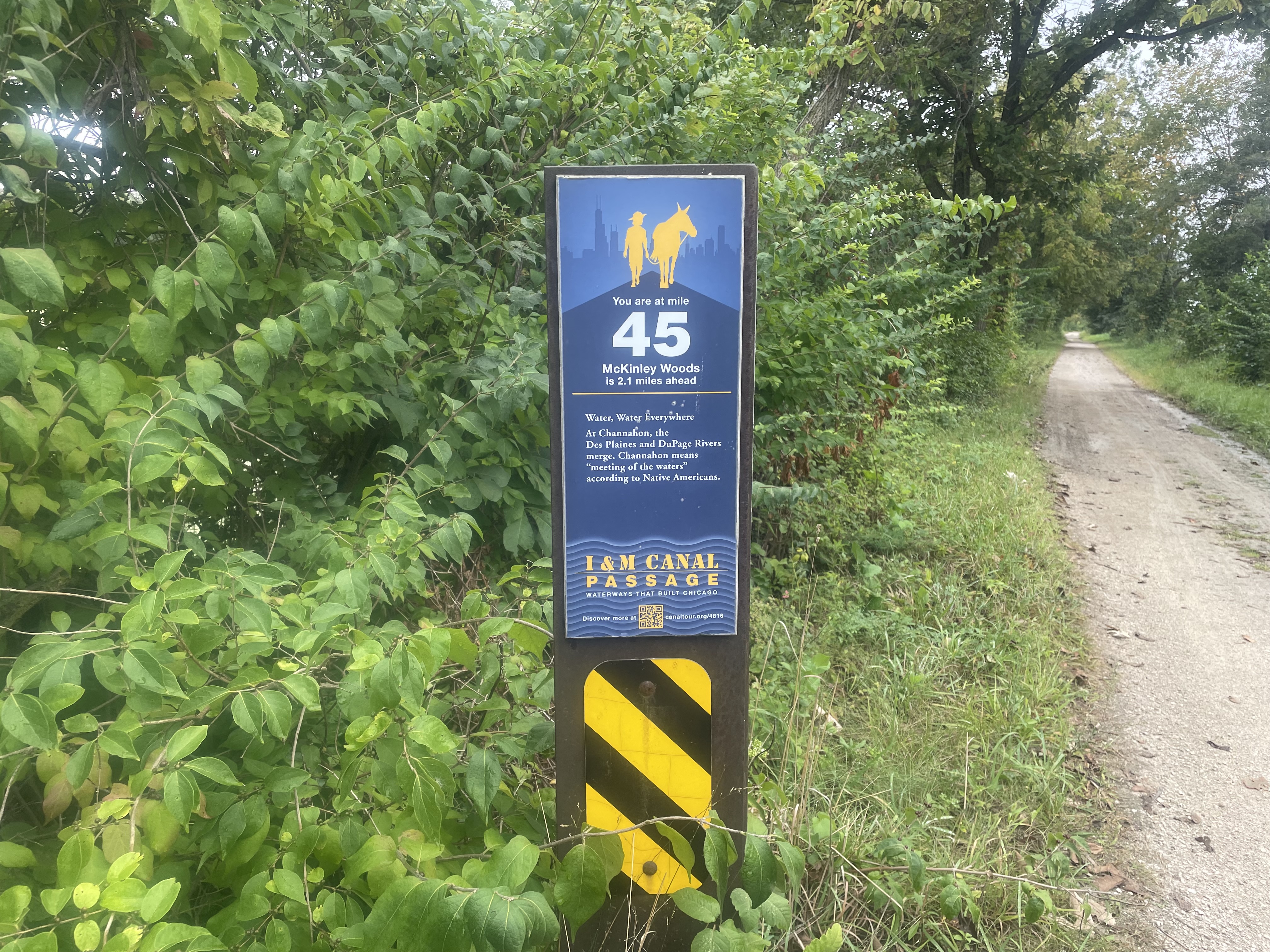
In Joliet, the trail next to the canal ended, requiring Pat to find us a route around the city and back to the next segment of the trail. As the day progressed we realized we had tried to take on too many miles for our second day. I was slowing down and then I was really slowing down; from a 10 mile an hour average to a crawl at 5 miles per hour.  At a canal gate in the town of Morris, Pat suggested we stop.  But I wasn’t ready to give in, that is until I looked at my back tire.  “Oh, that was my problem,” I said.  “My tire is flat.”
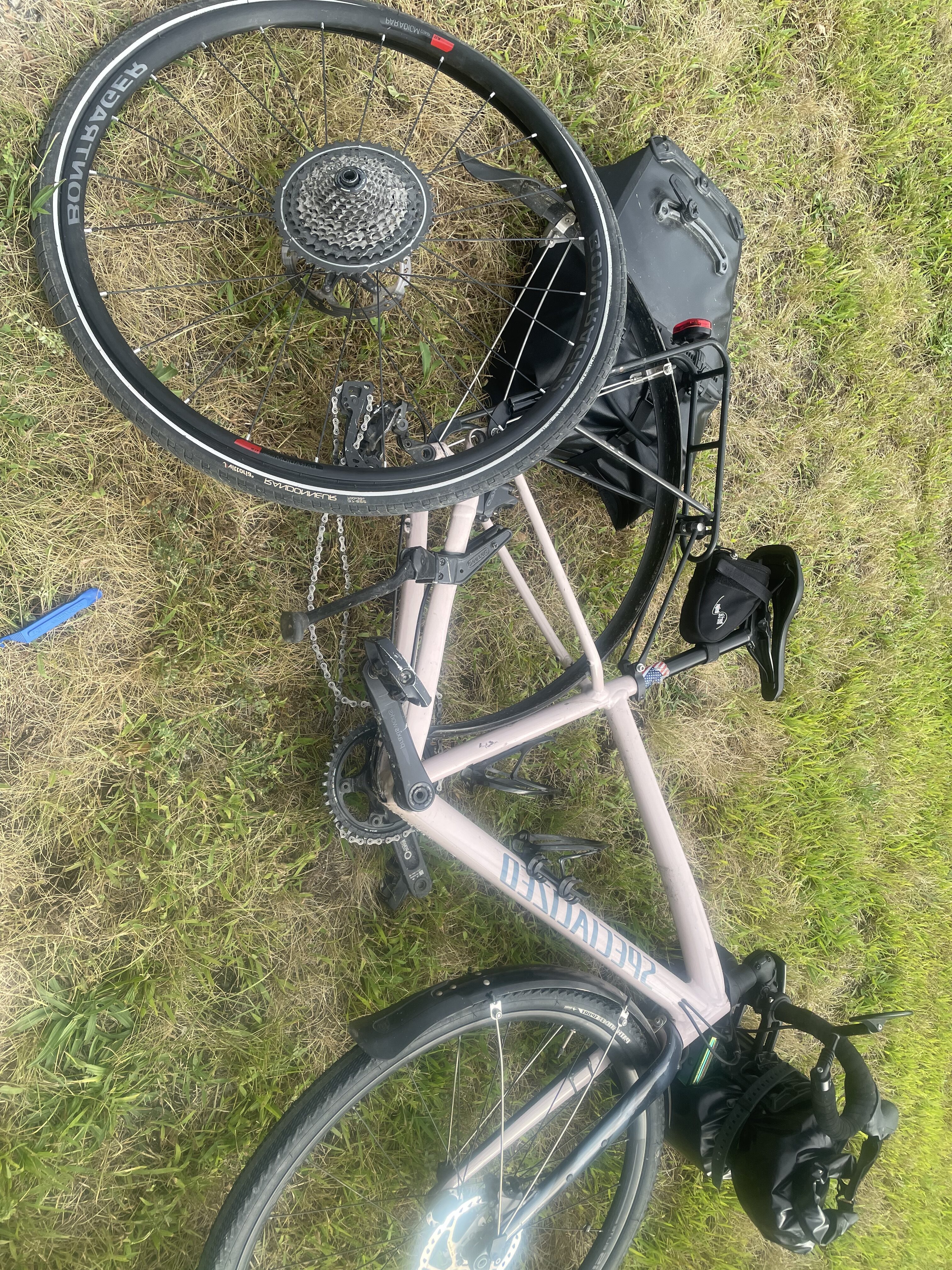
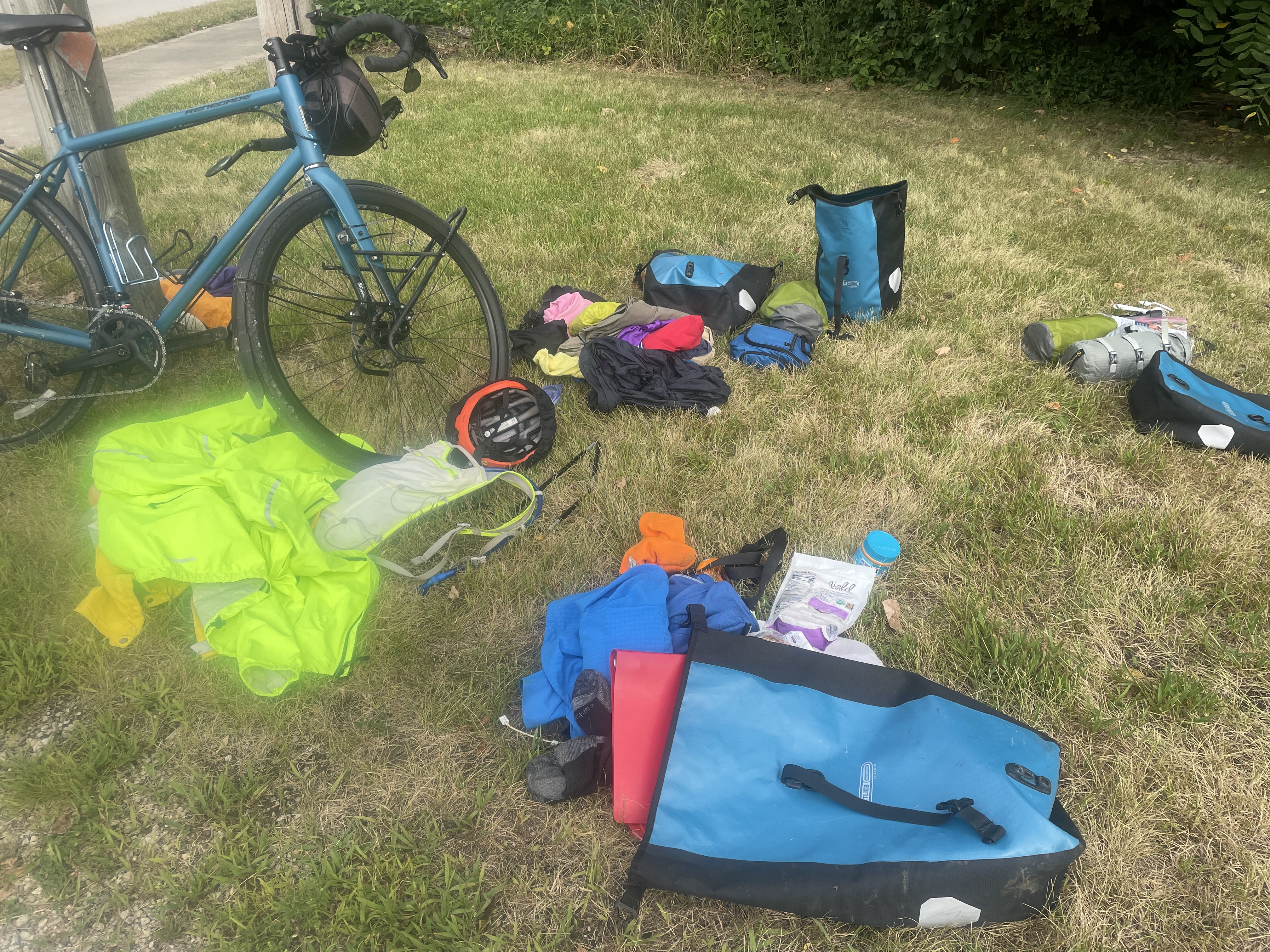
We were both grumbling.  It was only the second day and we had to change a flat tire. Neither of us could remember where we had put the tire lever, the extra inner tubes and the tire pump. Subsequently we had a major meltdown and chucked everything out of four panniers all over the path.  Changing the back tire on my bicycle isn’t easy and once the new inner tube was on and the tire inflated again, it was impossible to insert the back pin to hold the wheel into the frame.  While Pat was swearing at the tire, I was considering what other options we had. That’s when a couple pulled up in their vehicle and asked if we needed help. “Yes, we do, ” we shouted.
They parked their car and the gentleman began to work with Pat to get the pin back in. It was no easy task because some grains of dirt were in the way blocking the pin. But this gentleman didn’t give up until he was finally able to remove the grit.  It was an amazing turn around to what we had presumed was an unsolvable disaster.  We were ecstatic and so thankful for  their help.

It was now 6 p.m. and we figured cycling another 20 miles was not possible.  Instead we cycled through the Morris business district until we came upon a Super 8 sign and that is where we spent the night. As we were checking in, we talked with Mark Hammond and his friend. “We are on our way back from riding across the country,” Mark said. “I used to do what you all are doing but then I discovered riding a motorcycle is way more fun.”
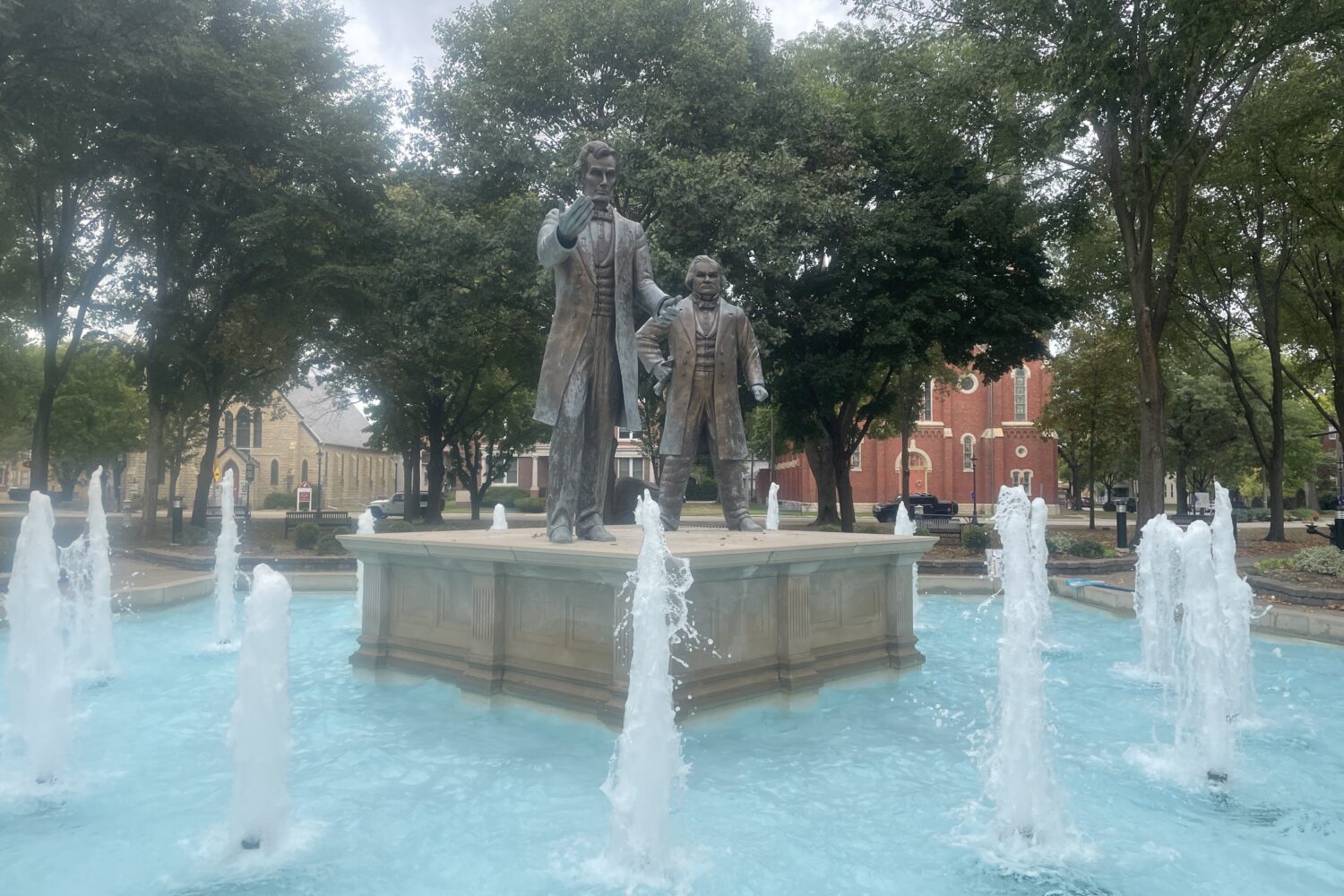
After several hours of rest, we were back on our bicycles on Friday and on a roll flying past mile marker after mile marker.  Most of the canal was empty. In Ottawa , we dined on ham and cheese sandwiches and cashews while sitting on the steps of a local church and listening to the church bells toll.  On our way back to the canal path, we spotted a town square with a fountain surrounding a monument of Abraham Lincoln and Stephen Douglas in honor of the debate they held in the town.

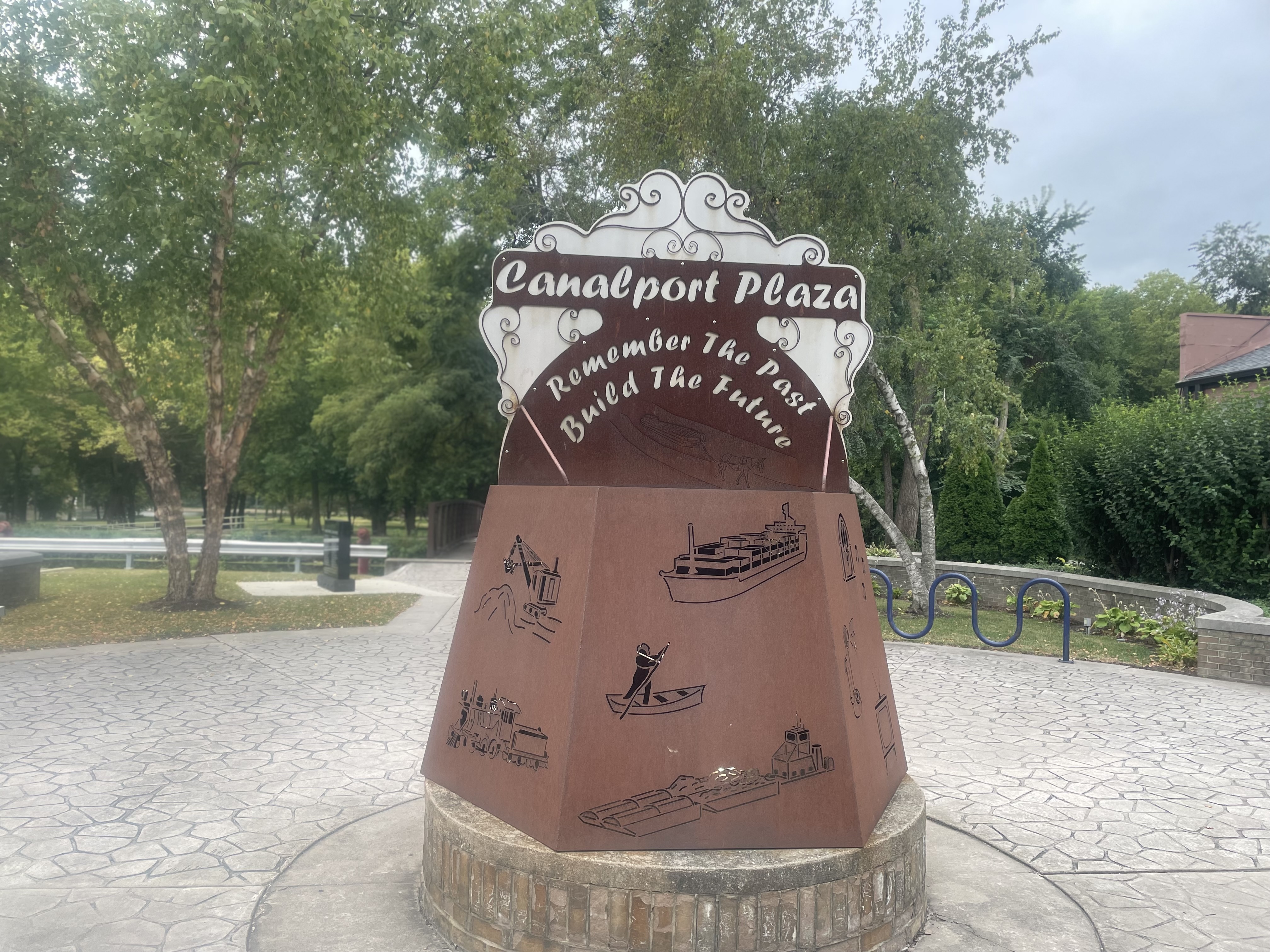
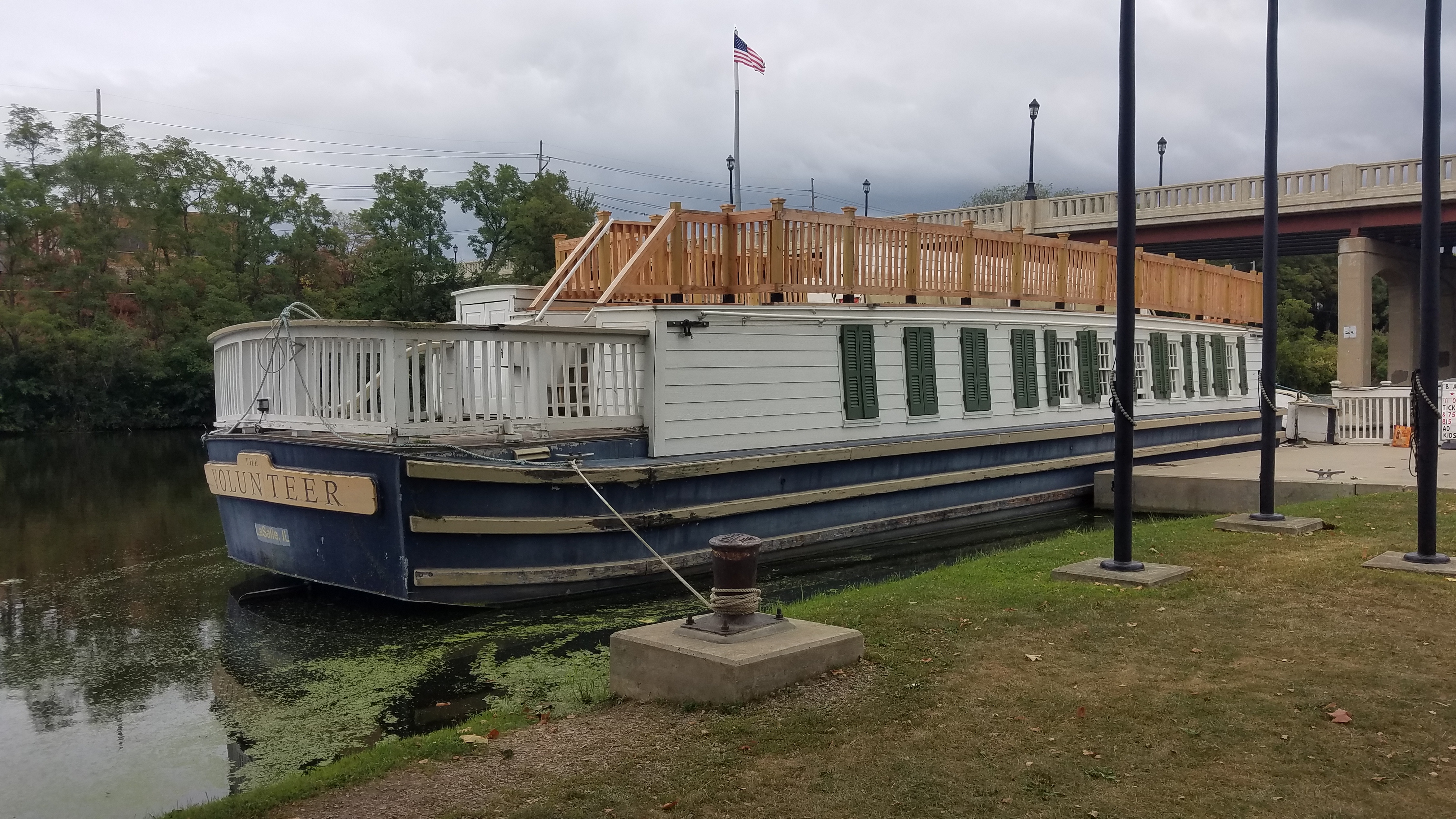
Sixteen more miles on the trail and we landed at the end in the town of La Salle. There we spotted a canal boat that takes guests up the canal for one mile with the help of a horse . They had shut down early today as there were very few customers. We were beat but thrilled that it had been a day without problems.
Shevonne and Pat


The Launch

Yesterday marked the first day of our Midwestern cycling adventure and it offered a bit of everything,

You might think that because we had traveled across the country two years ago, we would know exactly how and what to pack.  Apparently not and within the first half mile, Pat had already lost the piece on his hydration pack necessary for drinking water. He went back to the starting place, at our daughter’s apartment in Wheaton, but all he found was a flock of geese. Did we bring extra water bottles?  Yes, we had but decided to leave them at Destyni’s apartment because why not?

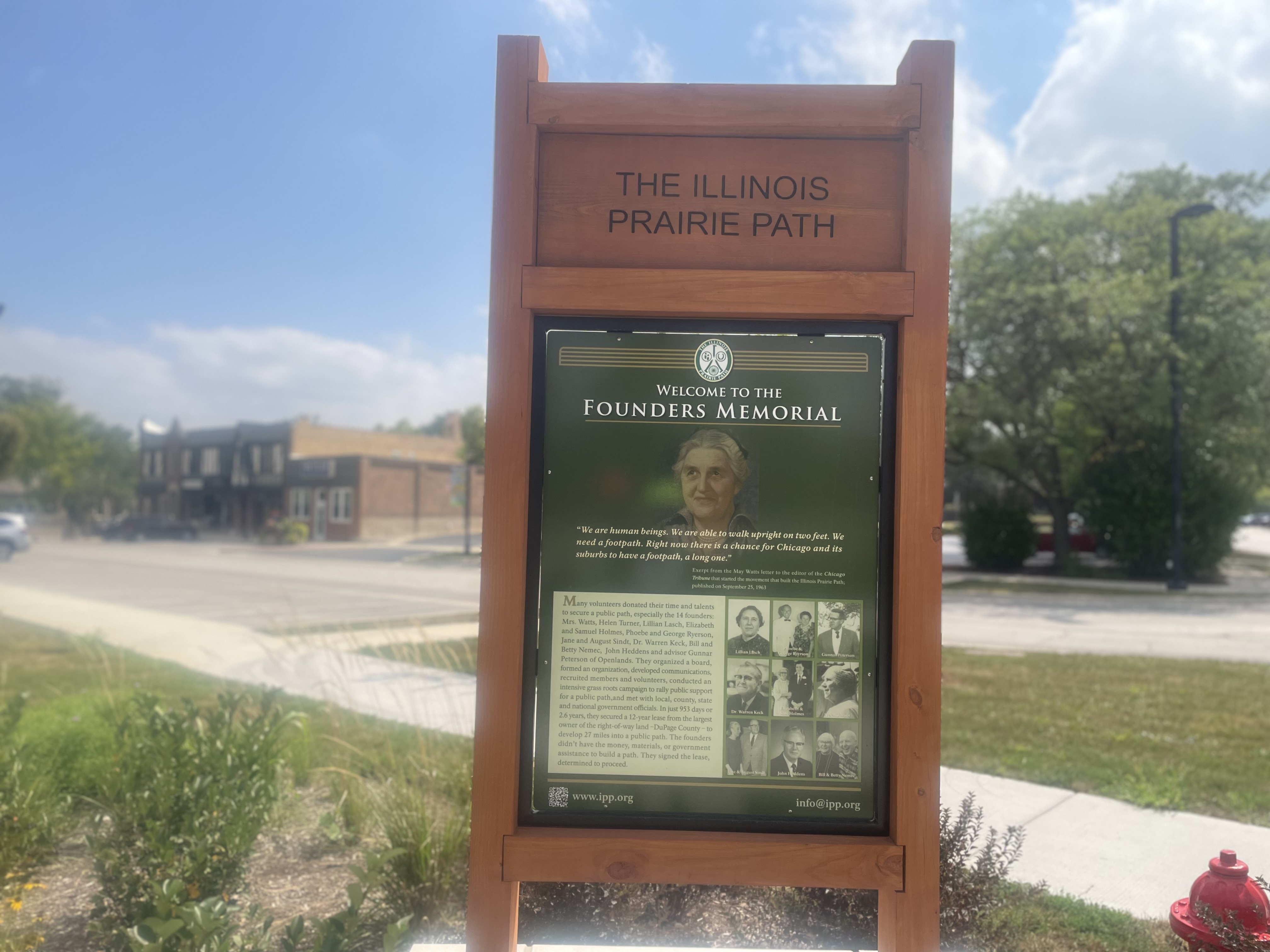
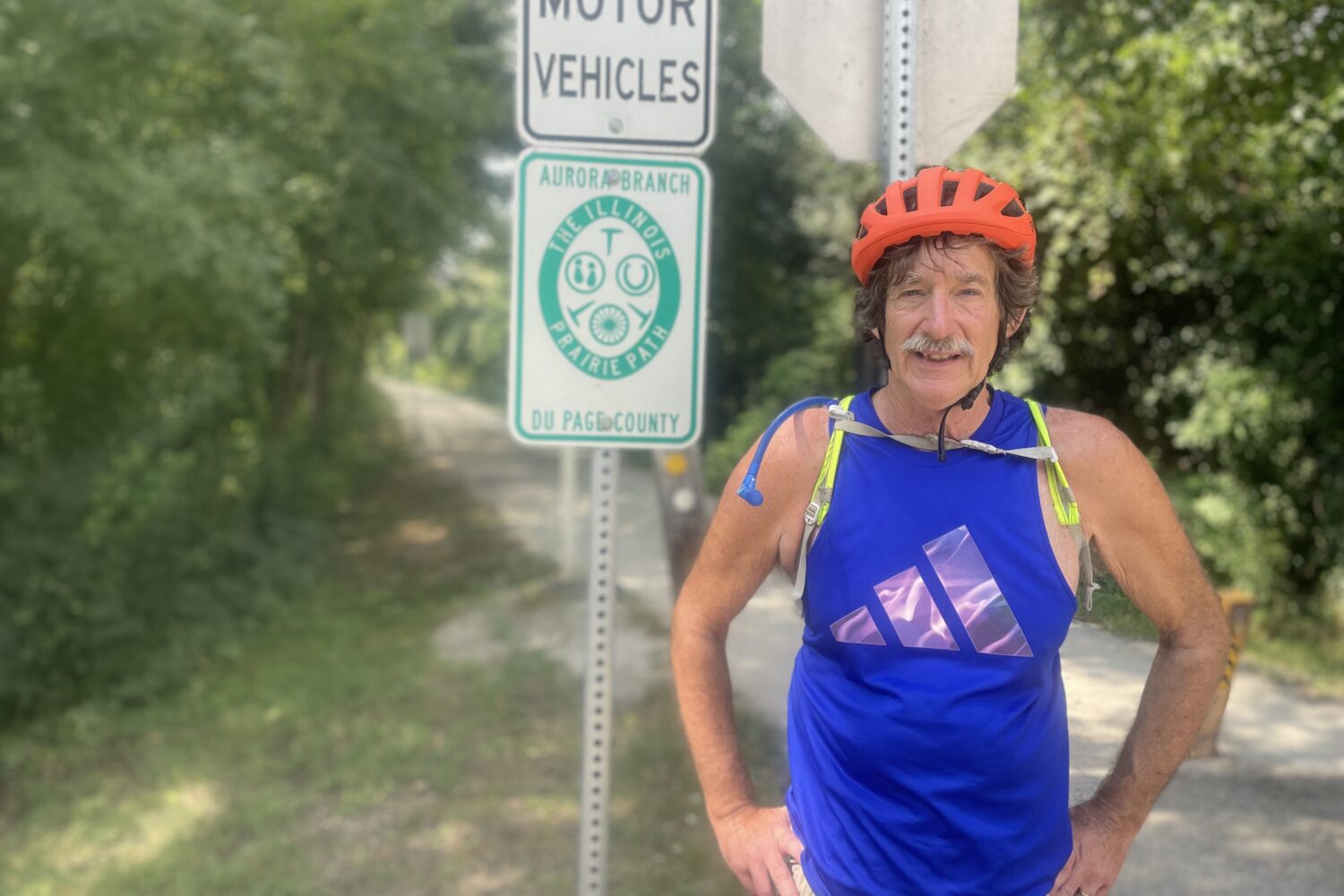
A few minutes later, I watched Pat catch his wheel in a gutter and he almost went down.  Not a good beginning but then we found the Illinois Prairie Path and our cycling abilities improved.  We passed some mothers out pushing infants in strollers and crossed multiple streets on the path as in took us to Warrenville.  The path was beautiful, tree covered on both sides and the surface was primarily crushed limestone.  We circled around the St. James Forest Preserve that had multiple corrals all of which had no horses.  Then came the highlight of the day when we arrived in Warrenville and spotted the memorial to the founders of the Illinois Prairie Path.  Getting this path off the ground was quite the feat thanks to May Watts and close to 12 others who advocated for the creation of a trail on the abandoned rail line. This trail and the Wisconsin trail from Elroy to Sparta were the beginnings of the rails to trails movement and we have much to thank the visionaries who saw what was possible and protected the land.

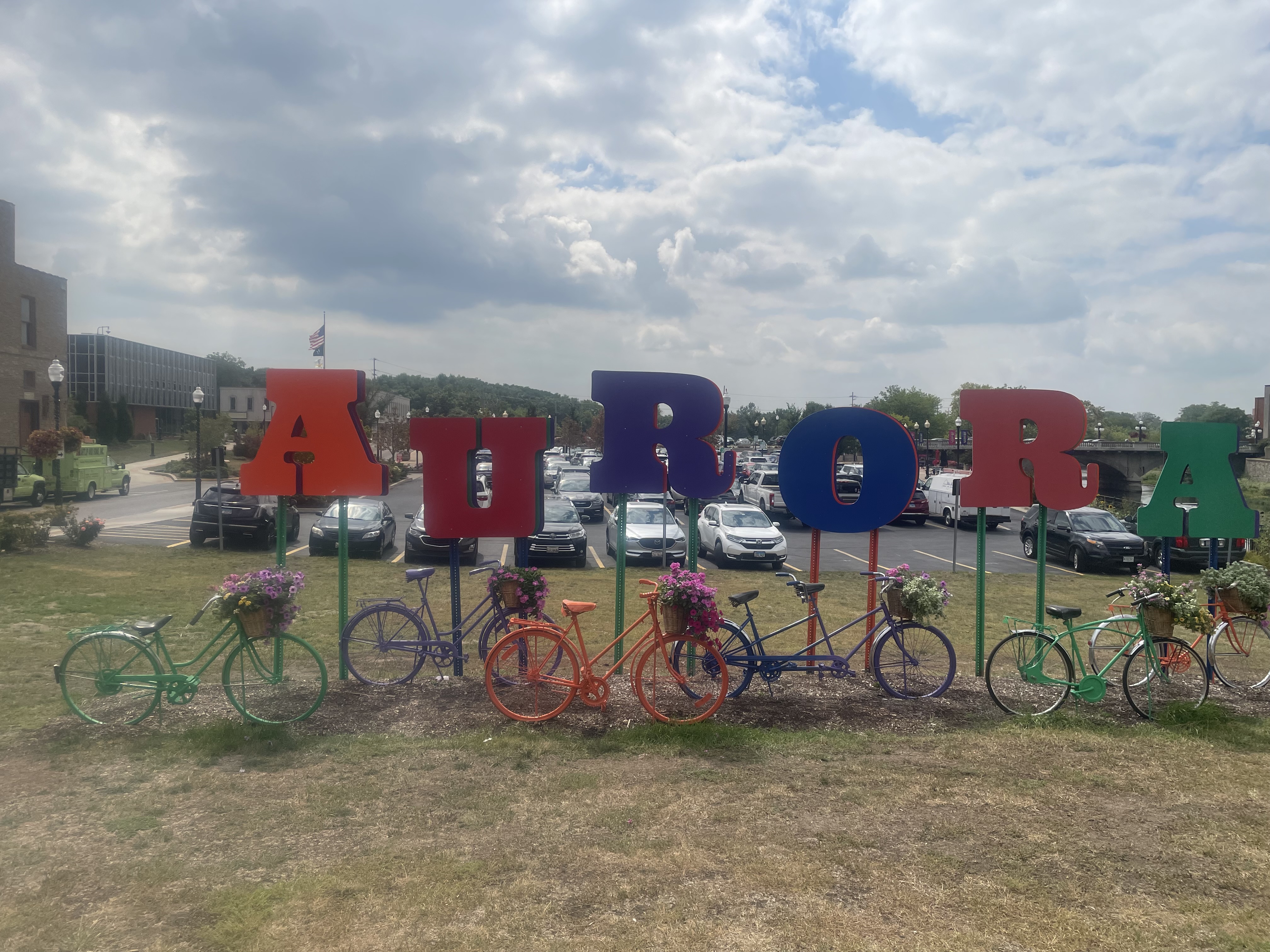
We then entered a section of the trail next to large power lines on one side and cattails on the other, crossed railroad tracks and went through an industrial park section.  It was here that the aroma of coffee was everywhere or perhaps I was fantasizing. The trail ended at the Fox River on the outskirts of Aurora, Illinois.  We found our way to the city of lights, their nickname, because they were one of the first communities to use electric street lights in the 19th century. Multiple businesses on the main street were shuttered but eventually we found a side street for iced coffee across from the city’s library.  Pat took charge of the rest of the trip; from one nature trail to another with suburban sidewalks and multiple housing developments.

The worst part of the afternoon occurred as we neared Interstate 55.  No sidewalks, no shoulders and cars and trucks moving at a fast speed. My brilliant solution to walk inside the guard rails facing traffic was a no go when we discovered a jersey divider over the bride and had to turn back, find a way to cross the horrid road and try walking on the other side with traffic. At one point, Pat moved his bicycle into the lane where the cars were and I was wondering why when I, too, noticed the dead animal in our path. Yuck!!!

After surviving this road intact, we found sidewalks again and continued on to Bolingbrook and Romeoville.  We were stressed and tired and knew our plans to cycle to a campground outside of Joliet was no longer in our sight. Luckily a nice gentleman suggested a few motels not far away and we found ourselves at a Holiday Inn Express. Apparently we arrived on the right night for free wine, beer (Bud Light) and popcorn.  After a excellent night’s sleep in a bed, rather than our daughter’s floor, we are ready for Day Two.

Shevonne and Pat


Training ride on the newly minted Lamoille Valley Rail Trail

It was the perfect day to take on the Lamoille Valley Rail Trail from Morrisville to St. Johnsbury.  The weather was smoky but sunny, it was Canada Day and it was Pat’s birthday. What better way to celebrate than to check out 50 miles of the trail we had never traversed.  As we wound our way from Waitsfield to Oxbow Park, we were filled with nervous energy.. We partially filled two panniers each, checked the air pressure of the tires and covered ourselves in sunscreen. Our plan was to meet my sister, Jill, and brother-in-law, Dave, somewhere along the trail. They were starting from St. Johnsbury and didn’t intend to cycle as far as we had in mind.

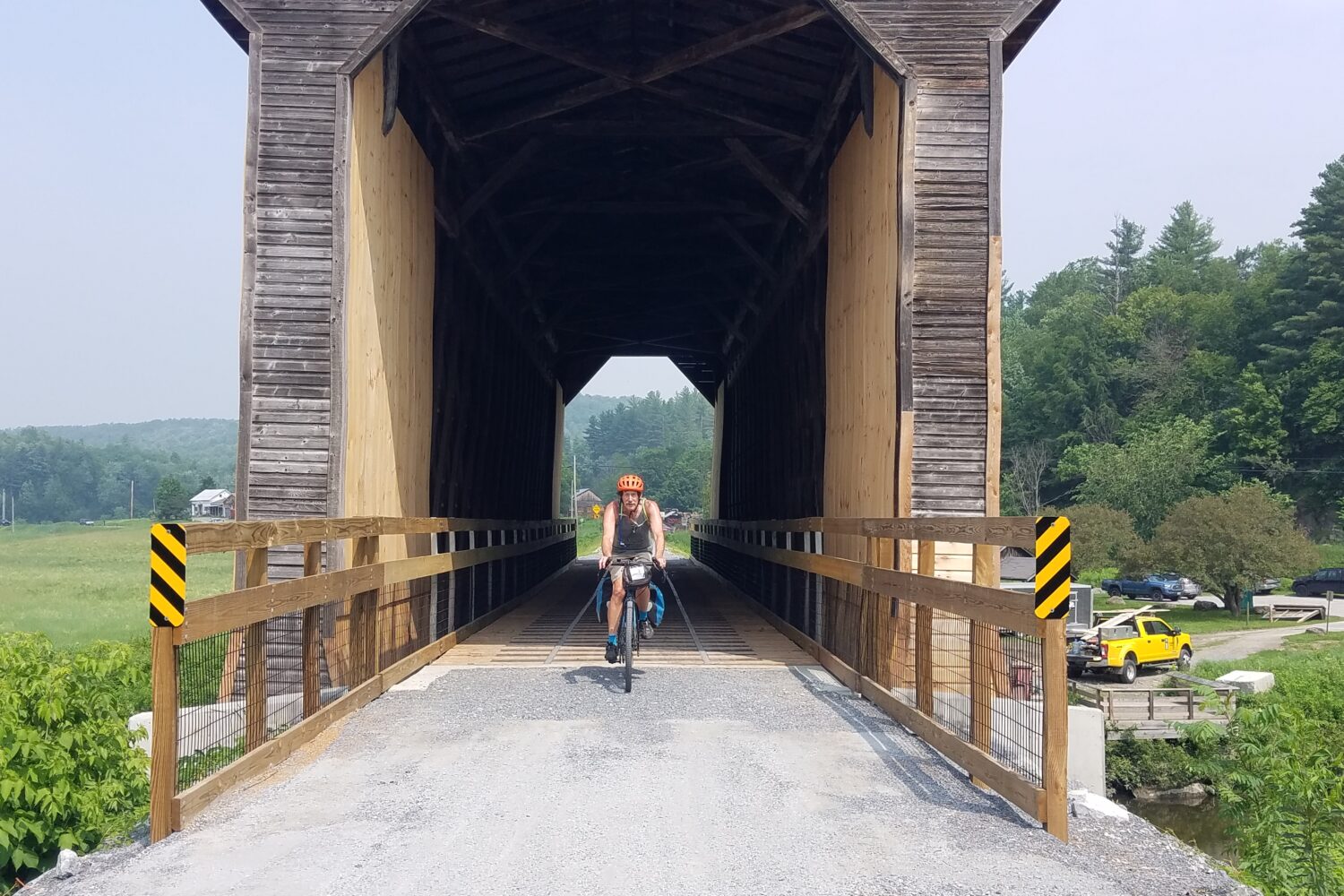
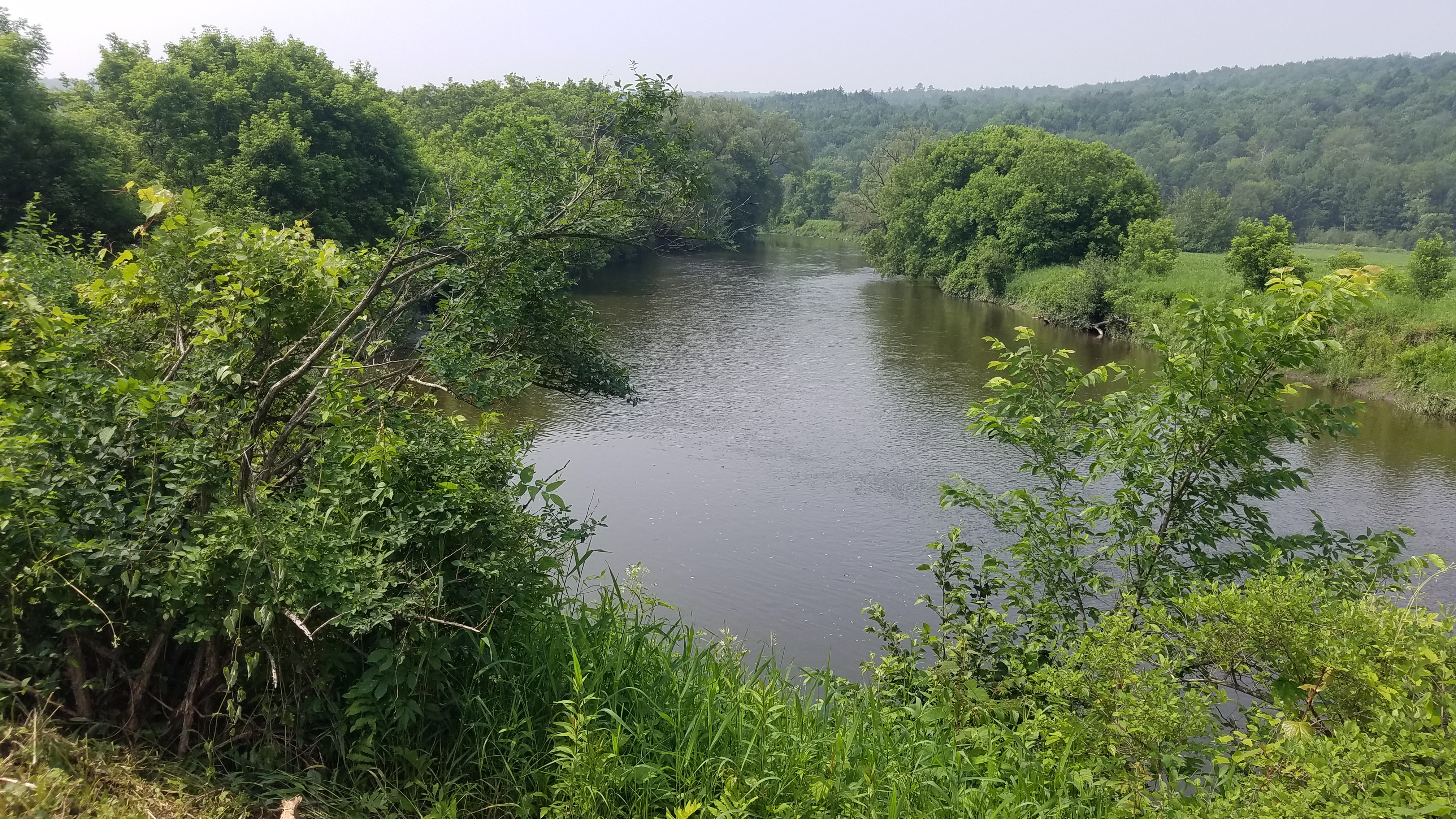
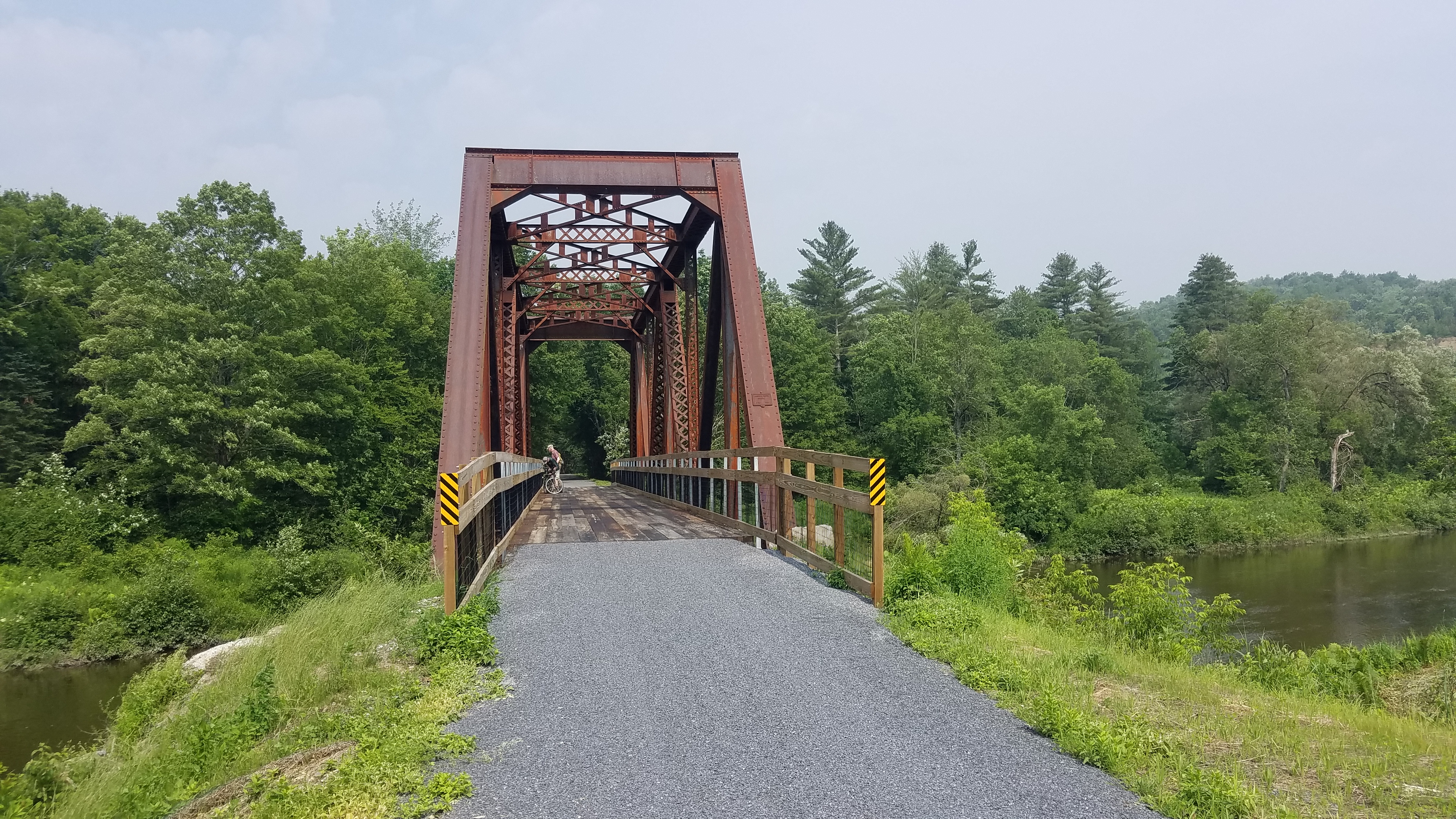
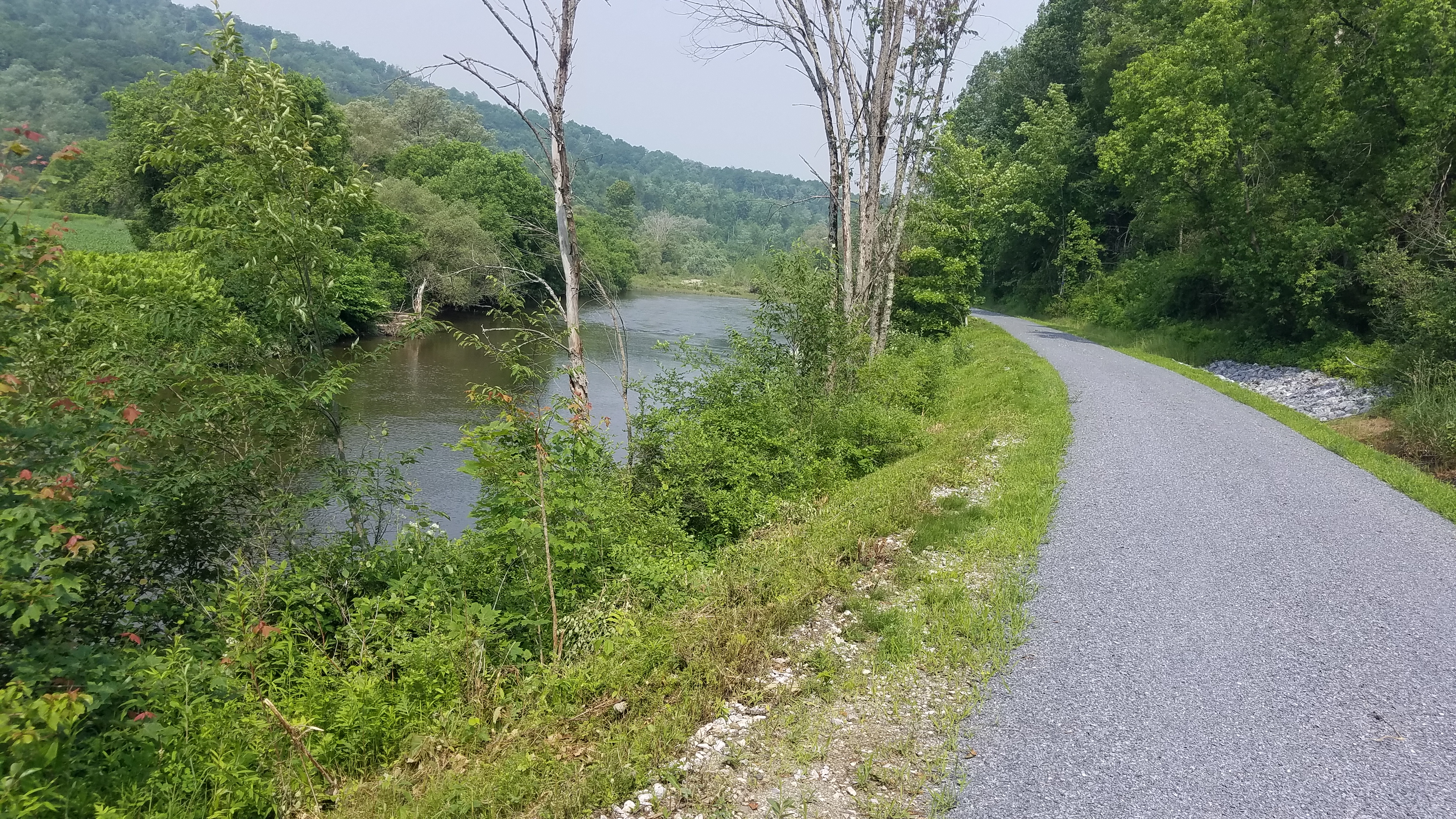
The newly constructed portion of the trail is wide, 10 feet to be exact, and it is covered in gravel, though much more reasonable gravel than whatever they use in Iowa. We crossed bridges on the Lamoille River, passed several  cornfields and marveled at the Fisher Covered Bridge reconstruction. We could see the backside of Wolcott and then cycled on to Hardwick.  Fourteen miles in, we took a detour to purchase some snacks, grabbing a bag of cherries and a box of peanut butter crackers. My goal was to hold onto them until we reached mile 30. We noted the former Hardwick rail depot, also home to the  historical society. and continued to skirt north. That’s when the real fun began. It might have been railroad grade but we never stopped pedaling through East Hardwick to Greensboro Bend to Walden. On either side of the trail we found swaths of forest and farmland  and plenty of cyclists enjoying the downhill coast while we continued to push upward.  At mile 28.5 I gave in; it was time for nourishment. Pat was ecstatic; “I’ve been starving for the last four miles,” he said. “Honey”, I replied, “the food was in your bag.”

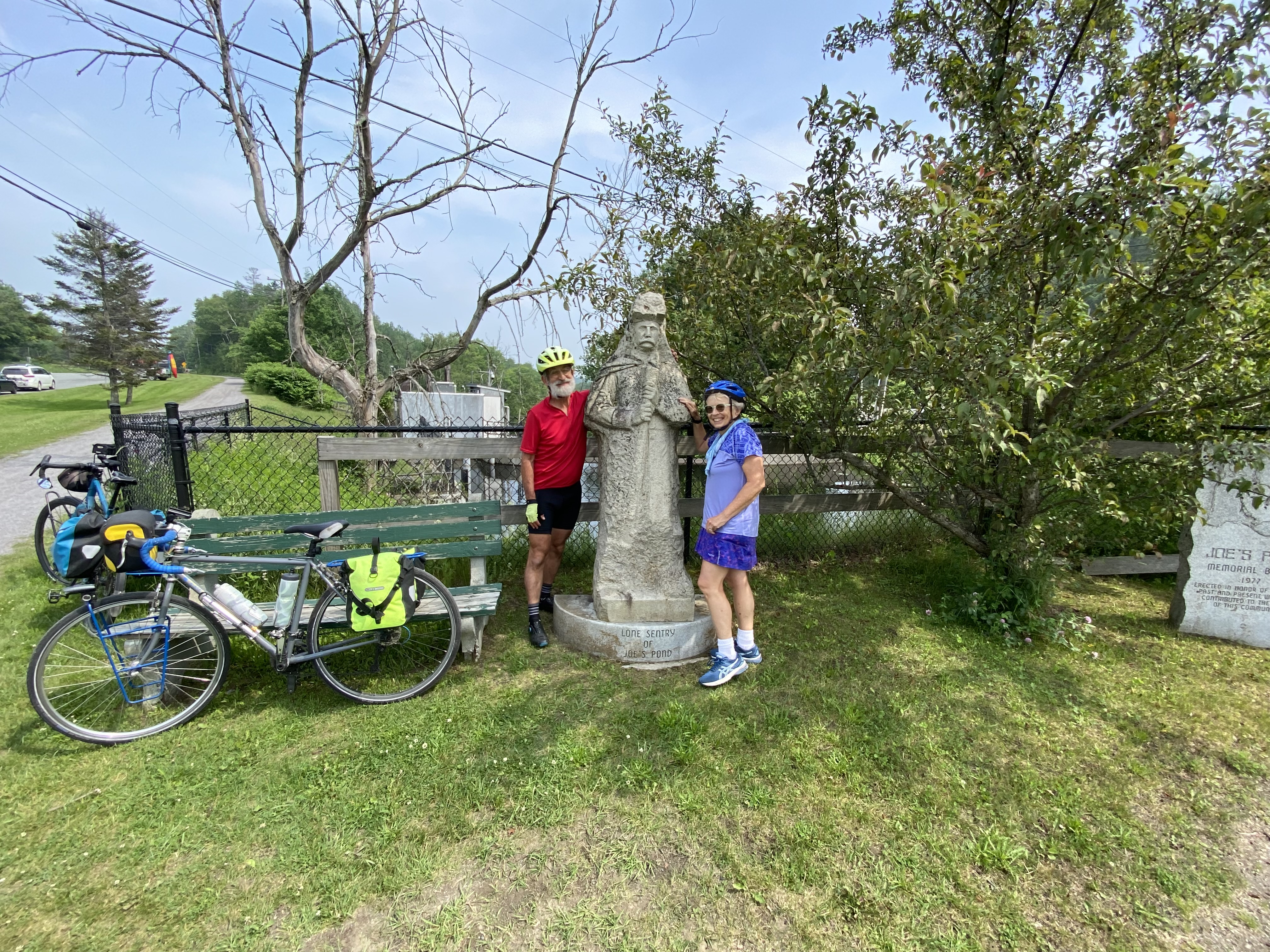
The next six miles to Joe’s Pond became easier because of the food and because we had reached the top of the 16 mile climb. As we entered the trail around Joe’s Pond, we spotted plenty of watercraft and well-maintained lakefront residences. It was here at the public beach that we crossed paths with our family members. They had  climbed from St. Johnsbury to West Danville and were looking forward to coasting all the way back with us to St. Johnsbury where we had reserved rooms at the Cherry House Inn.  The trail was now more narrow, dirt-covered and grass grew in the median. We paid close attention at the road crossings, two of which crossed Route 2. Somewhere along the way, Pat and David disappeared from sight and I received a text that said flat tire.  Jill and I went on ahead, determined to visit the St. Johnsbury Welcome Center before they shut their doors for the evening. While Jill predicted the flat tire repair would be at most 15 minutes, it took them 45 minutes because the tire refused to budge.

Presently, the trail ends at the bottom of the hill in St. Johnsbury. As we neared this end I slowed down, remembering that once upon a time, my former colleagues and I placed a imprinted metal riddle about our PATH Adventure on the trail. I wondered if it was still there; but I couldn’t remember where we had placed it. At the trail’s end there’s a steep rise to the road and then a dip down past a waste hauling company and one more gravel climb.  Our accommodations for the evening necessitated  one more relentless climb. I was doing my best not to be outdone by my younger sister but she sailed right by me. When I attempted to complain about the uphill to a gentleman sitting on a bench halfway up the hill, his response came out of left field. “Isn’t that an e-bike?”, he asked. “No,” I shouted.. “It’s all my own power.”

By the time Dave and Pat arrived, I’d already started my own happy hour with a beer from Virginia and some salty pretzels. The rest of the evening was pleasant; flat breads, shared salads and a chocolate chip cookie smothered in whipped cream to acknowledge  Pat’s birthday. Thankfully, when we awoke to a downpour on Sunday, we were able to catch a ride with Jill and Dave back to our car in Morrisville.

50.3 miles in total. Next training ride on the trail; Swanton to Cambridge and back. No overnight.

Shevonne and Pat


We are back and in training for a 1000 mile cycling trip this September

Illinois, Iowa and Minnesota

To all who might be waiting on pins and needles to learn where the Travers plan to cycle next, here is our update. In early September, we will stuff our Subaru Impreza with our bicycles, our panniers and our dog, Robbie and travel to  DuPage County in Illinois. Upon our arrival, we will  say adieu to Robbie, gifting him to our daughter for a month’s time.  Then we will begin riding west on the Illinois Prairie Path to the Illinois Michigan Canal Trail. We will cross the Mississippi River into Iowa and then travel northwest and north  to Minnesota until we reach he headwaters of the Mississippi River in Itasca. The estimated mileage is a bit over a thousand miles and we will partake of canal towpaths, rail trails, local roads and state highways. As per our style, we will camp, stay in some small motels, and  hopefully find a few Warm Showers hosts along the way.

Father’s Day Training Ride

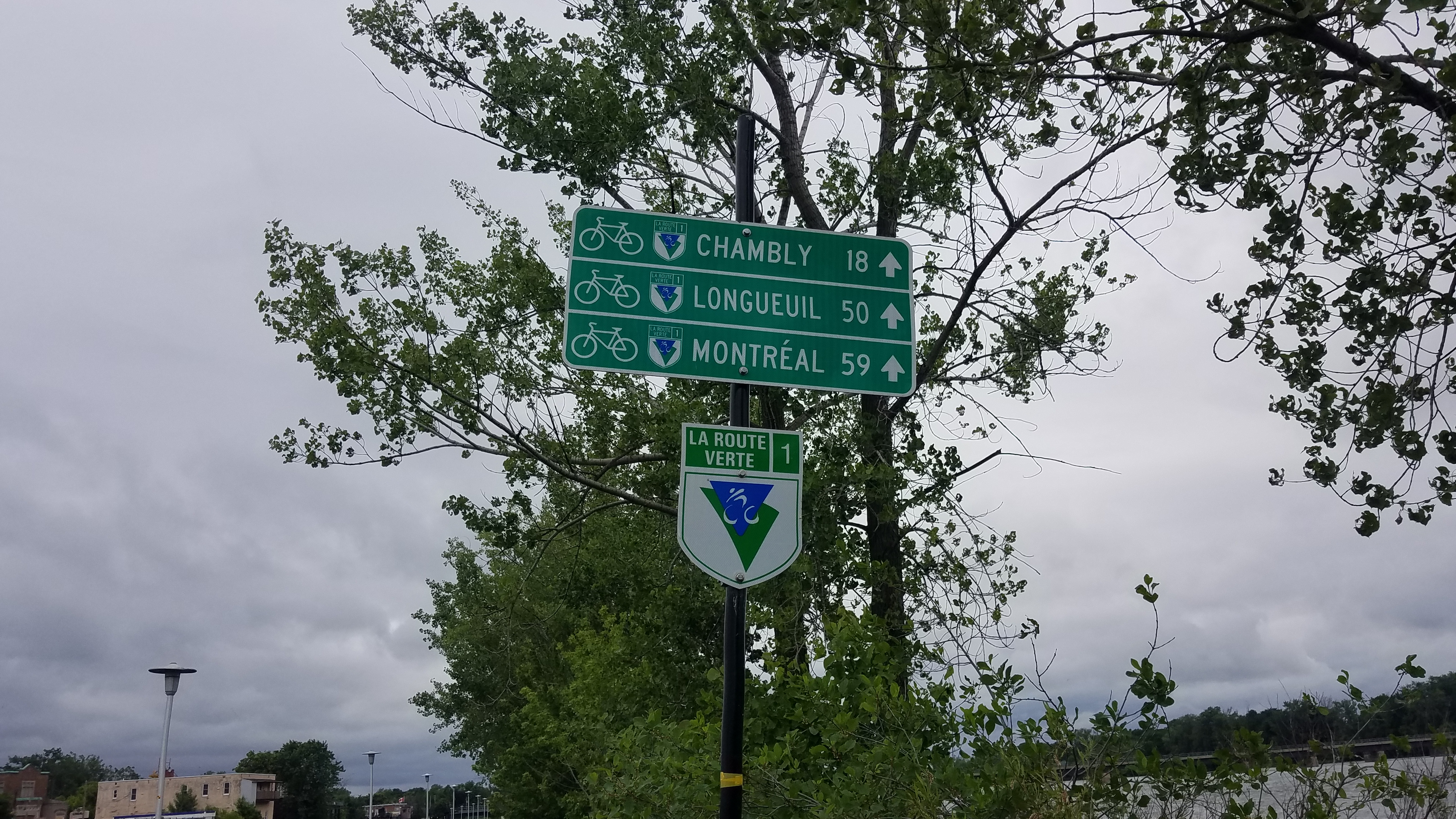
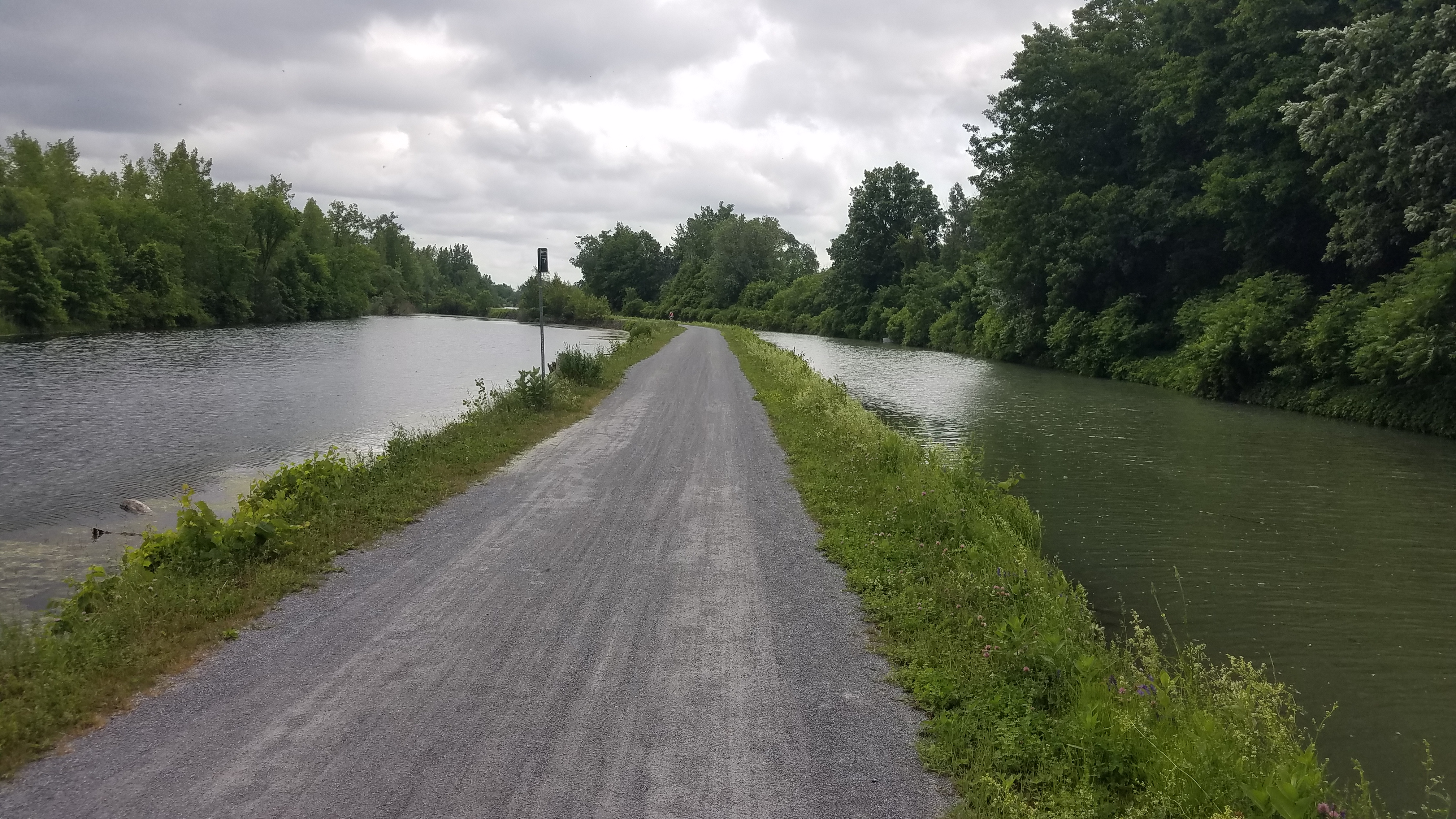
This plan means it’s time for us to get our  bodies in shape once again. Since early May we’ve  been training on a variety of rail trails and up and down the hills in the Mad River Valley. In honor of Father’s Day and because Pat’s new passport arrived in the mail, we journeyed by car to Saint Jean sur Richilieu in Quebec to ride on the Chambly Canal trail. This trail is 12 miles in length each way; it’s flat, filled with exquisite scenery and offers delicious food and drink once in Chambly.

It was 55 degrees when we left our home and we had gained only three more degrees when we parked at the tourist information center. After stepping out of the car, my first words were -“it’s too cold; I don’t want to do this.” Of course, I hadn’t dressed appropriately for the weather; the shorts and sleeveless shirt I had on weren’t helping me want to spring into action.  Pat’s response was the perfect way to get me on the bicycle. We’ll be in temperatures much like this in Minnesota this fall,” he said. So, I stopped whining and put on my bicycle shoes. At least I had brought along a windbreaker.

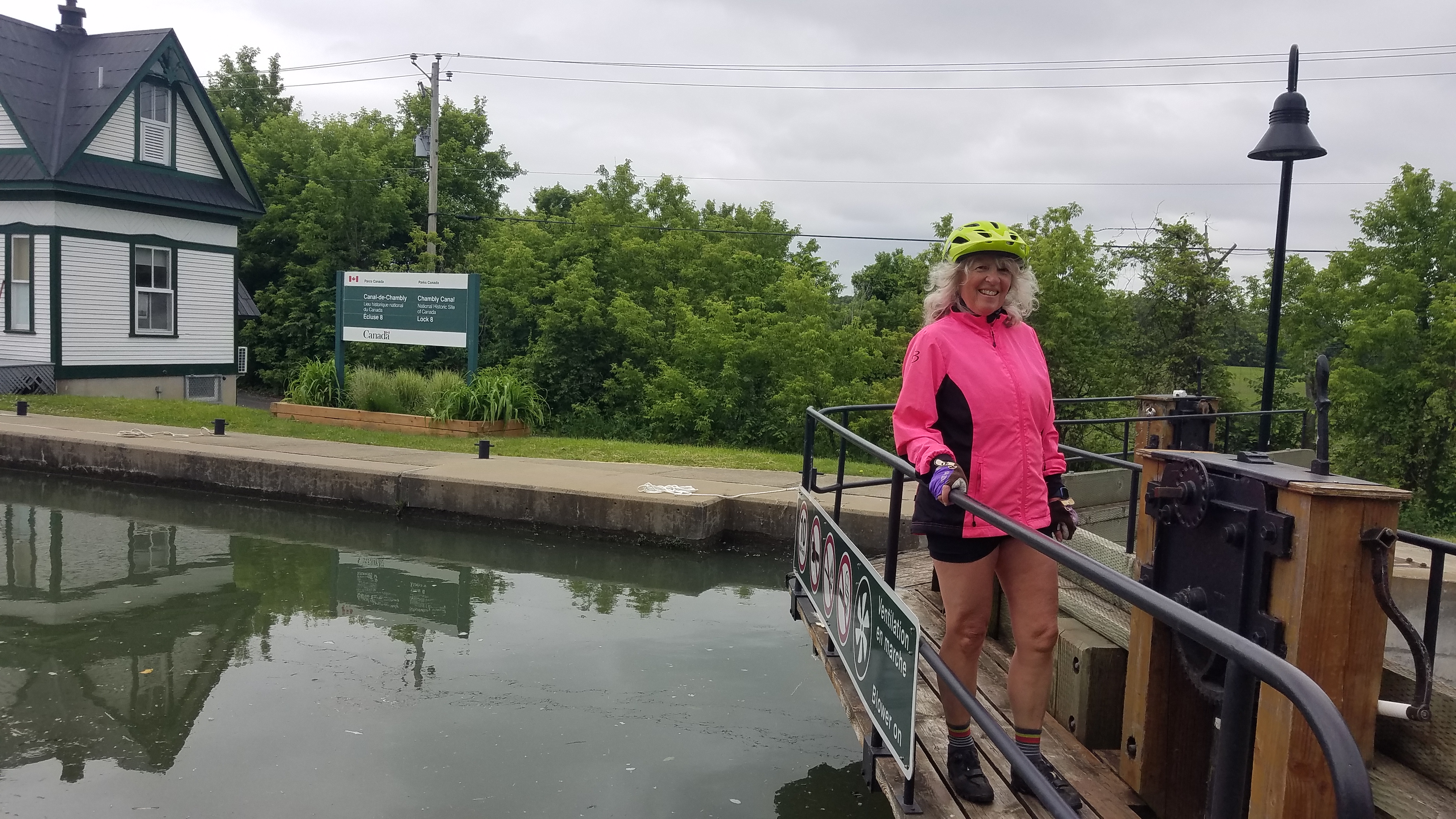
Though chilly with the wind blowing in our faces, the ride was easy and seemed way too fast. Unlike the C and O canal the Chambly Canal is an active canal with several locks requiring many lockmasters. This time we spied a boat that had traveled from Georgia.  At the halfway point, we stopped for lunch and tried mussels and frites served in a blue cheese broth. One beer and one sangria later, we were back on the trail, this time with the wind lending us a hand.

I don’t know where our next training ride will take us but we’ll keep you apprised as the summer continues.  I’m betting we’ll be doing some long trips on the newly minted Lamoille Valley Rail Trail across Vermont.

Shevonne and Pat


And Now for our Reflections and Acknowledgements

First from Pat,

So, our “event of a lifetime” is now behind us and I have had some time to pause, look back and reflect over what we just did. The first thing that comes to mind is, Wow, what an accomplishment, we did it! We traveled some 3,000 miles, across 14 states, from Seattle to Washington, DC on our bicycles! And, we did all that with our own legs, all the way.  Self-powered. I must say that I am quite proud of that. 

Another reflection is, what a diverse and beautiful country we live in. We got to see Puget Sound, the Cascade Mountains, the Rocky Mountains, the Great Plains, the Great Lakes, the Midwest and the Appalachians. We traveled through deserts, forests, corn fields, soybean fields, and dairy farms. We experienced several cities, including Seattle, Lincoln, Omaha, Chicago, Columbus, Pittsburgh and Washington, DC., and countless cute small towns, too many to mention. We also crossed over or cycled along dozens of rivers, including the Columbia, the Missouri, the Mississippi, the Ohio and the Potomac. There is great diversity to see out there and I am happy that I got to see it at ten miles per hour.

Thirdly, and perhaps most importantly, this trip restored my faith in humanity. With so much focus on negativity nowadays, I learned that the vast majority of people out there are indeed friendly and want to help. And it doesn’t matter where they live, what they do for work or what they have experienced in their backgrounds. On many occasions during this journey, when we really needed assistance, someone always showed up to give us a ride, provide us with water, lend us a hand on a repair or offer some other kind of help. This was very gratifying. I was also astounded by the daily curiosity and interest that total strangers showed in what we were doing. Some even took us out to dinner.  We have made some new friendships all across this country. I really didn’t expect all of this generosity when I started this trip.

Acknowledgements

First, I would like to thank my wife, Shevonne, for coming up with the idea of doing this trip. Frankly, I don’t know if I would have come up with the concept on my own.Secondly, I would like to thank my employer, Greenman-Pedersen, Inc., for allowing me to take a three-month leave of absence to take this journey and wanting me to come back to work after I finished the trip.

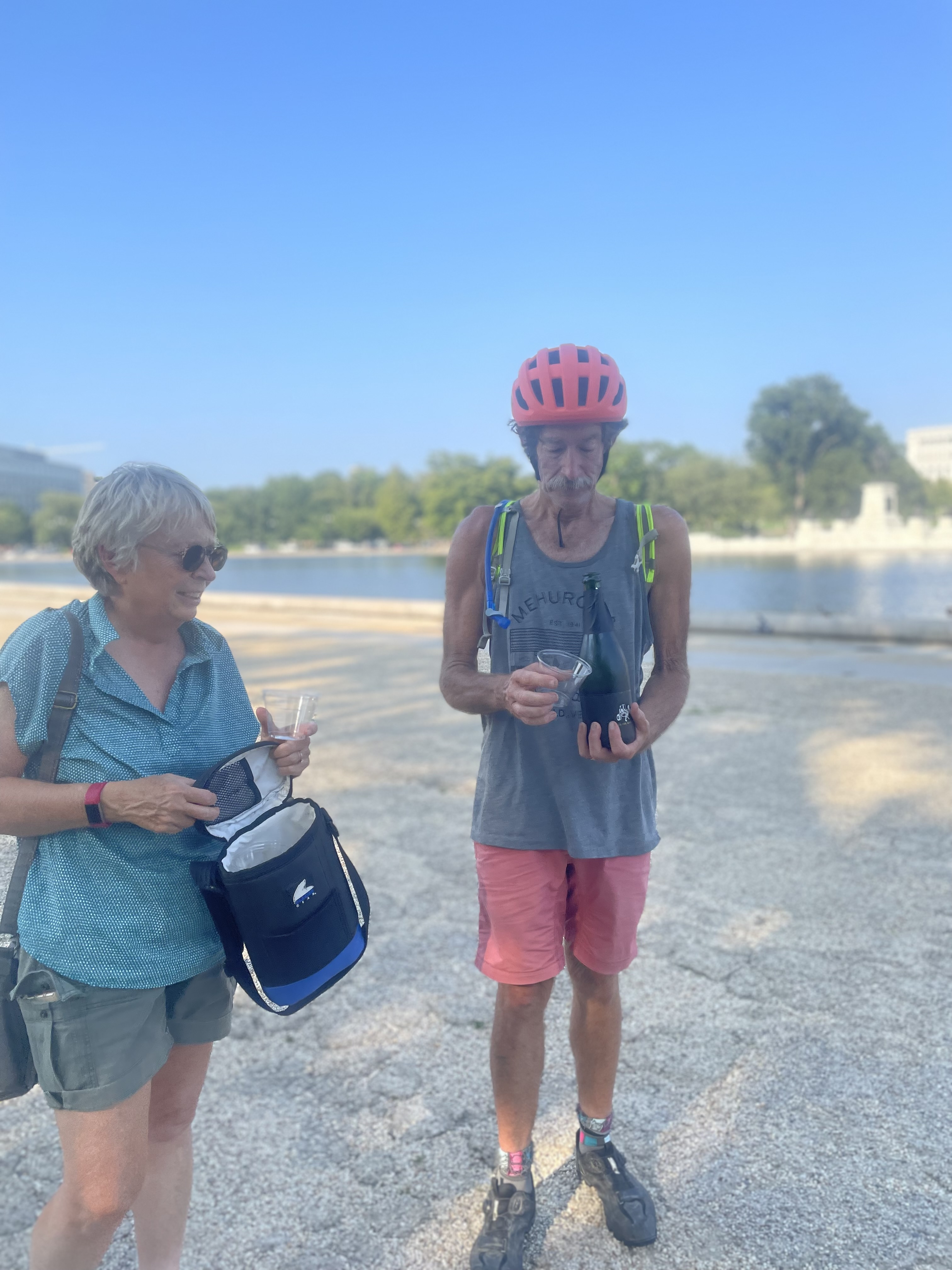
I also want to thank my brother-in-law, David Morganwalp, for providing guidance on what we would need for equipment and gear and to Jill, my sister-in-law for dropping us off at Union Station in Washington D.C. for our train trip west and picking us up in front of the US Capitol on the other end of our cycling trip and toasting us with champagne.

I also need to give out a shout to my sister-in-law, Leah Wilder, for picking us up and hosting us at her home in West Virginia when we ran out of rail trail and later taking us into Pittsburgh to avoid a dangerous road.

A big thank-you has to go out to all of the Warm Showers hosts that invited us into their homes, fed us, allowed us to do laundry and take a hot shower. The Warm Showers concept is awesome and we will now be hosting passing cyclists in our home through Warm Showers.

Thanks to all of our friends and neighbors here in the Mad River Valley and beyond, who warmly sent us off in June, followed our blog, eagerly awaited my Facebook posts, expressed support during the trip and gave us such an awesome welcome when we arrived back home. To this day, we are still receiving “Welcome back” greetings and that is heartwarming.

And finally, huge thanks to all of the “trail angels”, all across the country, who provided help when we really needed it.

And now from Shevonne,

The fact that an individual can pedal across our country continues to astound me. While many folks we talked with along the way indicated that they would not be able to cycle 10 miles let alone 3000 miles, for the vast majority this is probably not accurate. As we discovered, our bodies, our minds and our souls can adapt to new environments and new challenges that we present upon ourselves.

Putting our trust in others was absolutely essential for us on this journey. Our most horrific day was our fifth day into the trip, on the Army base in Washington, where we experienced miles of pushing our bikes through sand, high temperatures and then an unrelenting windstorm. Then, Bob Myrick appeared out of the blue to help us. it was then that I realized a power greater than the two of us would guide us forward and all we had to do was find the space to believe in and to trust others.

My best moments throughout this summer on wheels were those in which we made ourselves available to talk with others and listen to their stories. My life has become much richer and our connections with people now stretch across the country.

Though our family members and close friends expressed concern as to how we would endure all those days together, Pat and I discovered that we are a forceful duo when faced with the unexpected. 

Acknowledgements

To my father, Henry Walp, whose story of how he traveled from Pittsburgh to California by bicycle in the summer of 1939, lit a fire inside of me as a child and a flame that I could not extinguish until I was able to make my own cross-country journey.

To the Rails to Trails Federation for their vision and promotion of the Great American Rail Trail, that though unfinished, convinced me that this trip could be safer than I had ever imagined.

To my siblings, Jill and Leah, who housed us and listened to me when I was frantic about either a trail closure or my disastrous bicycle issues, I thank you. And to my niece, Carly, who knew exactly how to bring our Two Slowpokes on Spokes blog to life.

To my son, Ryan, who while expressing plenty of trepidation about his mother taking this on, stuck by me and listened by phone as we moved across the country. To my son, Corey, and his partner, Kyra, who shared their Iowa home for a much-needed respite and then subsequently assisted our daughter, Destyni, in moving from Arizona to Chicago for dental school.  This enabled Destyni to move without requiring any help from us.

To our friends from the Mad River Valley and Grand Isle who celebrated our leaving with a bon voyage party and then upon our return surprised us with another fabulous get together.

To everyone who read our stories on our blog, on Facebook or in the Valley Reporter and added supportive comments along the way. We appreciated it all and were thrilled that you lived vicariously through us.

To my former employer, VSBIT, and the VEHI PATH team for listening to me as I talked incessantly about this idea for over a year and for making sure I stayed relatively dry from bad weather throughout the trip.

And lastly, I want to thank Patrick, who got on board with this idea, spent hundreds of hours building an itinerary complete with maps, distances and places to stay and then carried it all in a pannier in a three-ring binder. Every time our trip needed some revamping because of unforeseen circumstances or because I was in a panic about the lack of shoulders on a road, he graciously found new routes to travel.


Cheers to all of you!!!  We shall miss writing to you all.


From the C and O Canal Towpath to the US Capitol – Tout Fin!

“I need to find a post office,” Pat said on the second day we were cycling on the C and O Towpath. Me, in my typical gullible fashion, fell for it. “What do you need to mail?” I asked, a bit irritated by his desire. Pat, has made it a point of lightening what is in his panniers throughout this trip – and we only had two days more of cycling. What could he possibly need to mail now?  “My blue jacket that I haven’t worn since the State of Washington,” he responded. And then he cracked a big smile. “Gotcha,” he said.

Last Saturday morning, we steered our bicycles toward the C and O Towpath in Cumberland, MD, which is 184.5 miles in length. Thanks to interpretive signage, we learned that on July 4, 1828, the construction of the Baltimore and Ohio railroad began in Baltimore while at the same time the construction of the Chesapeake and Ohio Canal began in Georgetown. It was a race to see who would finish first. The railroad won opening eight years earlier than the canal did. And while the B and O railroad continued on to the Midwest, the canal threw in the towel and ended in Cumberland. According to what we read, it was George Washington who, several years earlier, recognized how valuable linking the Potomac to what eventually became Pittsburgh, would be for the new nation.

Because the canal couldn’t compete with rail in terms of speed or capacity, (after all, it relied on mules), it was nearly obsolete from the time of its opening. Bulk commodities including lumber, wheat and coal were transported on the canal as were passengers. The canal continued to operate until 1924 when a significant flood damaged it beyond repair. Over decade later, the federal government took ownership and this summer, marks the 50th anniversary of the C and O National Historical Park.

Cycling on the towpath has its share of highlights and challenges. Several miles of it are in need of resurfacing and because of this. when it rains, the mud can be overwhelming. It is the one trail wherein we might have purchased more food in advance as there is nothing nearby.  There are plenty of primitive camping sites along the way and in many sections, as you ride, you can see the railroad, canal and the Potomac River at the same time. As we cycled we passed by several locks that the canal boats once traveled through

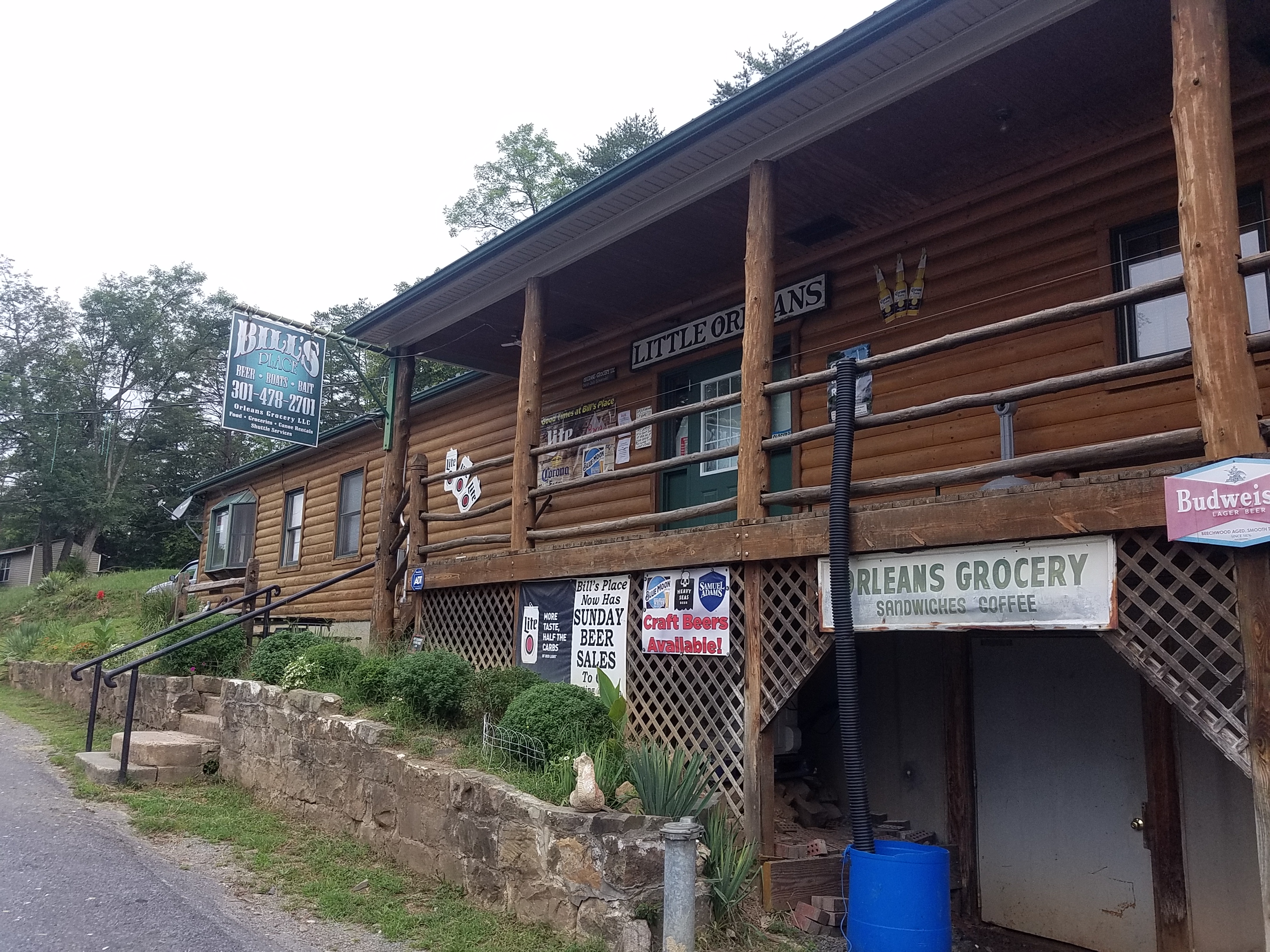
The first night we opted to set up camp and grab a bite of something to eat at the only establishment around – Bill’s Place in Little Orleans, MD.  Bill’s Place had a 50th anniversary a few years ago and there’s a For Sale sign in front of it. In spite of the “Welcome Cyclists” banner, we felt very much out of place.  We’re not sure if that was because we arrived on bicycles rather than motorcycles or perhaps because we didn’t fit in with their usual clientele.

Back at the campground, we took a quick swim in the Potomac – the only way of showering and then hunkered down to watch the moon rise. The next morning, we were able to change it up and cycle on the 28 paved miles of the Western Maryland Rail Trail, which is right next to the towpath, through the town of Hancock to Fort Fredrick where it ends because of an active rail line.

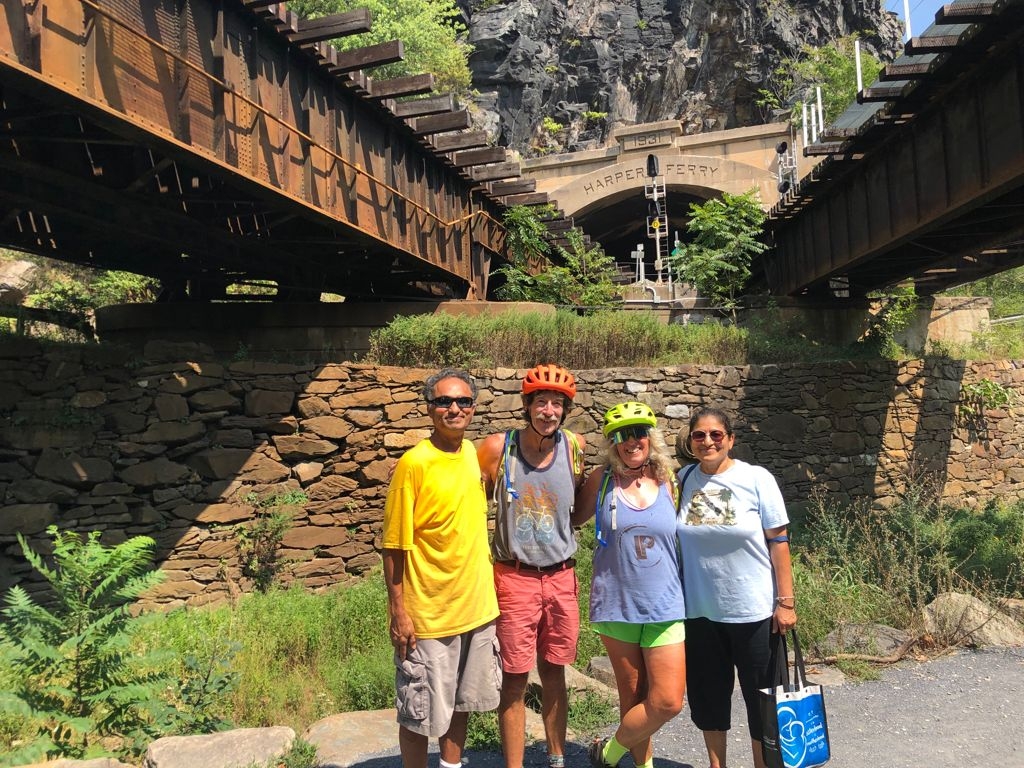
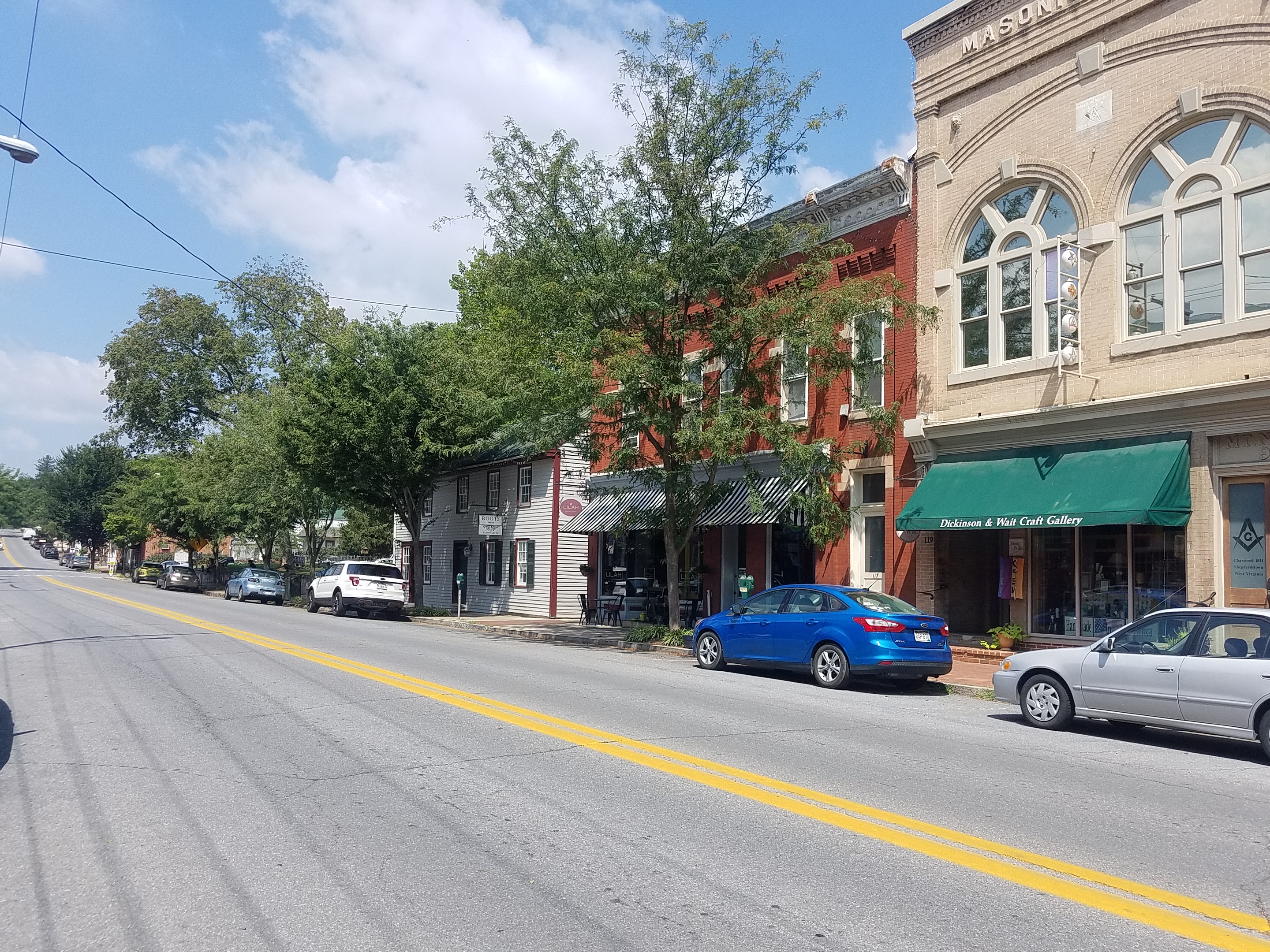
We stopped for the night in Williamsport, MD and then on Monday, we made our way to Shepherdstown, WV, crossing over a bridge into the historic village. Shepherdstown is the home of Shepherd University and Monday was the first day of classes there. Returning to the towpath, we cycled to the bicycle parking area at the Harper’s Ferry intersection, which offers another bridge crossing, but instead of a bicycle ramp leading up to that bridge, one has to either carry their bicycle up and down multiple steps or lock it up in the provided rack.

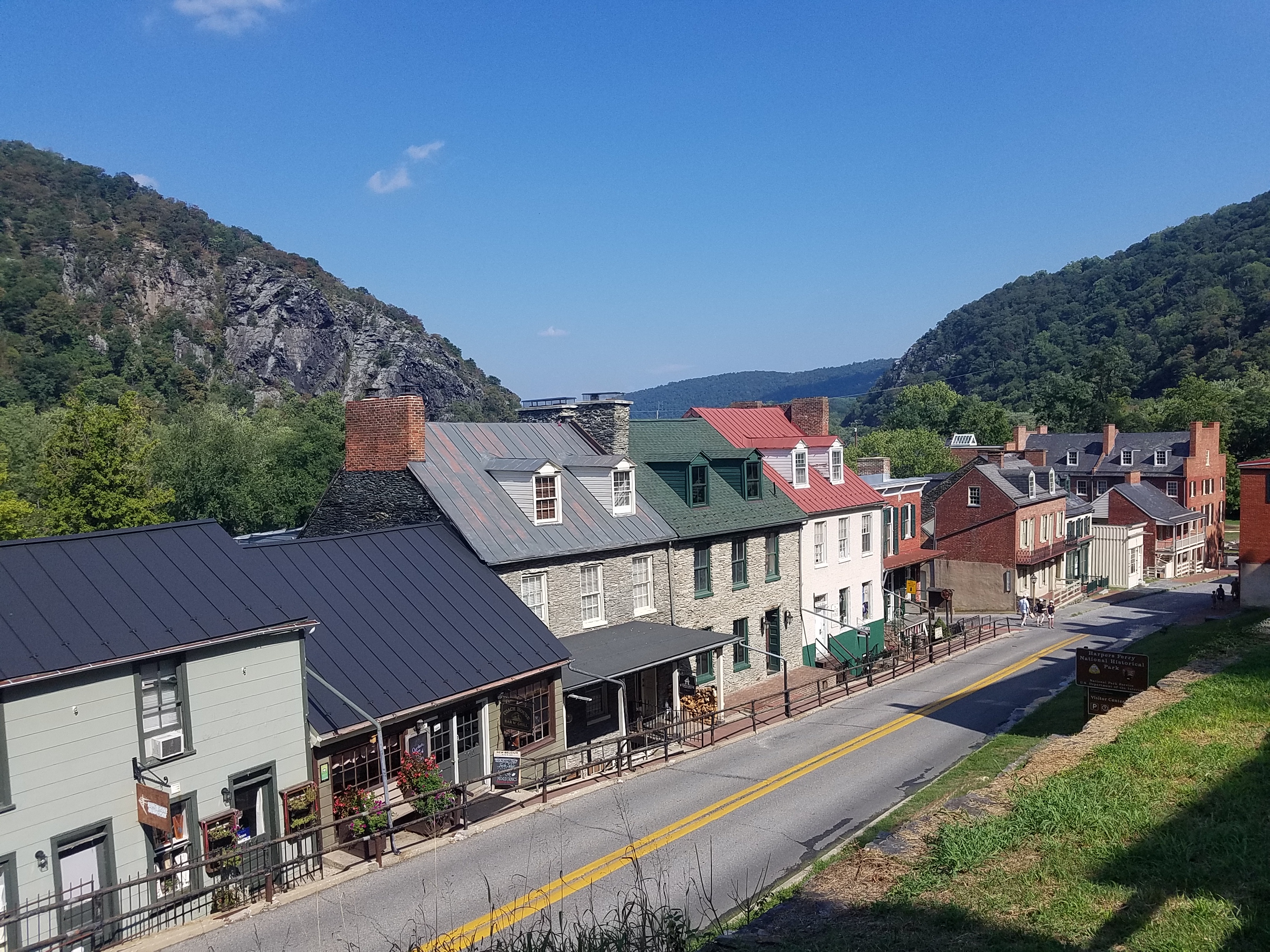
It was fairly hot by the time we arrived, but we did our best to meander through some of the National Historic Park and spent the majority of our time inside the John Brown museum. Neither Pat nor I had ever really spent time at Harper’s Ferry and after reading everything in the museum, the question for us remains – Did John Brown truly precipitate the beginning of the Civil War?

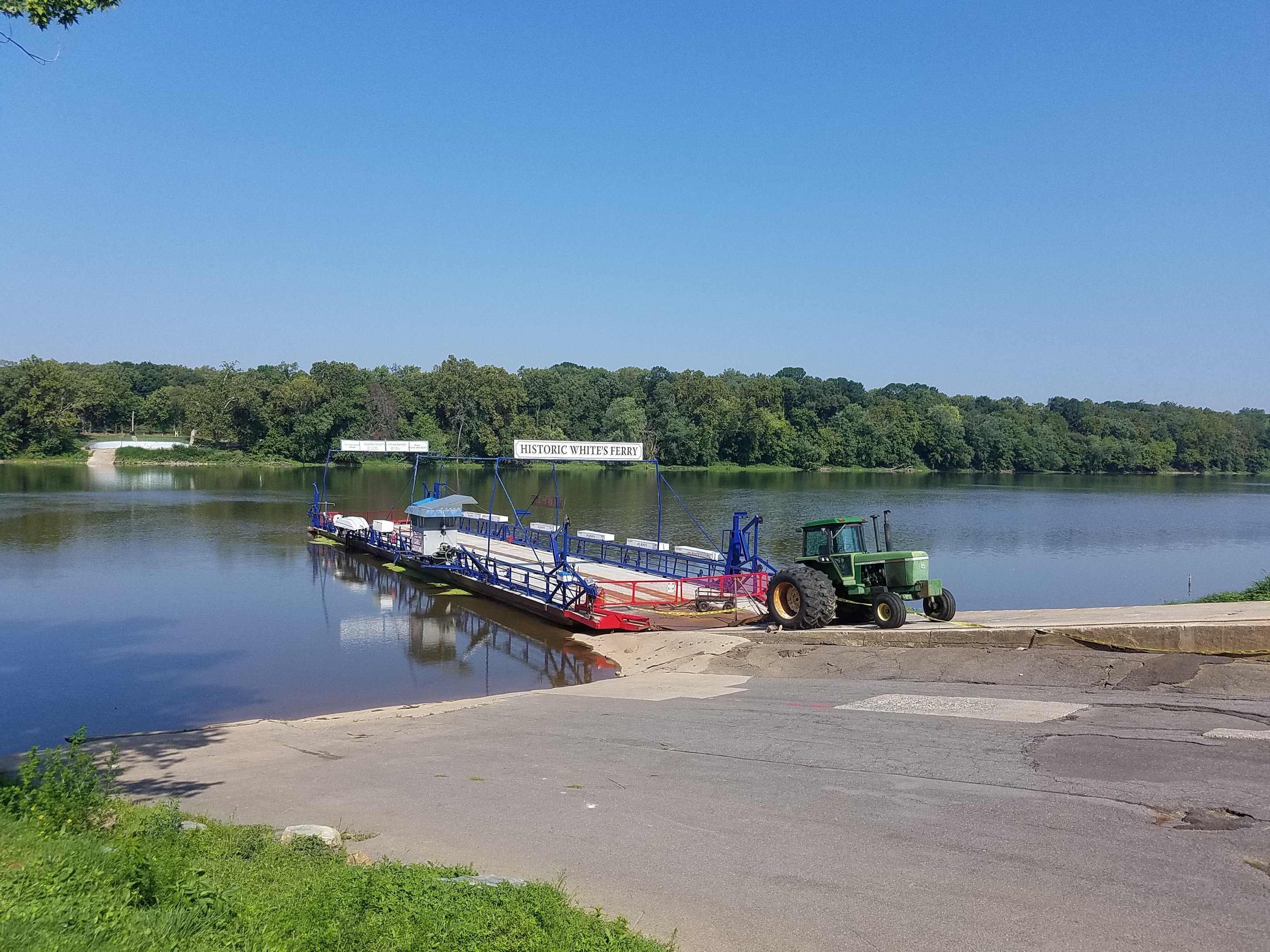
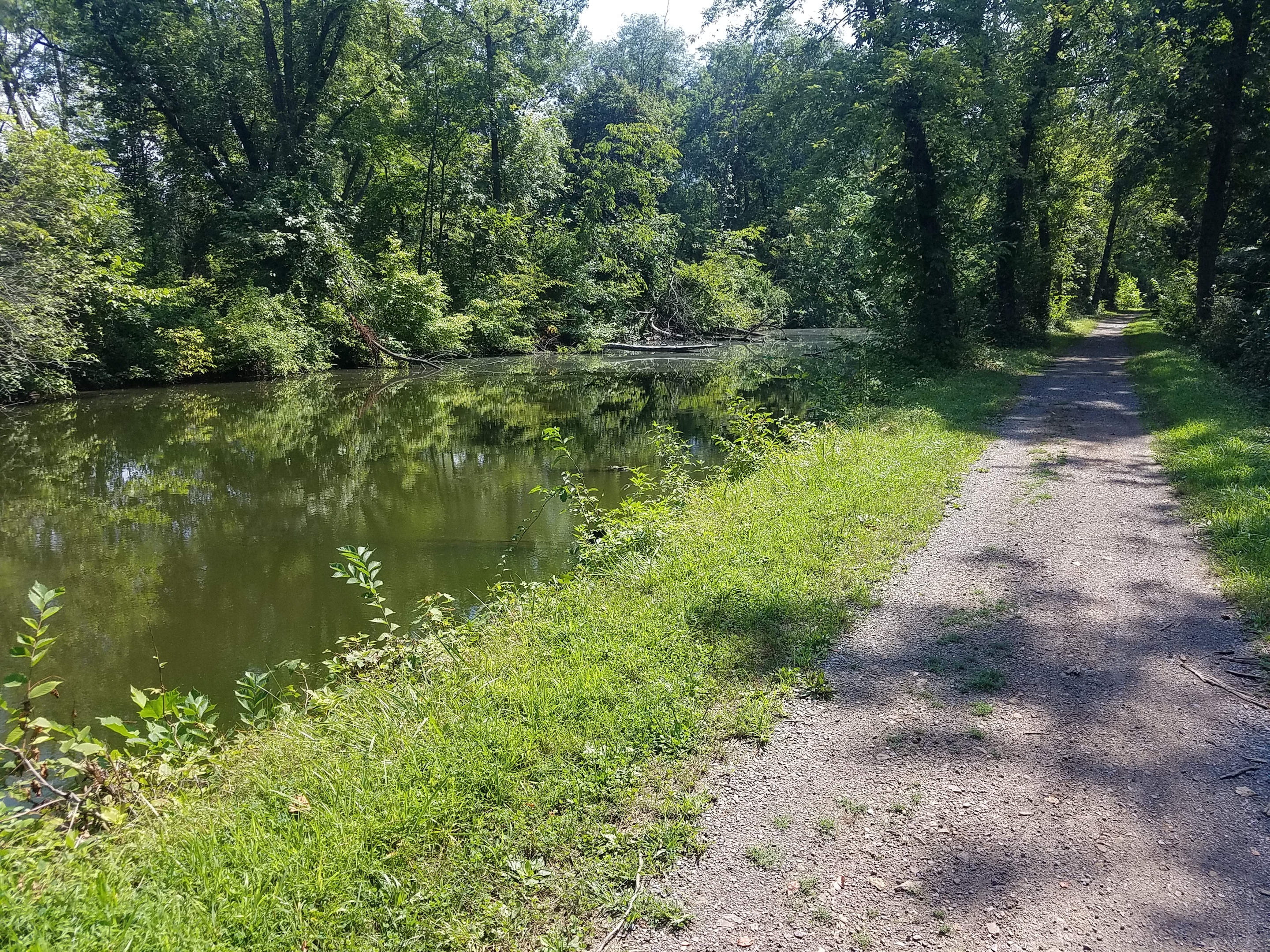
On our last night on the towpath, we pitched our tent at the Indian Flats Hiker-Biker Campsie, about 42 miles outside of Washington, DC. This was our first experience at this type of campsite, and they are very primitive. – just a water spigot and a porta-let.  Appropriately enough, we were serenaded a few times by train whistles from the nearby railroad. In the morning, we had cold coffee in the tent and headed out on our bicycles for breakfast seven miles downstream at the historic White’s Ferry.

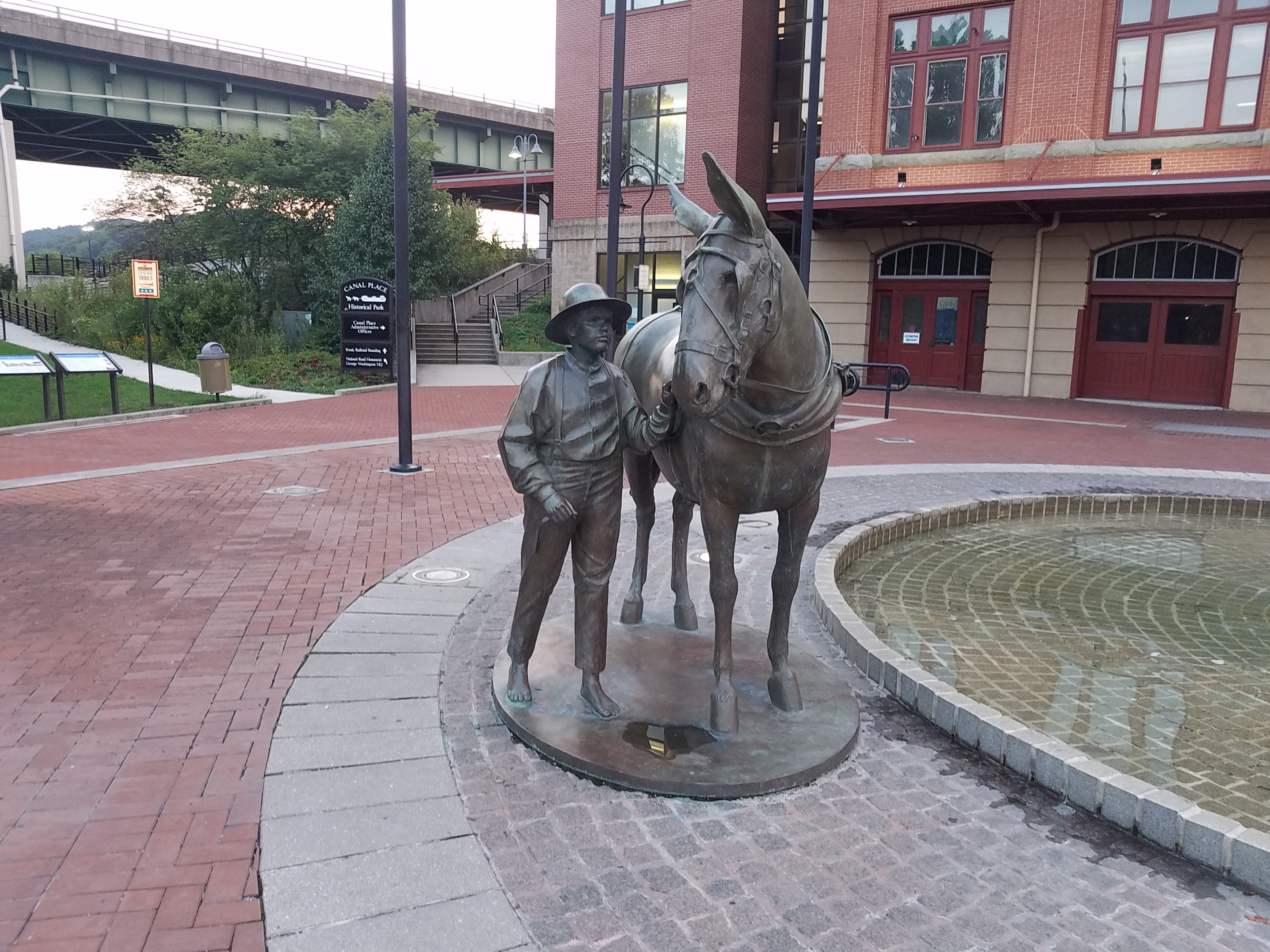
The next stop after breakfast was the Potomac Great Falls, where the river cascades through flumes over a series of rocks. The falls area is quite scenic and kayakers like to shoot the rapids here. An old barge boat is also docked at the lock house, which in non-pandemic times offers rides in the canal.

Three miles from the end of the C&O Canal Towpath, we cut over onto Washington DC’s Capital Crescent Trail, to stay on the Great American Rail Trail. At that trail junction, we stopped for a soda at The Boathouse at Fletcher’s Cove. A local cyclist/banjo player gave us some tips on cycling in the area and shared stories about his life.

In Georgetown, we had the pleasure of meeting up with Kevin Belanger, the Manager of Trail Planning for the Rails-to-Trails Conservancy. This is the non-profit organization spearheading the development of the Great American Rail Trail. We had a very nice chat with Kevin and provided him with our frank assessment of the various portions of the existing segments of the trail and how the conservancy might better communicate the status of the planned nationwide rail trail.

After meeting Kevin, we had a mere four miles to go to finish our “journey of a lifetime.” Just a quick ride down the Water Street Bike Lane to the Rock Creek Trail and then the National Mall Trails. How appropriate and fitting it was that a portion of the Rock Creek Trail is being reconstructed and we had to follow yet another detour for about a mile on the city streets of DC! This included going through an intersection on Constitution Avenue with a malfunctioning traffic signal. Nobody said this would be easy.

With the detour behind us, we pushed on for the last three miles. The Rock Creek Trail fed us into the National Mall. In front of the Lincoln Memorial, we stopped to take in the view of the Washington Monument, the Reflecting Pool and the US Capitol in the distance.

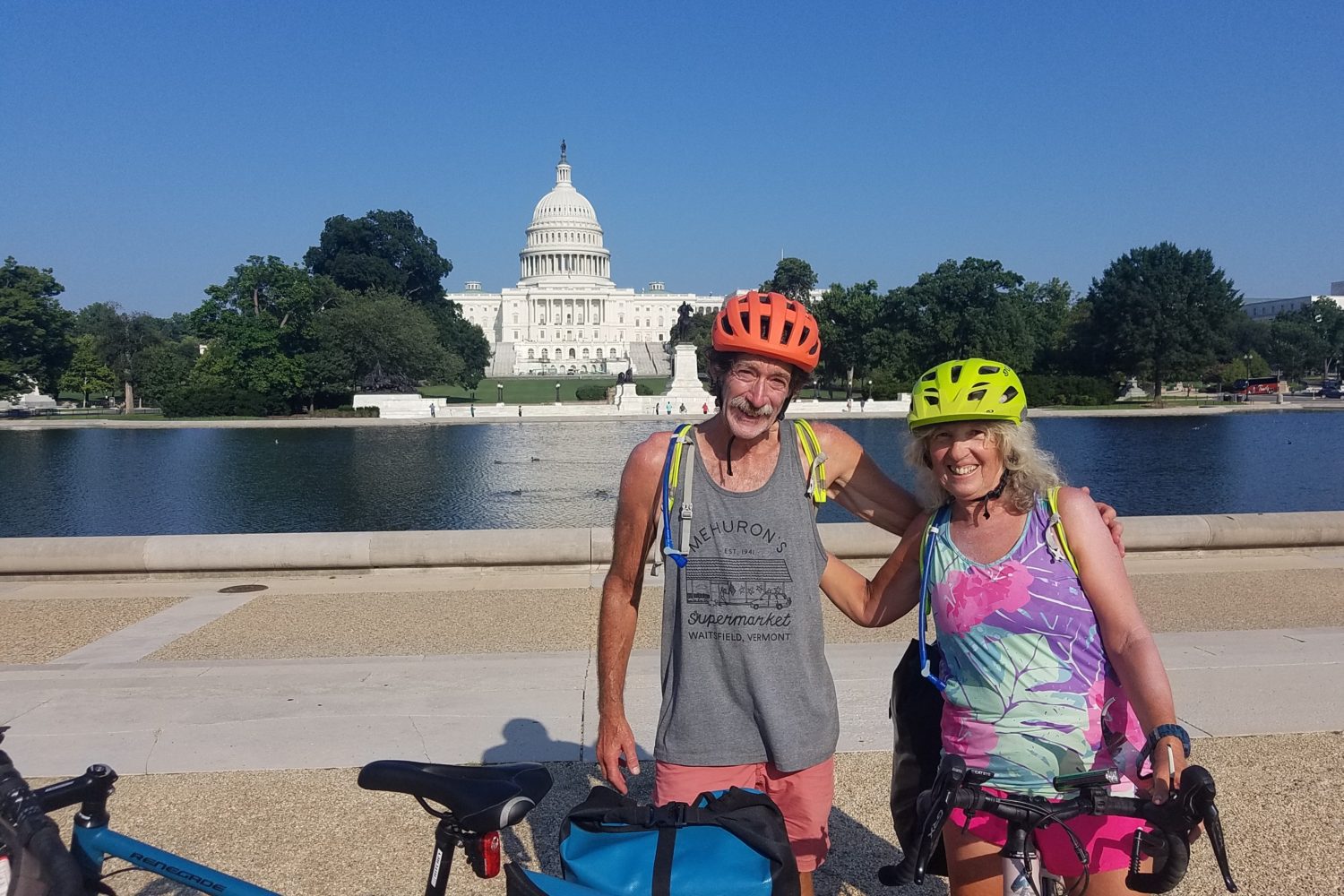
The very last chapter of our journey involved cycling through the National Mall, past the Washington Monument to the United States Capitol. It was very thrilling to ride through this historic site where so many significant events have occurred over the past 200+ years. After dodging several pedestrians, crossing what seemed to be multiple intersecting streets and turning down offers from water vendors, we came to the pool in front of the United States Capitol. It was an incredibly emotional moment. We had finished our 77-day journey across the United States, all the way from Seattle! We succeeded!

Pat asked the first person he saw to take the final photo of our journey, in front of the US Capitol. How ironic was it that this individual was a Russian tourist visiting from Moscow! As stated before, we have definitely come to “expect the unexpected.”

Shevonne and Patrick

Stay tuned for our reflections of this epic trip  after we return to Vermont


The Great Allegheny Passage – The Icing on the Cake

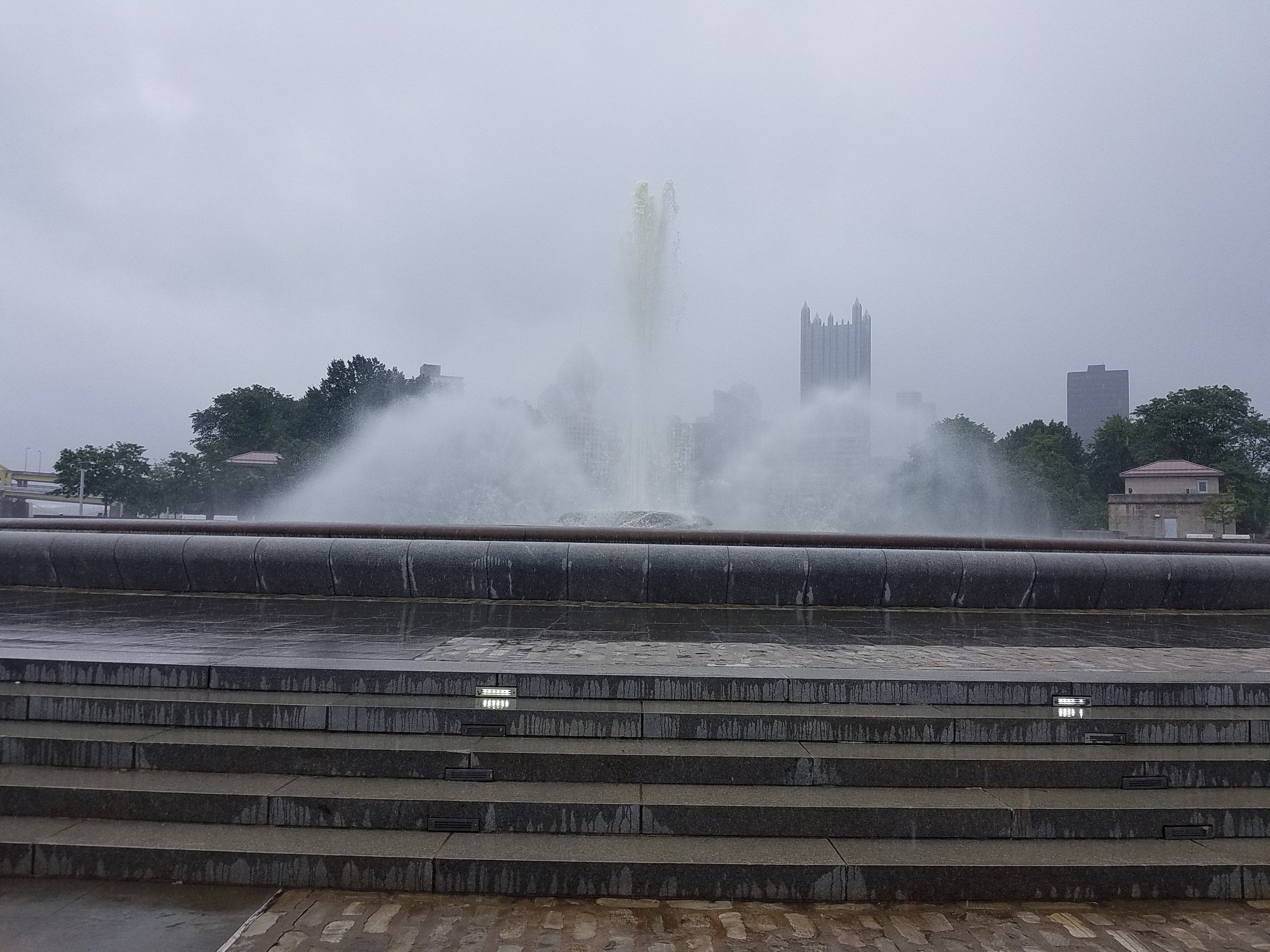
It was 11 a.m. We had been stalling because of the torrential rain, but now it was time to grin and bear it. In our full rain wear (jackets, rain pants and helmet covers), which we had not used since the State of Washington, we cycled over the Smithfield Street Bridge toward Pittsburgh’s Point State Park. The Great Allegheny Passage (GAP) begins at the Point. We had been hearing rave reviews about the GAP from other cyclists since we were in Indiana. And, here we were, in my hometown, taking on the next 149 miles (a quest I never dreamed would one day be a reality).

After the obligatory photo at the fountain, we were on our way, cycling past the Steeler’s training camp, former steel mills that have been converted to other businesses, up and back over the Monongahela at the Hot Metal Bridge and past Kennywood, Pittsburgh’s amusement park, A bit farther along, we came across the fully operational West Mifflin US Steel plant.

This absolutely outstanding trail, (which having ridden on plenty this past summer gets our blue-ribbon award of excellence), was a 35-year effort that required commitments from two states, nonprofit organizations and thousands of volunteers. The vision for such a trail began in 1978 and culminated in 2013 when the last part of the trail was completed!  The GAP has a bit of everything – beginning at the confluence of three rivers in a city once known for its steel industry and boasts of over 400 bridges, through smaller towns next to the Youghiogheny River, forests, wind towers, tunnels and a 23-mile downhill ride to Cumberland, Maryland.

After riding through Homestead, we cycled through McKeesport and part of the Union Railroad to the village of Boston and then to West Newton, PA. We decided to call it a day and stayed at a unique campground that offered outdoor warm showers, a living room complete with television, and a sheltered place to pitch our tent. Just as we were in the throes of celebrating our good fortune, Pat noticed that his rear tire was flat.  Learning that there was a bicycle shop still open a half mile away, he chose to have the shop replace it.  Hey, we figured we have earned it!

As we continued through the next section of the GAP, we began bumping into more cyclists, some of whom were traveling from Cumberland to Pittsburgh and some individuals who were doing sections as morning training rides. In Connellsville, another former mining town, we took a break and then found our way back to the trail, which overlooks the Youghiogheny River for several miles. We passed through Ohiopyle, well known for its rafting excursions and Frank Lloyd Wright’s Fallingwater masterpiece.

Our camping destination this time, was the Outflow Campground in Confluence, PA – managed by the Army Corp of Engineers.I was looking forward to some decent rest, as the previous night the trains through West Newton had kept me awake.  All was rosy, until around 3 a.m., when a blinding blinking light woke me up.  While I presumed, it was coming from someone’s recreational vehicle, I was sorely mistaken. Pat’s bicycle headlight had turned itself into a strobe light and regardless of how many times I attempted to shut it down, the light wasn’t having it. That night’s rain had caused a short in it. Finally, I asked for Pat’s help; ultimately, he threw it in the corner of the nearby men’s room and we both went back to sleep.  Hours later, it was still blinking.

After what has become a normal routine of putting everything back in the panniers, we cycled into the small village of Confluence and discovered the Tissue Farm coffee shop. It turned out that one of the owners, Pope, came by with his dog and we learned that he and his wife, Susan, had only opened the shop a few months ago. Previously they lived in the Seattle suburbs where Pope once worked for Microsoft.  “If you have ever played solitaire on your computer, you are welcome,” he said, laughing.  Following Microsoft, he did a stint with Burning Man and now is where they want to be next to the river and the GAP.

We also had the pleasure of conversing with Doug Tartar, who was taking a break from his earlier ride before cycling back up to his home in Fort Hill. Doug offered to ride with us until his turn-off and we took him up on it. He and his wife chose to retire in this area after living in Kentucky, because of the GAP and the pristine land.

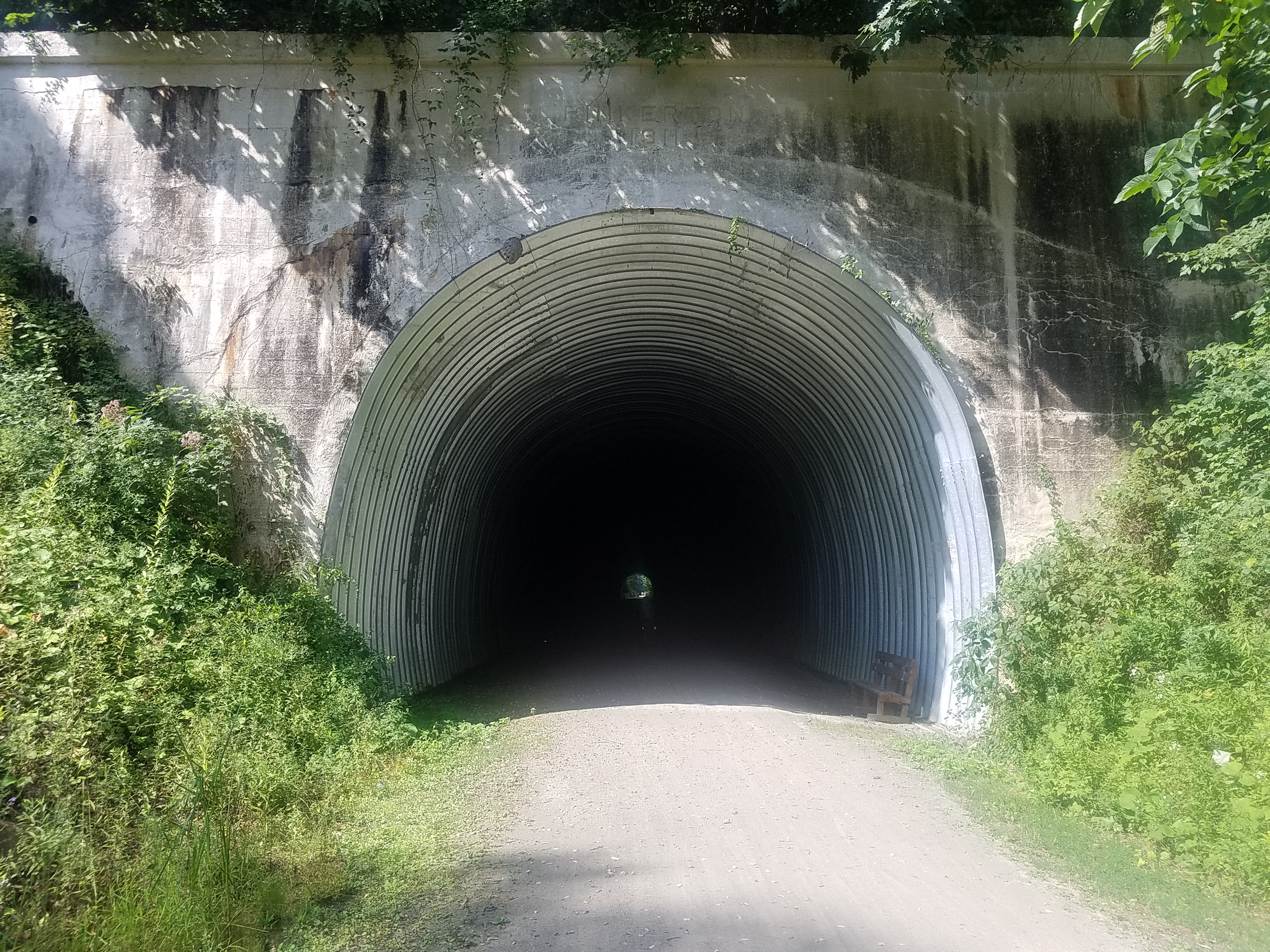
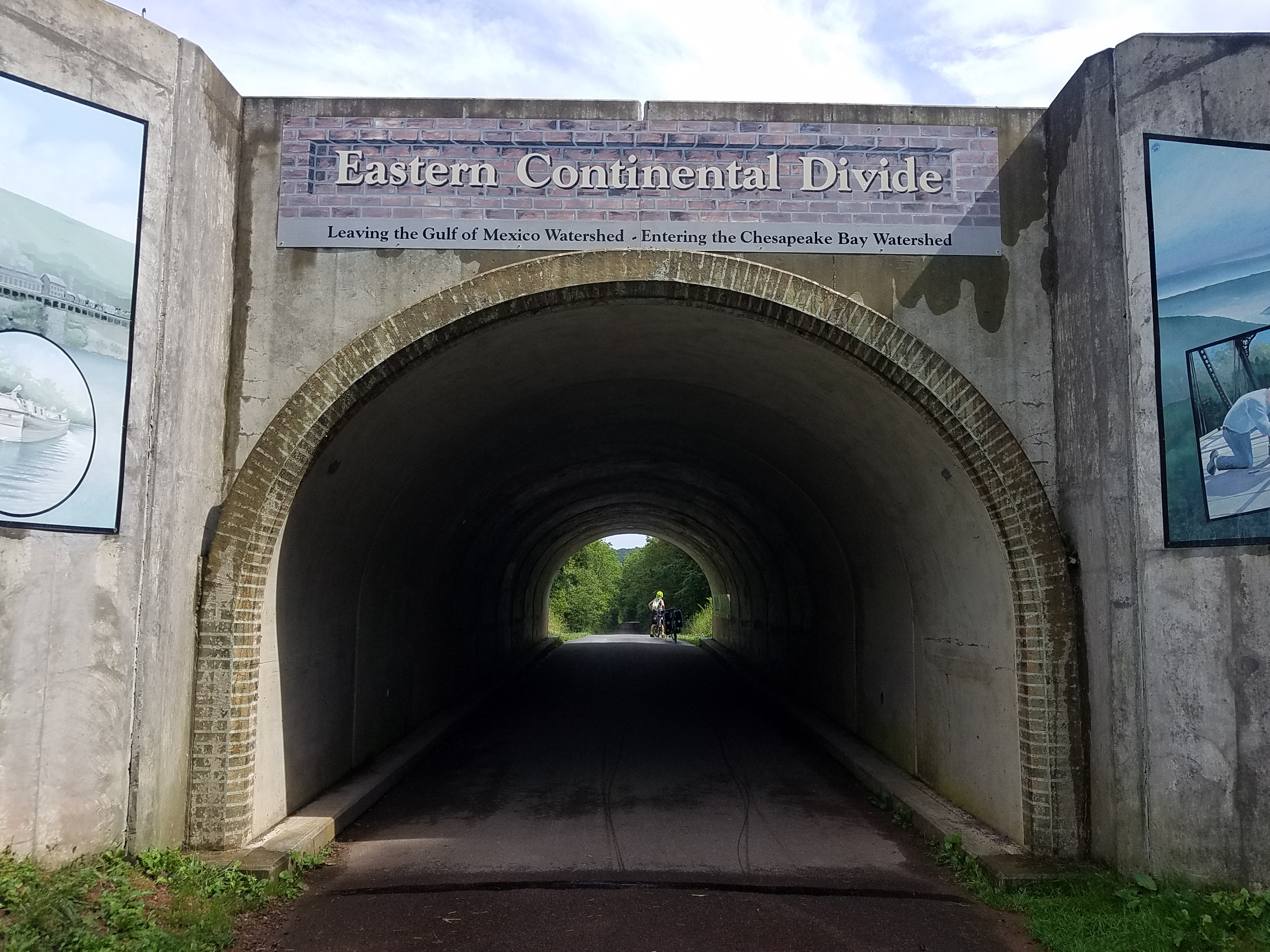
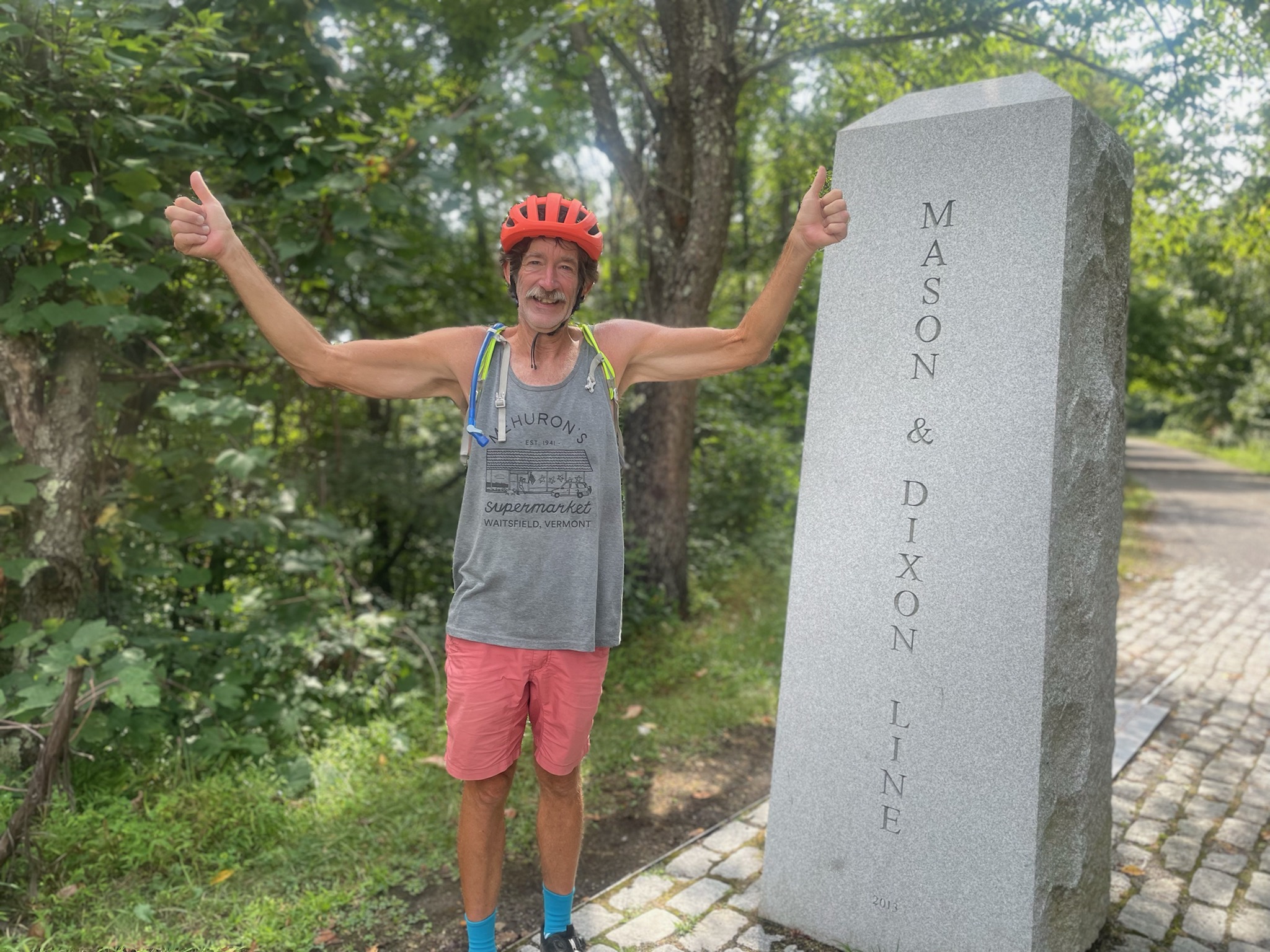
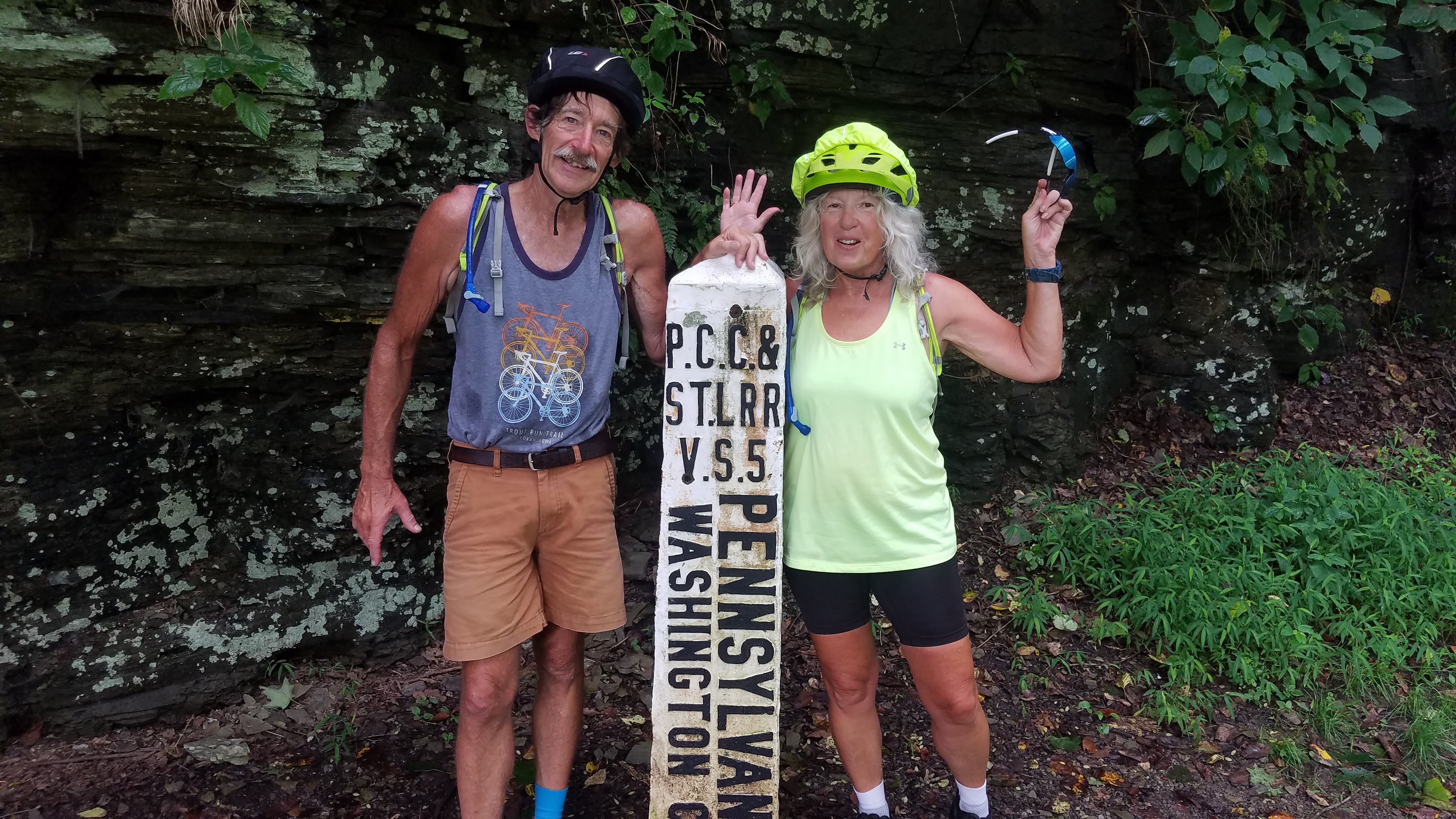
Though the ride was a steady climb, 38 miles on a very gradual grade, there was plenty to keep to us entertained along the way: tunnels, the former Salisbury railroad viaduct, a visitor’s center at Rockwood, the Myersdale depot/museum and the Eastern Continental Divide. And on the way down the mountain we saw the Big Savage Mountain Tunnel and the Mason-Dixon Line. It was there that we had a brief history lesson; according to the signage, Mason and Dixon drew the line at the behest of two prominent British families – the Penn’s and the Calvert’s who had continued to disagree for years as to who owned what. Less than a decade later, however, all this disagreement was for naught, because of the American Revolution.

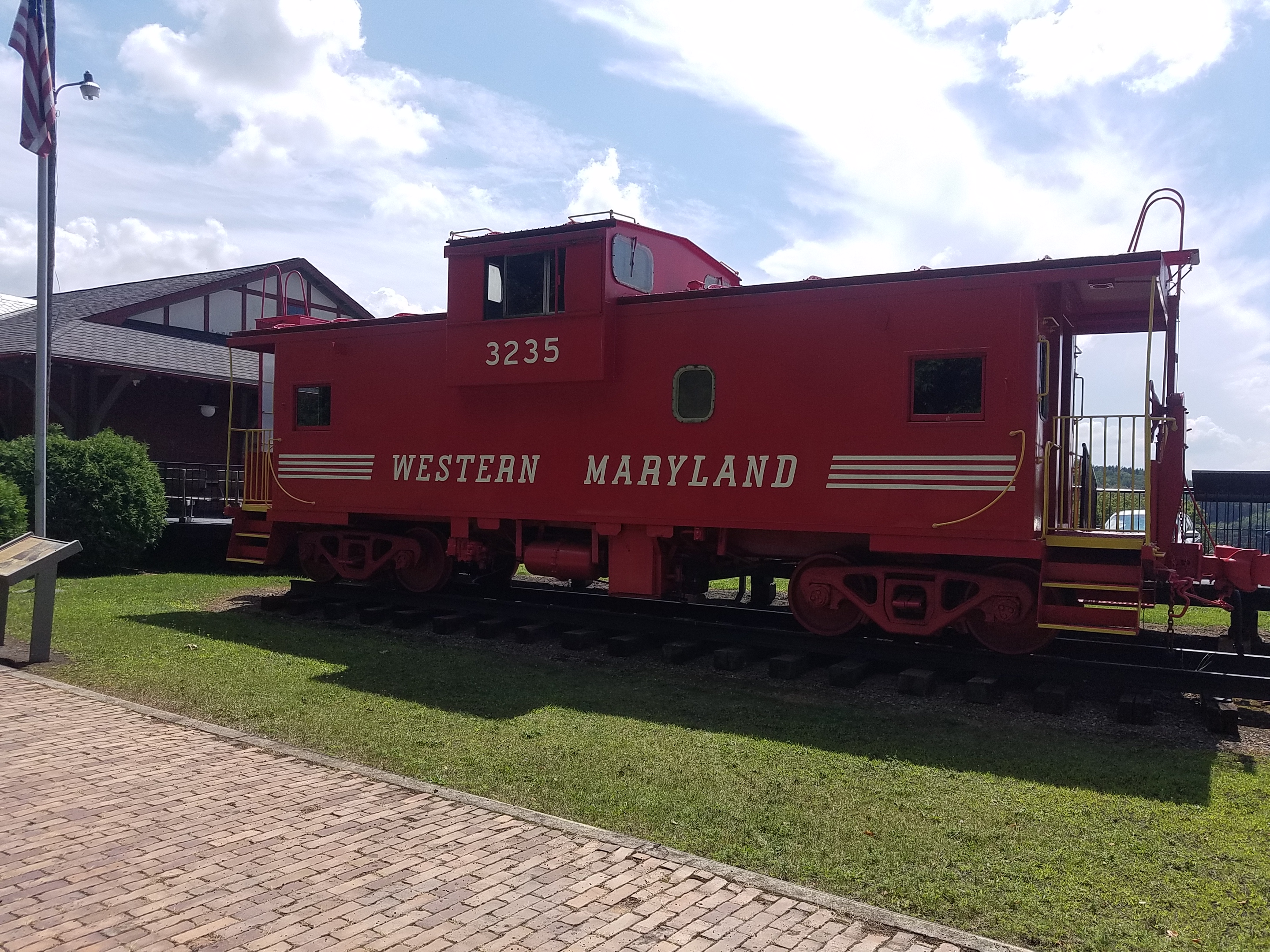
We coasted the rest of the way into Cumberland, passing the outskirts of Frostburg and then we followed alongside an active rail line, now known as the Western Maryland Scenic Railroad. Apparently, there are special excursions that individuals can take advantage of on this railway.

We arrived at the Fairfield Inn to spend the night, thanks to a wonderful gift from our Grand Isle friends, Mick Brown and Michelle Godwin. The hotel room was outstanding – it was cool and we could see the almost full moon rise out our window. We did our laundry and there were lots of yummy items on the breakfast table. On to the C and O towpath.

Shevonne and Pat
Follow us as we spin our wheel


Revelations, Relaxation and Rolling through Rail Trails

Having grown up in the New York metropolitan area, I had absolutely no interaction with Amish people and frankly didn’t understand them. What I knew came from reading brief descriptions in textbooks or from hearing what others had to say about them. I was lead to believe that they worked on their farms in Pennsylvania, stuck to themselves and really didn’t want to interact with the “English.”

Because of our unplanned visit to Berlin, OH and the opportunity to spend an evening and the next morning visiting with Leroy and Cinda Yoder, the stereotype I have carried all these years is now history. I was honored to be invited into their home and hope that through writing letters we will be able to stay in touch with them when we return to Vermont.

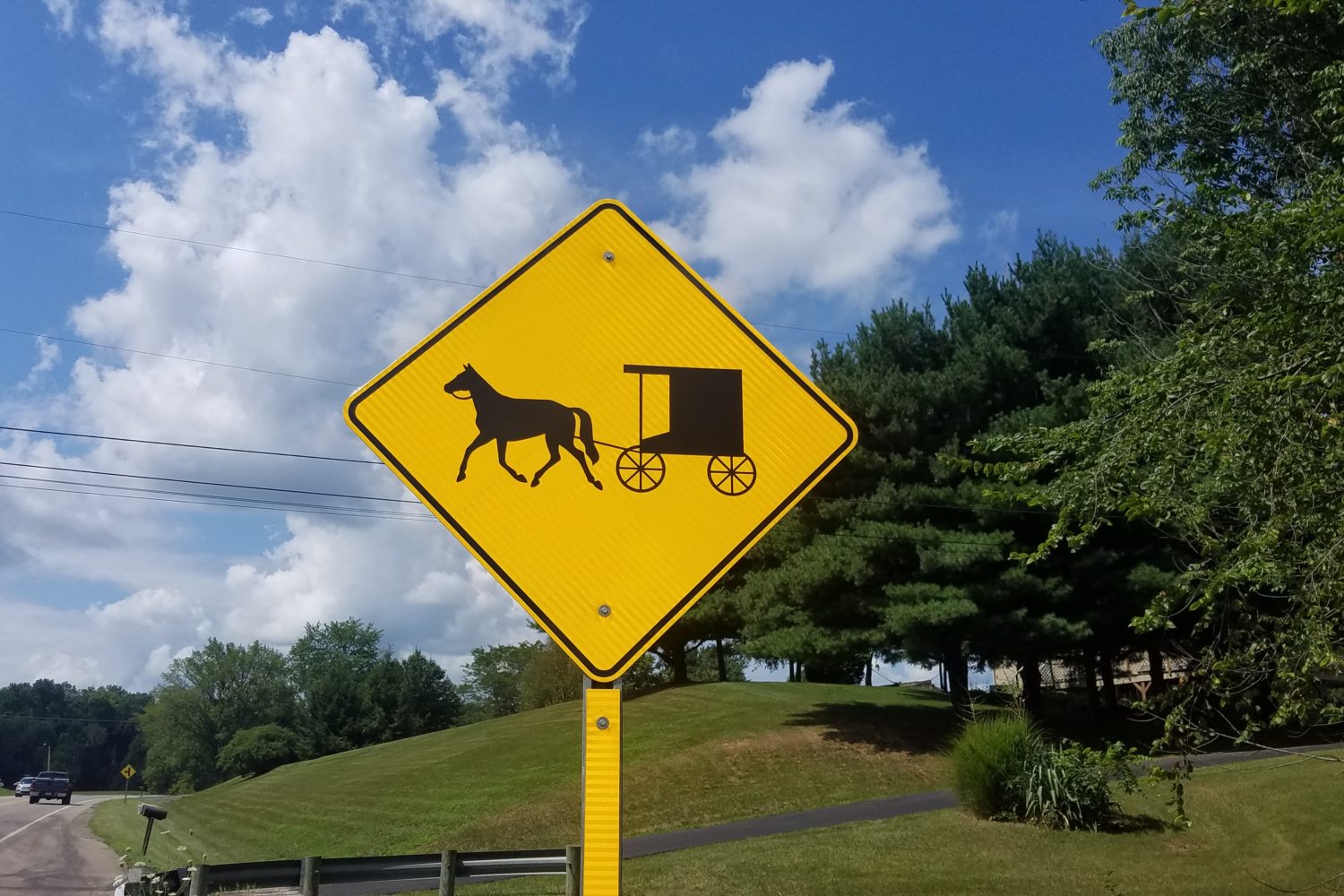
On Saturday morning, Shevonne and I continued eastward on our journey, cycling through the heart of Ohio’s Amish country, which features beautiful rolling hills. With my new appreciation for the Anabaptists, I waved to every Amish and Mennonite person we encountered (in buggies and on bicycles) and every one of them waved back.

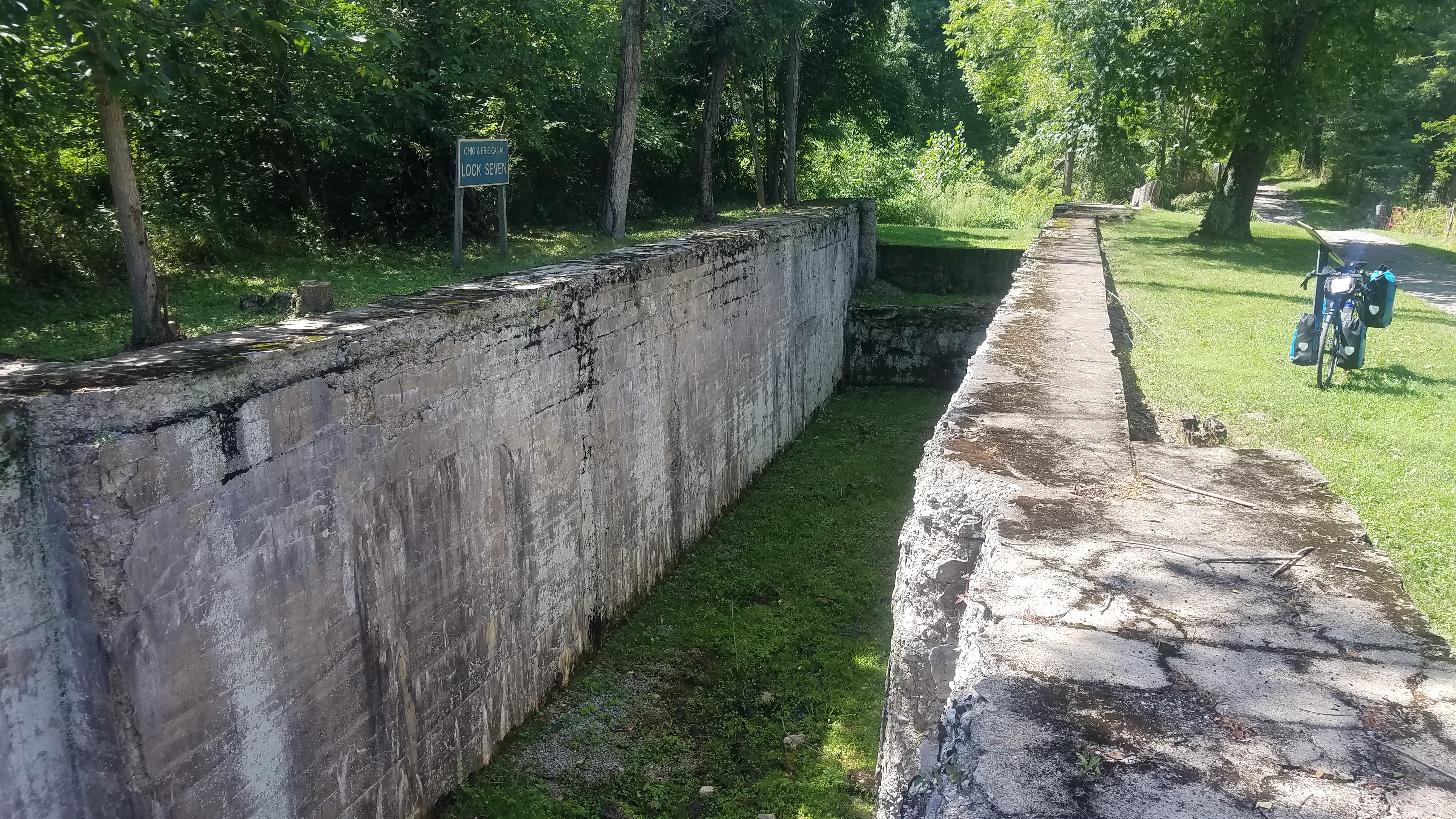
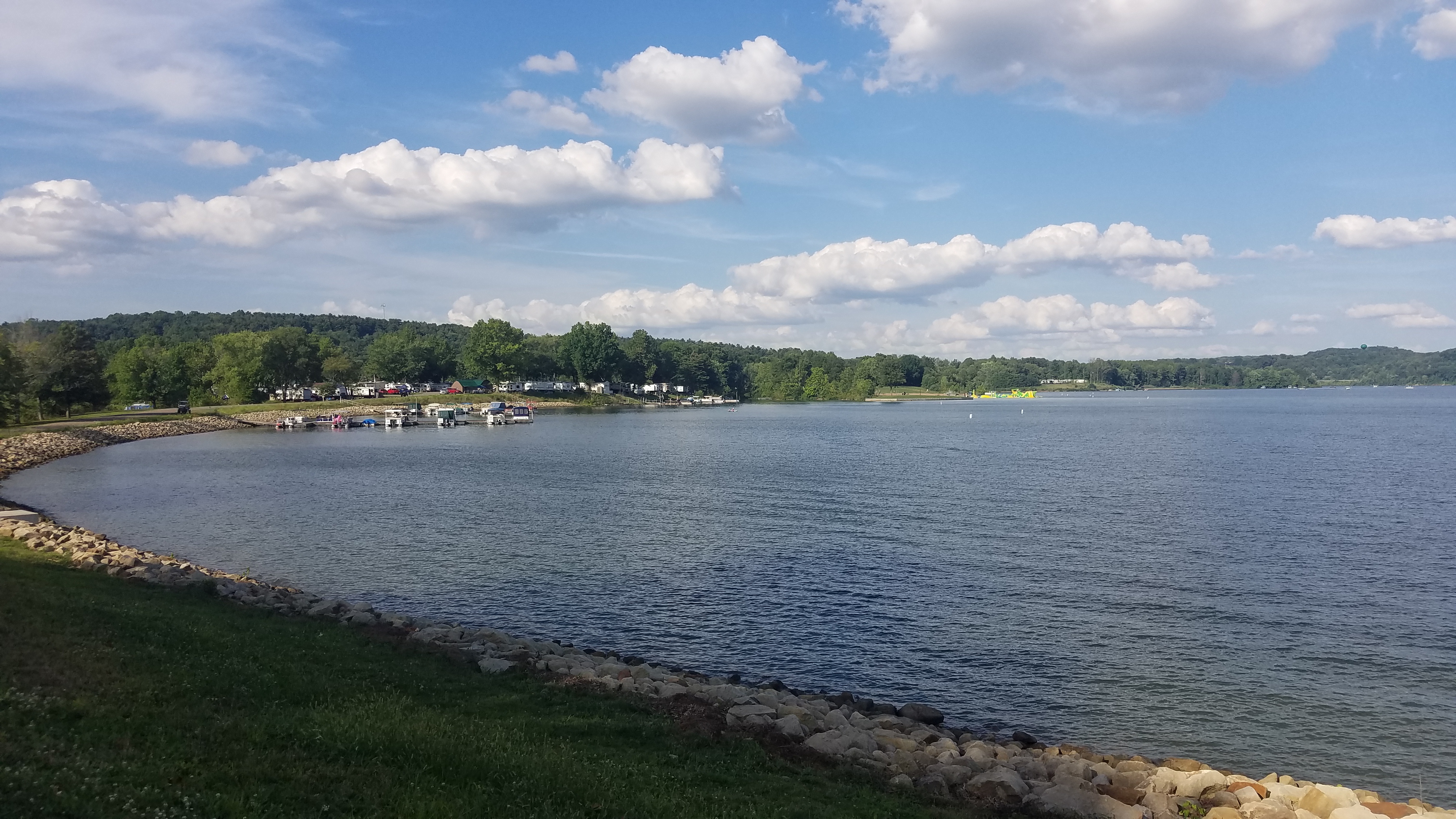
We traveled some 20 miles along US Route 62 to Navarre, where we picked up the Ohio and Erie Canal Towpath Trail, part of the Great American Rail Trail. This recreation trail is not a rail trail; instead it follows a historic canal, constructed in the 1820’s, that once ran from Portsmouth, on the Ohio River, to Cleveland. Along this scenic trail in the woods, we passed several old locks, had lunch in the historic town of Bolivar and traveled through the site of Fort Laurens, the only Revolutionary War fort located in what would become the State of Ohio. Currently, the trail ends in Zoarville meaning that we had to cycle on a very busy road for ten miles to Atwood Lake, our destination. To us, it seemed as though the entire population of Ohio was camping there – it was crammed with recreational vehicles of all shapes and sizes and plenty of folks driving golf carts. I believe we may have had the only tent in the entire park. The lake is gorgeous and for the first time in months, it was superb to be invited to join our neighbor’s campfire as the temperatures significantly dropped

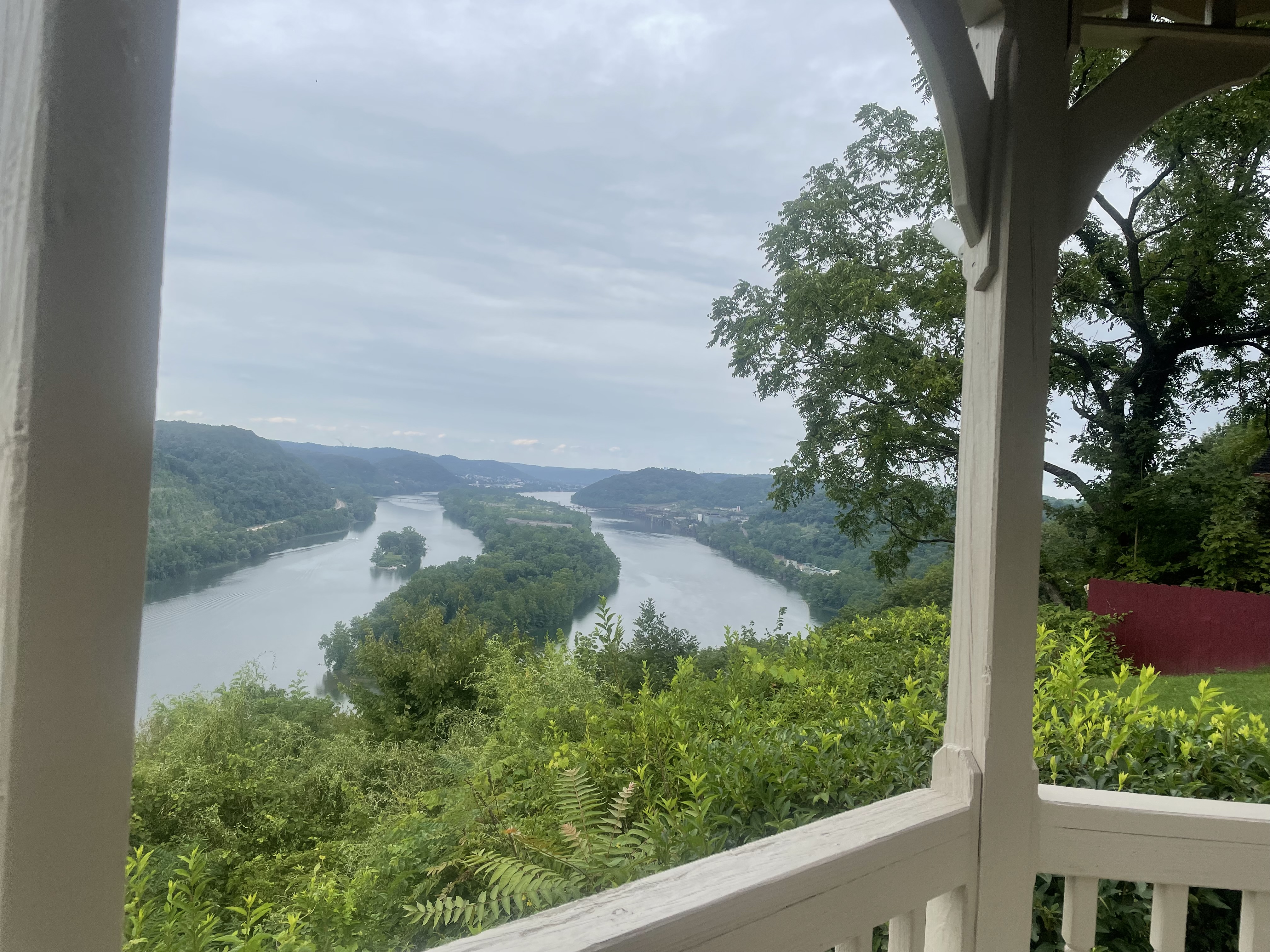
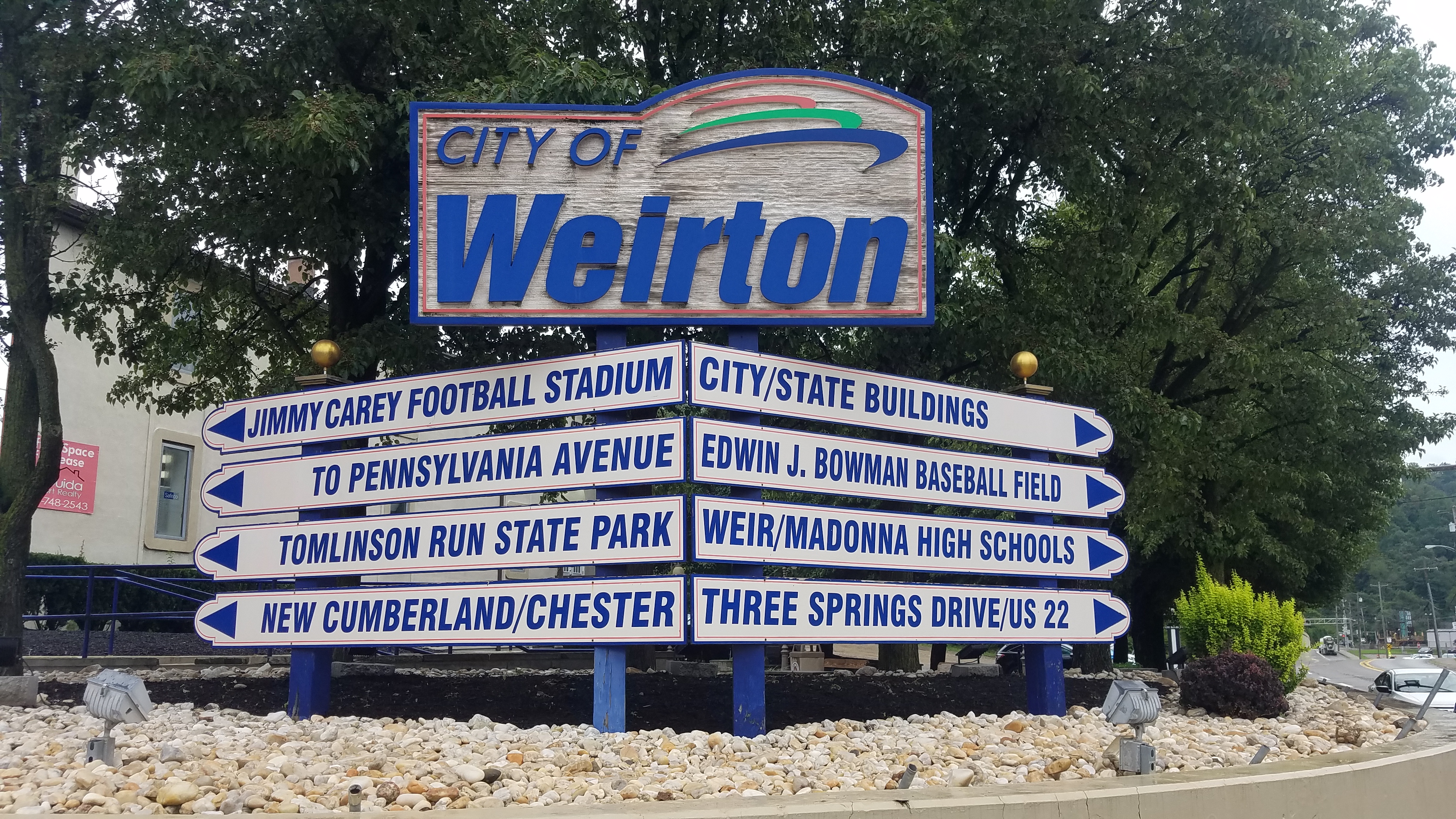
Our next destination was Weirton, WV (an old industrial steel city) where Shevonne’s sister, Leah, recently purchased a home that overlooks the Ohio River. We could see barges and pleasure boats traveling from our perch in her gazebo. Leah made sure we had a relaxing stay, buying our favorite foods, hosting a picnic and introducing us to the finest ribs in town.

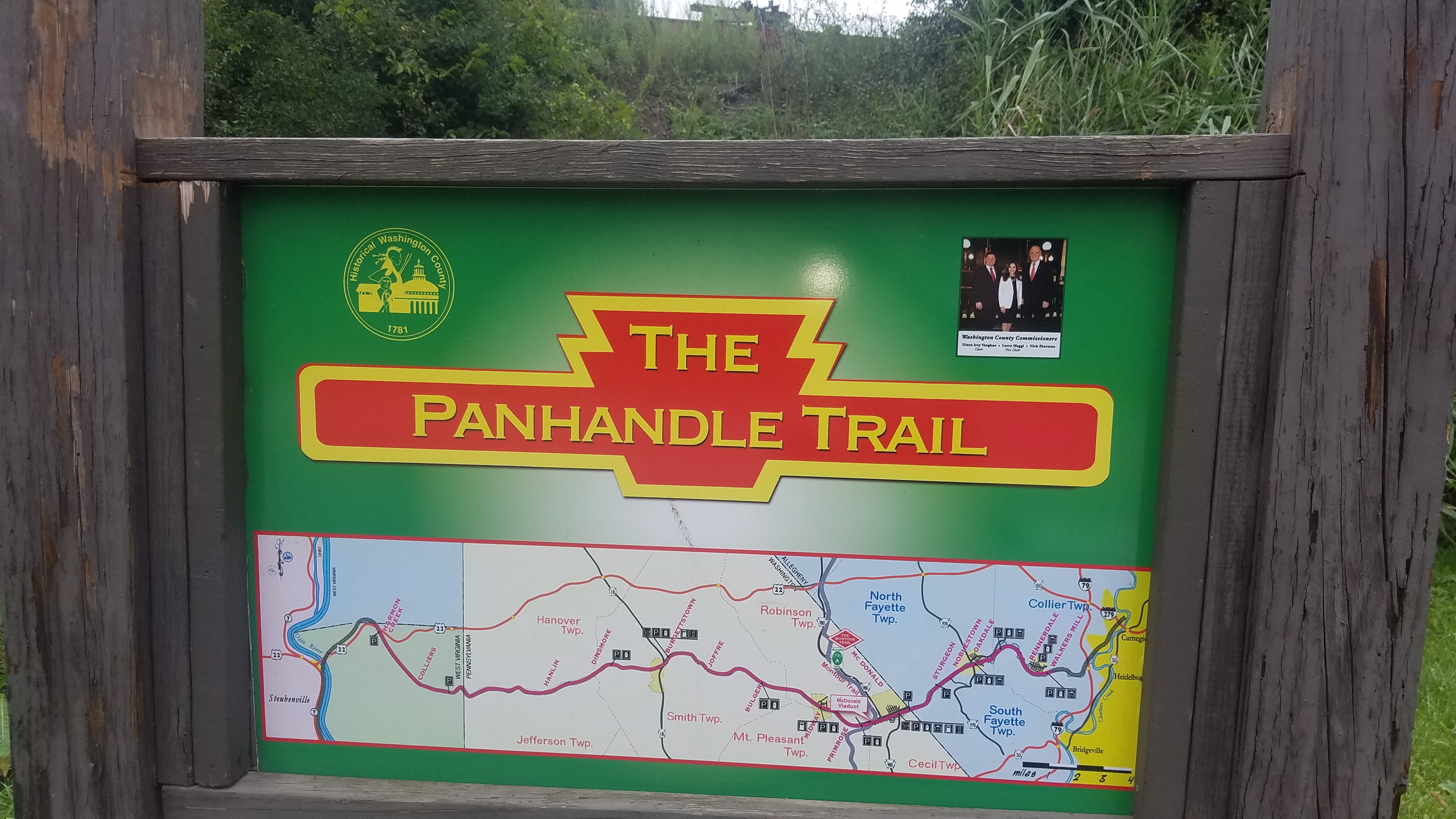
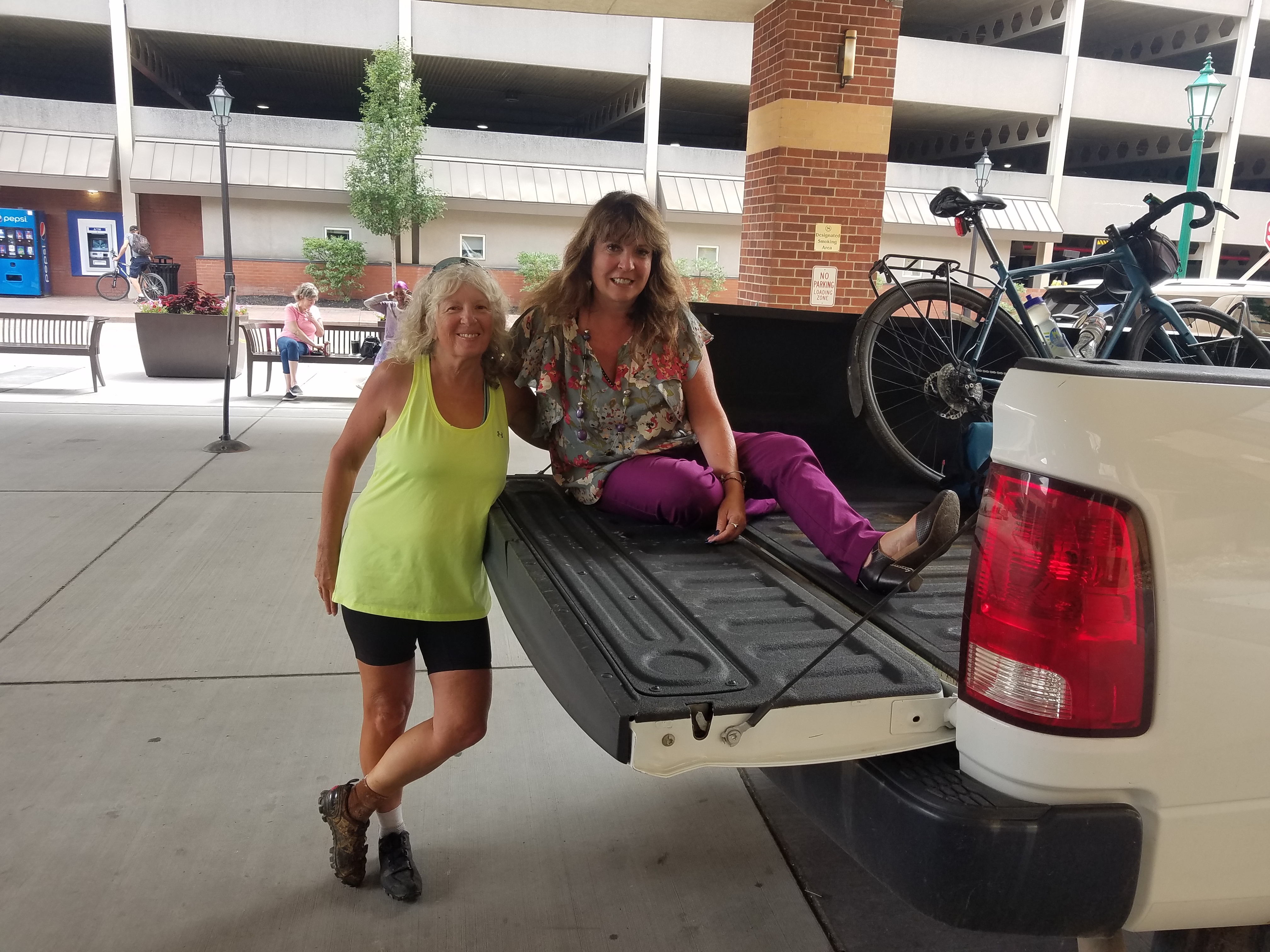
From her home, we had a three-mile ride through Weirton to pick up the Panhandle Trail (the next section of the Great American Rail Trail). The Panhandle Trail, runs along an old rail bed from West Virginia’s panhandle to Carnegie, PA. Apparently, the former railroad transported coal from West Virginia to the steel mills around Pittsburgh. It was definitely a day when our raincoats were on and off. After 20 miles, we turned onto the Montour Trail and after another 20 miles we went from rural country to the suburbs of Pittsburgh, arriving at the Coraopolis trailhead. Thankfully we did not have to ride the last 11 miles into Pittsburgh as there is presently no safe cycling route to the city. Leah borrowed a pickup truck, found us without issue and we loaded our bicycles in the back for the last part of the day’s journey.

Pat

Follow us as we spin our wheels


When a Tree Falls from the Forest Unexpected Gifts Arrive

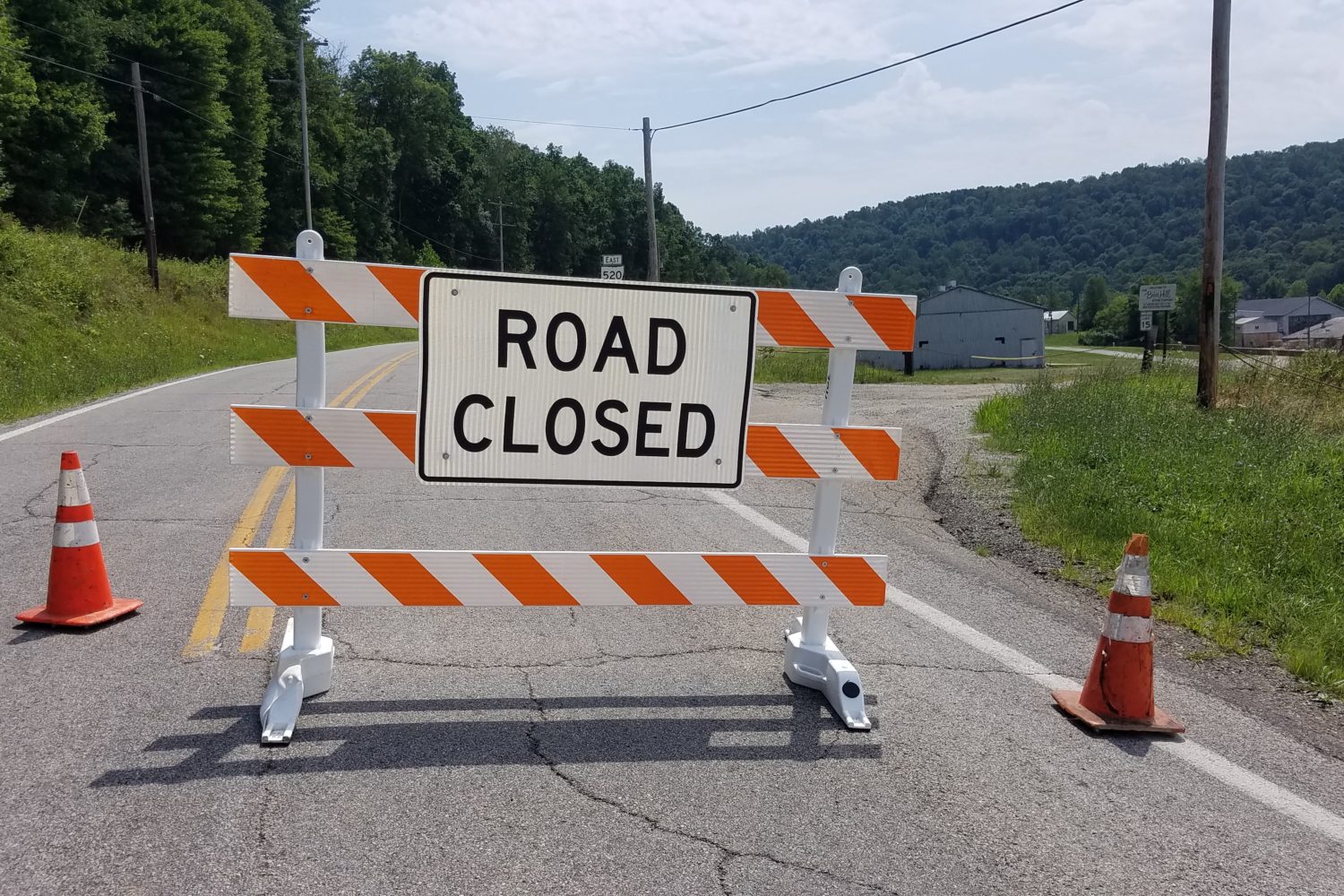
When the Ohio to Erie Trail ended in the town of Glenmont, we had two choices; turn left and follow the river valley to the Turkey Hollow Campground in Millersburg or turn right and climb straight up an enormous hill. According to Pat, left was our intended direction and I breathed a sigh of relief.  A few miles out of town, however, a “Road Closed” sign appeared in front of us.

We have had our share of disagreements about how to handle those signs and this time, we both decided to ignore it. That is, until the Ohio Department of Transportation personnel in their trucks told us we could not go further because of the tree that fell from the forest and knocked down the power lines with it.

“We don’t know when they will get around to shutting down the power so we can cut the tree,” one of the guys said.  “It may not happen until tomorrow. “You will need to cycle back into town and cycle up that big hill and then travel about four or five miles more and come back down on the other side of the road,” he said.

Grimacing, Pat and I turned around and cycled back to the hill to begin what seemed arduous after several days on flatter terrain. My bicycle screamed out in pain, refusing to change gears and forcing a hot walk up the hill. I wanted to chuck this bicycle in the woods for good!

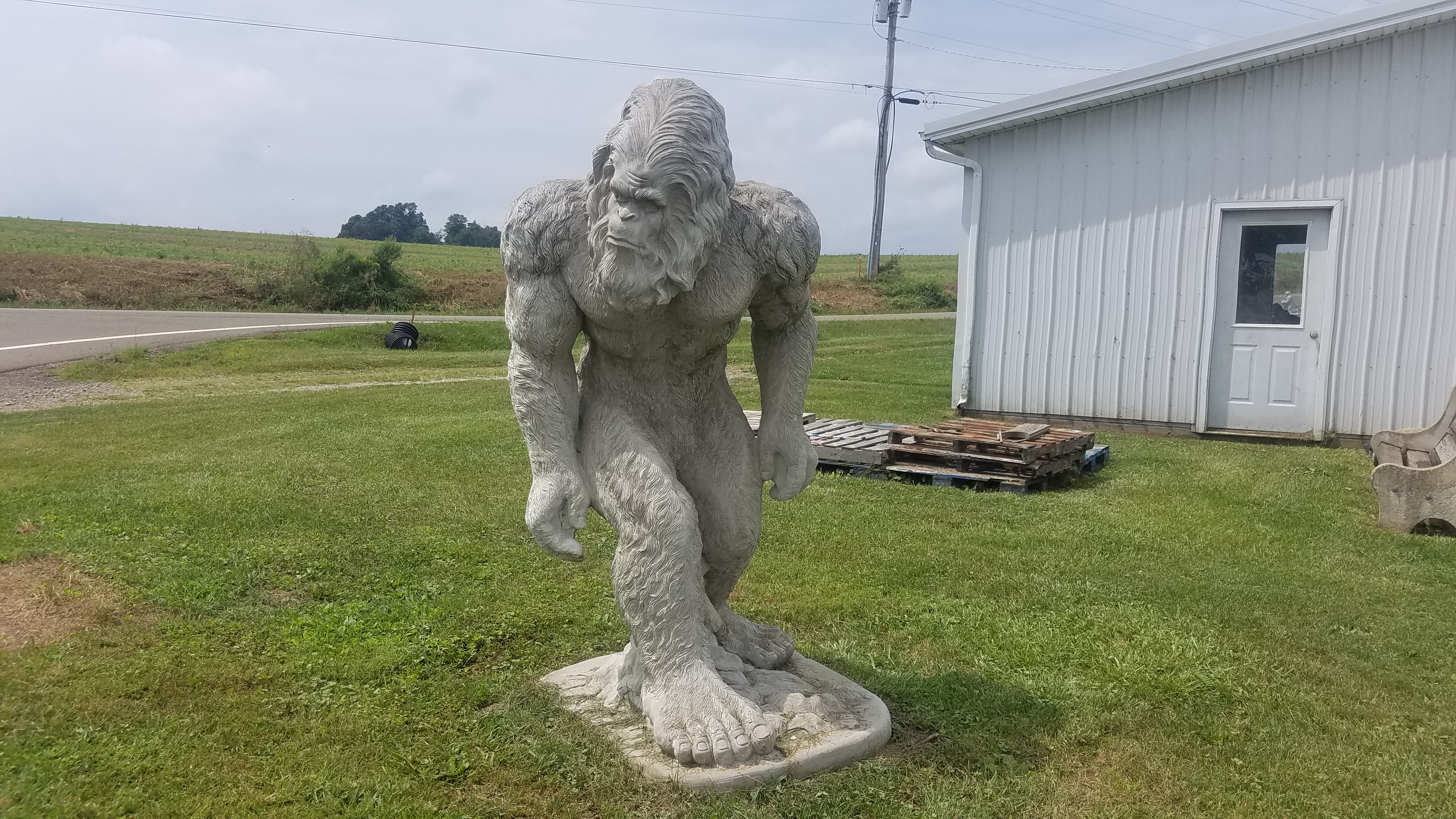
At the top of the hill, I was hysterical as I saw no way forward to finish the adventure without another bicycle. I called my sister, Leah, in West Virginia  as we were heading her way in a few days. “Can I borrow your bicycle when I get to your place?” I asked.  “It has skinny tires, “Leah answered. “It won’t work on the trails.” “Then I need some kind of bicycle,” I said. “Can you get me one at Dick’s or Walmart?  She said she would call me back in a bit once she considered some different possibilities. With that, I relaxed a bit. It was possible to cycle on the downhill but each uphill climb was less than pretty. We stopped at a fun intersection – fun I thought because there was a concrete Yeti in place. We called our friend, Tom, from Illinois – after all he had gotten us out of the last jam – maybe he would have an easy solution. While we were on the phone with Tom, a gentleman in a small pickup truck came by and offered to take us to a bicycle repair shop. His truck was packed with a couch and cushions.  – “Give me a half an hour and I will be back”, he said. Then, my sister called back.  “I am buying you’ a bicycle right now,” she said. “What kind of pedals do you want?” This was all too overwhelming for me to handle. I suggested that she wait because maybe I could resolve the problem.  “No”, she said.  “I am getting you a bicycle.”

Pat and I kept on cycling up and down some hills, and true to his word, in about 30 minutes, the gentleman, named Rick, with the pick-up (named Elinor) reappeared.  I was on the fence about having him take us to a shop and Rick could sense my apprehension. “You can drive the truck if you’d like,” he said. “Is it a clutch?” I asked. “I would really like to drive a car with a clutch again as it has been some years,” “No,” Rick answered.  A bit disappointed, I then, agreed to put our bicycles in the back of the pickup and head for a repair shop.

“Elinor will get us there safely”, said Rick as the three of us crammed into a two-person pickup truck. “I don’t like to go very fast on these back roads.” While Pat shouted out the Google directions to the bicycle shop, Rick drove and told us we were now in the midst of Amish country. 

Fifteen miles later, we pulled up to the Hiland Bicycle Shop, owned by Leroy and Cinda Yoder. Leroy and Cinda are Amish and Leroy has been selling and repairing bicycles for several years. His shop and the bicycles keep multiplying and now he has a new warehouse behind the shop which is stuffed with electric assist bicycles and lots of bicycle parts. Most of the people he serves live no more than 10 miles away as members of theAmish and Mennonite communities use bicycles as their means of transportation. “Your cassette is all chewed up,” Leroy said. “I don’t have one that is the same but I can replace it with another, though it won’t be that easy to get up steep hills.”

Desperate and knowing we had a few more days before we were back on rail trails, I agreed to have him replace it and 10 minutes later I was testing it. It was now about 4:30 p.m. on Friday evening. Pat and I needed a place to camp and some food. Rick asked Leroy if there was a place we could camp on his property.  Leroy indicated that we could do so, either on his son’s property behind the shop or on his property across the road. “There’s also a place to get food about a mile and a half from here,” he said. “And if you would like, you can sleep in the shop’s warehouse tonight”. Knowing thunderstorms were brewing, we agreed to stay in the warehouse and stashed everything there. Once more, Rick took us in Elinor to the market and returned us to the Hiland Bicycle Shop.  Rick seemed thrilled to have been able to help us and he left us in good hands.

Two hours later, Leroy and Cinda stopped in to visit with us, bringing four chairs so we could sit outside and converse as the sunlight faded. We had many questions for them and they had many questions for us.As we began talking, Leroy said he had a question. “How did you happen to come to us today? And Pat answered with the following “It all began when a tree fell from the forest and blocked the road.”

And we all laughed.

We are incredibly thankful for the unexpected gifts that arrived on this fine day.

Shevonne and Pat
Follow us as we spin our wheels

The Extraordinary Trails through Dayton, London, Columbus and Mount Vernon

“You don’t live here,” said a woman as we came out of our host’s apartment in Richmond, IN. “Are you trying to break in to my son’s car? That was how our morning began. Pat didn’t take offense – he simply introduced himself and eventually all was smoothed out. Down the street, we attempted to feel a bit better with some coffee but that was peppered with an individual who proceeded to play gospel music inside the coffee house at full volume.

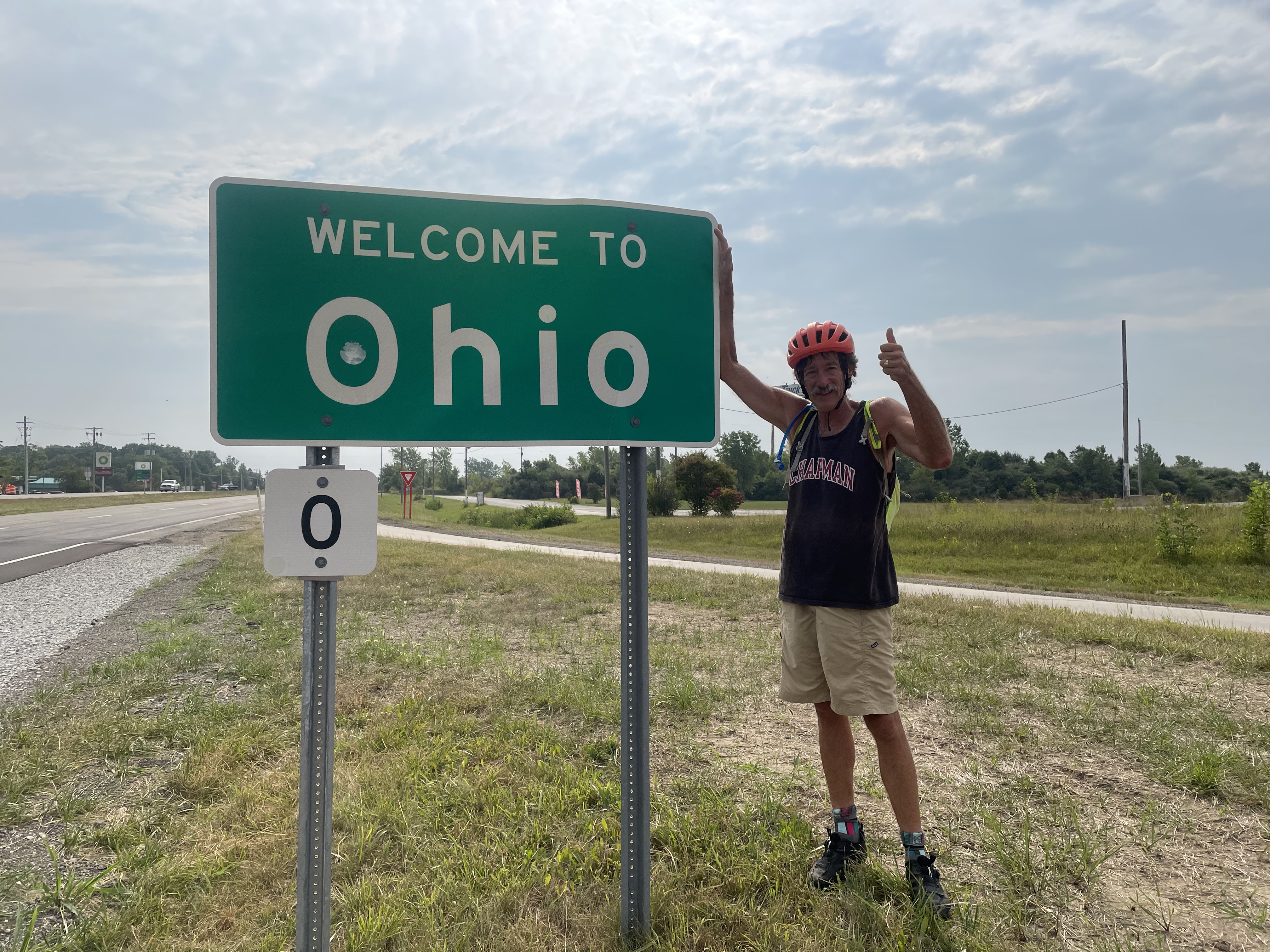
Because our host, Blair recommended US Route 40 as the best way to cycle, (given the wide shoulder) we followed his advice and crossed into Ohio in a few miles.

After a fairly easy 19-mile ride, we arrived at the Wolf Creek Trailhead just in time to get pounded by rain.

Then Jim, who oversees the trail, appeared in his truck, opened the garage so we could have some shelter and shared some of his bicycle touring stories. A short time later, we were back on our bicycles cycling through the outskirts of Dayton to the Miami River.

Unfortunately, the trail we then needed to cycle on was closed for construction and our only way through was up and over a long set of stairs.  We didn’t hesitate – just did it! Once we crossed the Miami River, we cycled through the University of Dayton and then into the South ParkDistrict where our Warm Showers hosts, Heath and Joyce, and their dog, Josie, reside.Heath shared a bit about Dayton’s history and how the city dug the river much deeper after a horrific flood over 100 years ago.

Our travels through Ohio have been relatively easy – paved, flat trails and lots of towns with soda foundations. As we cycled through Xenia, we discovered it is known as a bicycle hub because five trails converge in the town. And after another 30 miles on the trail, we arrived in London, OH and the primitive campsite right next to the Ohio to Erie Trail.  There we were greeted by three other cyclists, Dave (who is celebrating his 70th birthday, his daughter Katherine and her partner, Pete. They are cycling from Cincinnati to Cleveland. They are all from central Massachusetts and we found plenty of commonalities.

Though many individuals rave about this idyllic campsite, I had the opposite experience.  Between the high humidity, lack of any breeze, mosquitos, a bright white light in my eyes and the group that appeared at 1:30 a.m. to smoke weed, it was another rough night. Pat continues to sleep through everything.

Of course, the unexpected occurred during the ride the next day. First, we had to deal with a train full of hopper cars that kept moving forward and backward blocking all the cycling crossings. And then, when attempting to put my bicycle in gear to get up a hill, it faltered. Time to visit another bicycle repair shop, this time in the Short North area of Columbus, Ohio.

This time the diagnosis was that I needed a new derailleur. However, the bicycle mechanic told me that there would be no way to get one because they stopped manufacturing the type on my bicycle during the pandemic. He did a bit of tweaking, showing me how I might deal with it should it reoccur

Back on the Ohio to Erie trail, we maneuvered through the Columbus outskirts and picked up the Alum Creek Trail, a pleasant trail with winding paths and lots of bridges. We arrived in Westerville, thirsty but undecided about taking a break because the skies promised a storm coming soon. The irresistible afternoon Dr. Pepper won out, because of which we didn’t make it to our Warm Showers location before the torrential thunderstorm touched down. A gentleman motioned us into his home and we did, for the next hour.  We ventured back out – with Pat recommending to hoof it under the power lines. Three miles later we were greeted by Dave, our Warm host in Sunbury, Ohio.

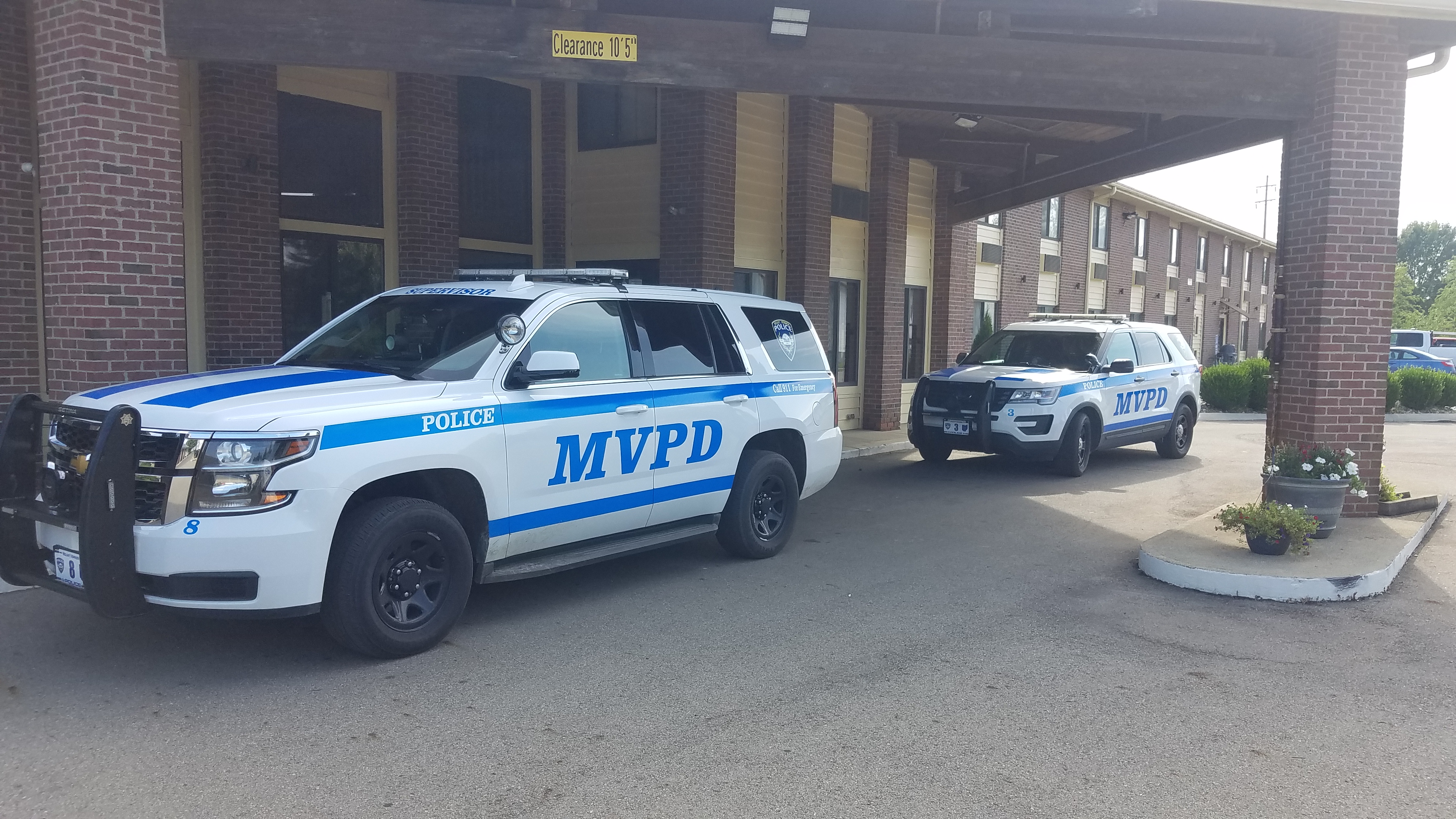
After a restful night, and a chance to talk more with our host about cycling in Ohio and elsewhere, we easily cycled to Mount Vernon. As we exited the Comfort Inn, we bumped into  two local police cars in front of the motel with their engines running. Memories of the beginning of our trip outside of Seattle and the Motel Six quickly came to our minds – and once again we wondered – are we in a safe motel?

Shevonne and Pat

Follow us as we spin our wheels